Scroll to top

Vodniy Jurnal

kolyajivoy

Water magazine No.5 Fish penis,drop fish, Opisthoproct

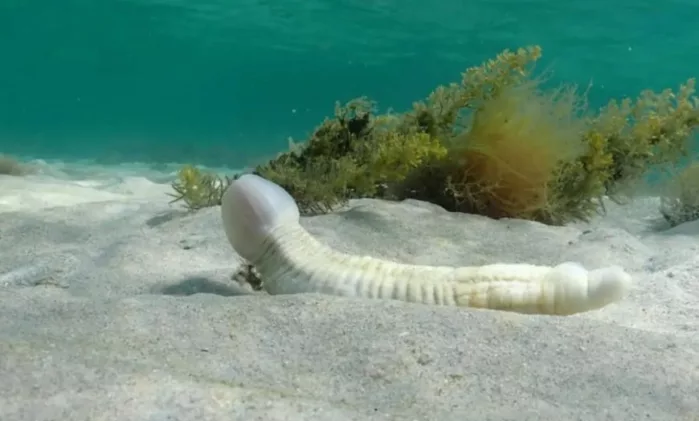
Penis fish

Water magazine No.5 Fish penis,drop fish, Opisthoproct

Scientifically known as Urechis Caupo, or "fat tavern worm", penis fish is a type of false worm that lives under the soft sediments of the seabed. They can live up to 25 years and grow up to 30cm. These creatures are designed to live underground, feeding on plankton, bacteria and other small particles that fall into their mucus traps. Using contractions (peristalsis) to pump water through its burrow, the worm sucks in plankton, bacteria and other particles. It lives in shallow water.In Korea, they are eaten as food, often raw with salt and sesame oil or gochujang. They are common in Korea, Japan and the Pacific coast. After storms that massively destroy their burrows, they can be thrown out in large quantities by waves on beaches.
Drop fish

Water magazine No.5 Fish penis,drop fish, Opisthoproct

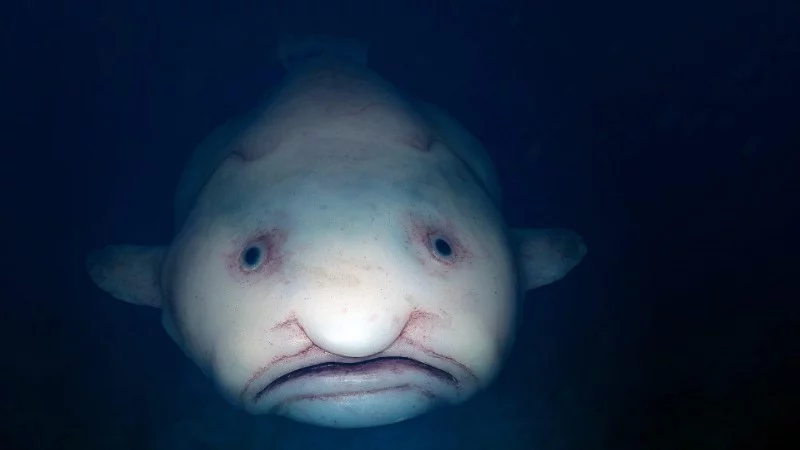
The dropfish is a very unusual and little–studied creature inhabiting the oceanic depths. This fish still remains a mystery in many ways, all its habits and lifestyle have not been studied enough anyway, because it prefers an inconspicuous, secretive lifestyle, it is rare and at great depths. She lives in the Pacific, Atlantic and Indian Oceans, or rather, in their mysterious depths. It is most often found by fishermen along the coast of the Australian continent and near the island of Tasmania. The depth at which it lives varies from 600 to 1200 meters. The pressure of the water masses there is 80 times greater than at shallow depths near the surface. She has adapted to the constant darkness in the water column, so her eyesight is well developed, the fish moves smoothly and steadily, without rushing anywhere. The drop has no muscle mass at all, so it cannot swim fast, because of this, it also has no opportunity to chase its prey. The fish sits in one place and waits for its snack, its huge mouth wide open, like a trap. Due to the inability to move quickly, excessive slowness, these fish often remain hungry, constantly malnourished. These unearthly creatures live from 5 to 14 years. As for the natural, natural enemies that can harm the fish drop, then nothing is known about them either. At great depths, where this strange fish lives, there are not so many living creatures as near the surface of the water, therefore, no special detractors have been found in this fish, all because of the lack of knowledge of this amazing organism. Although the drop has no special obvious enemies, the population of this fish has been constantly declining. There is a ban on catching this species of fish, but it continues to fall into the nets of fishermen when they fur the bottom with them in search of a completely different catch.
Opisthoproct

Water magazine No.5 Fish penis,drop fish, Opisthoproct

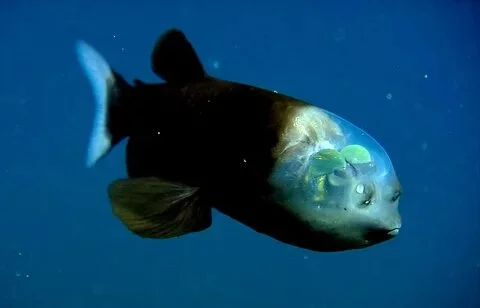
Opisthoproctes are widespread in tropical and moderately warm waters of the World Ocean. They usually live at a depth of 500 to 700 meters. The maximum size of most species does not exceed 10 cm. The complexity of the structure and, as one might think, the high efficiency of the opisthoproctovs' organs of vision indicate that the eyes play a very important role in their lives. Some of them are very rare and are known from single specimens, others are more common, because of this, this family is almost unexplored. They have a transparent head and luminous eyes.It mainly preys on bioluminescent siphonophores.

Tags:AnimalsAquatic creaturesKolyajivoy
3
11
14
0comments
22views

Leave a comment

Before commenting, you need to sign in.

Bestcomments (0)

There are no comments for this post yet. Want to leave the first one?

Similar posts

Water magazine No. 27 Wart

It grows up to 35cm. It lives on coral reefs, near muddy algae, in sand, rocks, mud. Due to its mottled-greenish or mottled-brown color, the stone fish easily hides, masking itself in

Water magazine No. 25 Blue angel, Sea Lily.

The blue angel is a species of gastropod mollusks common in the seas of all oceans of the tropical belt. The body length is 5-40 mm. On the sides, perpendicular to the axis of the body, there are three groups of cerata - finger-shaped

Water Magazine No. 23 Mississippian Shell

The Mississippian shellfish is one of the largest freshwater fish: according to experts, its length can reach 3 m with a weight of over 130 kg. The average life span of fish is 40 years. They have a torpedo image

Water magazine No. 22 Ordinary Catfish

Catfish belong to ray–finned fish - the first representatives of this class appeared in the Devonian period, about 390 million years BC. Previously, giant catfish were caught in European rivers for

Water Magazine No. 21 Japanese Spider Crab

The Japanese giant spider crab, although not the heaviest in the underwater world, is however the largest known arthropod. The well-calcined shell is only about 40 cm, but the total length is

Water magazine No. 20 Greenland Shark

The largest individuals can reach 7.3 m and weigh up to 1.5 tons. However, on average, the length of these sharks ranges from 2.44—4.8 m, and the weight does not exceed 400 kg. The head is elongated, the distance from the tip of the snout

Water magazine No. 19 Anomalocaris

Anomalocaris lived 520-535 million years ago. It is one of the largest predators of the Cambrian, reaching a length of up to 38 cm. Previously, it was believed that it grew up to 1 meter in length, but this estimate seems small

Water Magazine No. 18 Green Sea Turtle

The shell of a turtle is characterized by an oval shape, while its length can reach almost 2 meters, although there are mostly individuals with a shell length of no more than 1 meter. You should pay attention to

Water magazine No. 17 Krylatka

  Lionfish is a genus of ray—finned fish belonging to the scorpion family. They are distinguished by elongated feathery fins, bold patterns and extraordinary behavior. Adults reach a length of about 43 cm and a weight of

Water magazine No. 10 Beluga

The gill membranes fused together and formed a free fold under the gill gap. The snout is short, pointed, soft from above and from the sides, devoid of shields. The mouth is large, semi-lunar. Lower

Water magazine No. 8 Whale Shark

The whale shark is the largest shark species currently in existence, as well as the largest of modern fish. Its maximum size reaches at least 12.65 m, possibly more. At the whale a

Water magazine No. 3 Som Kandiru, Lamprey

Its thin and skinny, so it is almost transparent. Hungry, kandiru begins to search for a victim — and he is looking for some bigger fish. To find her, even in the murky opaque waters of the Amazon