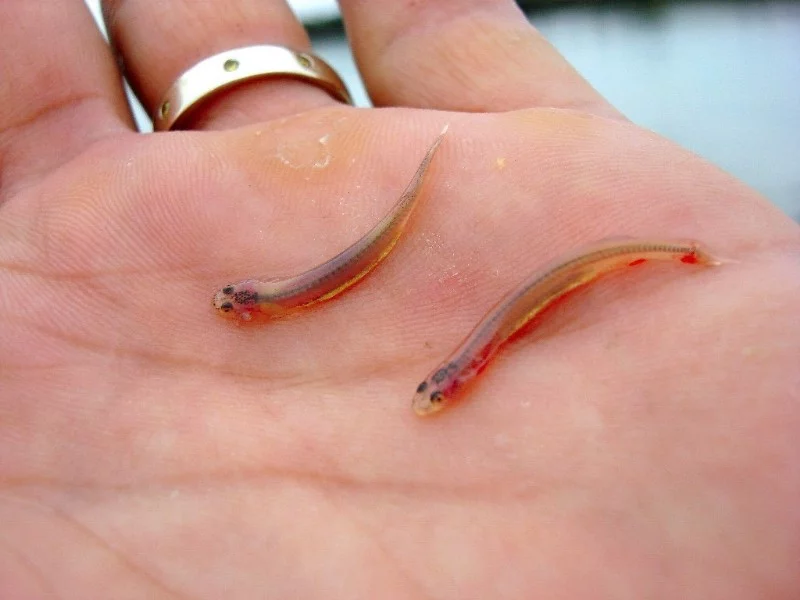
Despite its small size — 2-3 mm in thickness, the locals are more afraid of it than piranhas.
Its thin and skinny, so it is almost transparent. Hungry, kandiru begins to search for a victim — and he is looking for some bigger fish. An excellent sense of smell helps to find it, even in the murky opaque waters of the Amazon. When the kandiru feels the characteristic jet of water ejected by the fish through the gills when breathing, besides, the catfish catches the smell of ammonia (a metabolic product of fish, which is partially excreted from their body through breathing), it rushes forward. Having found the fish, the candiru literally crawls into the gap under the gill cover, and then securely attaches itself to the gills of its victim. He does this with the help of special spikes located on his fins so much so that no forces can get rid of him now, even the most powerful stream of water passing through the gills. He expertly bites a hole in the tissues of the fish gills, from which blood begins to ooze, and kandiru proceeds to a bloody meal. He eats quickly, and it takes only half a minute to two minutes for a meal to be fully saturated. After that, kandiru detaches himself from the victim and swims away from her. But what happens if a fish confuses a person with a fish?

The smell of water flowing from the gills of a catfish can be confused with the smell of a stream of urine released in the water by a mammal or a human. Then kandiru can mistakenly get into the body of a human or some animal. In this case, the parasite can get into the anus or vagina, and small specimens of catfish can enter the human penis, and further down to the bladder itself. Human lesions are extremely rare, but the consequences for the victim are severe. Without medical help, human injury with a candiru catfish can lead to death. But the important thing is that kandiru cannot get out of this unusual situation himself, he will be stuck there for a long time. Here, the catfish necessarily always dies, since it cannot get out of the human body. Candiru penetrate into the human genitourinary organs and, having reached the urethra, open the gill spines, thus strengthening themselves in the human body.

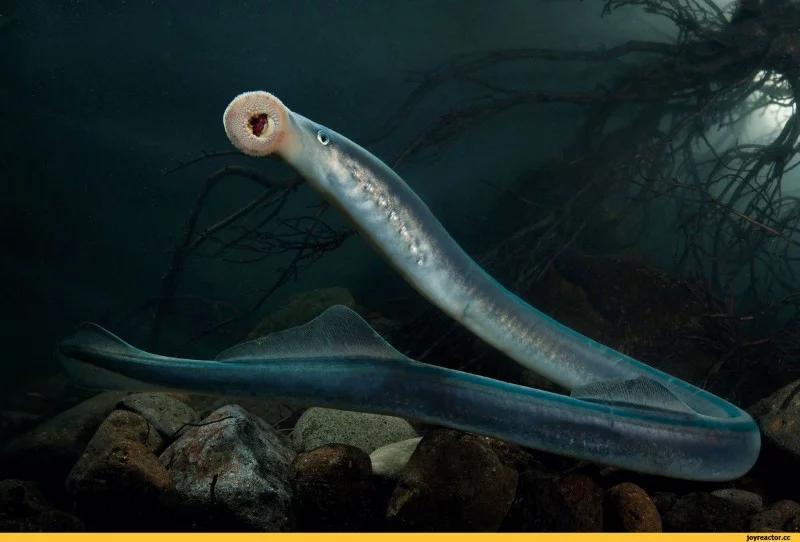
Lampreys live mainly in coastal and fresh waters and are found in most temperate regions. Adults outwardly resemble eels in that they have scaly, elongated bodies and can have a length of 13 to 100 cm
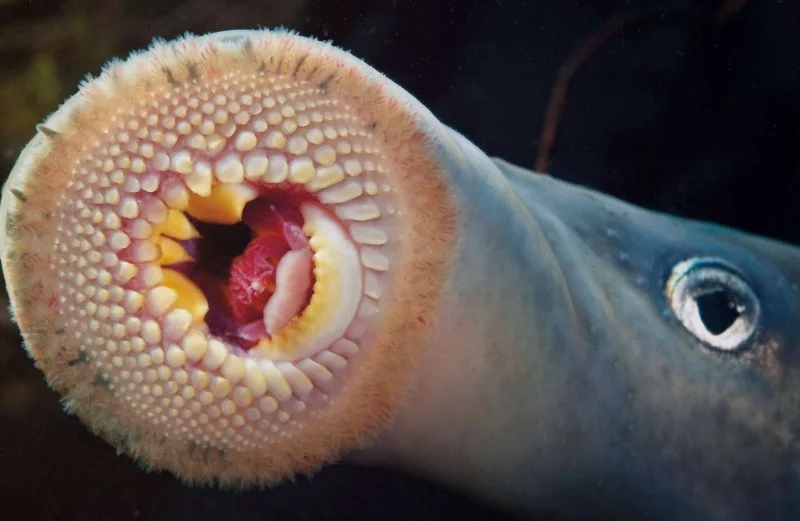
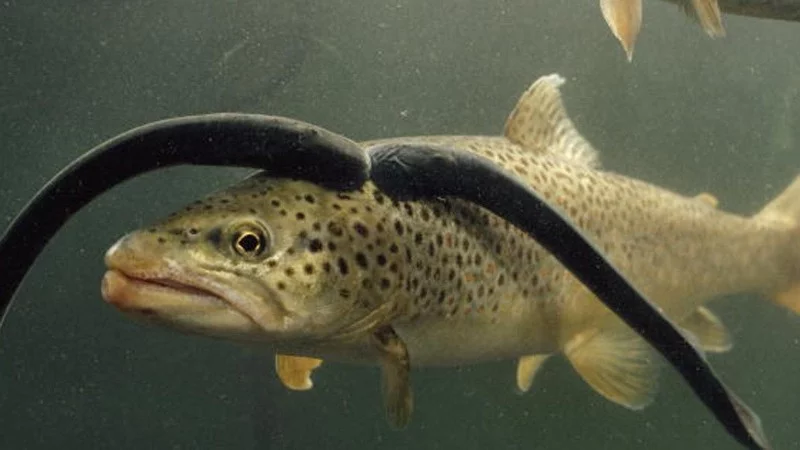
The lamprey's feeding process is very interesting due to the unique structure of its mouth. It lacks a chewing mechanism, and all the lamprey can do is stick to the body, attaching itself with sharp teeth and tongue.First, the lamprey, having chosen a victim, firmly adheres to her body. Then she bites through even the densest skin with sharp teeth and starts drinking blood. Thanks to the special substances in the lamprey's saliva – anticoagulants, the victim's blood does not clot and continues to flow while the lamprey is on the victim's body. The lamprey can eat for several hours, since its oral cavity does not serve for respiratory functions. Together with the blood, the lamprey eats the victim's saliva-softened tissues that enter the area of her mouth. Sometimes lampreys suck so hard that they eat into the very internal organs. The victims, of course, die from such wounds and blood loss.
In this issue, I have accommodated two creatures at once. I hope it was interesting. I want to say a big thank you to @@The Cat Dog@@ for giving me a premium, so I will try to release 6 issues a week. If you want any creature, write in the comments.


Share:
Bestcomments (0)
There are no comments for this post yet. Want to leave the first one?