Scroll to top

Vodniy Jurnal

kolyajivoy

Water magazine No. 19 Anomalocaris

Water magazine No. 19 Anomalocaris

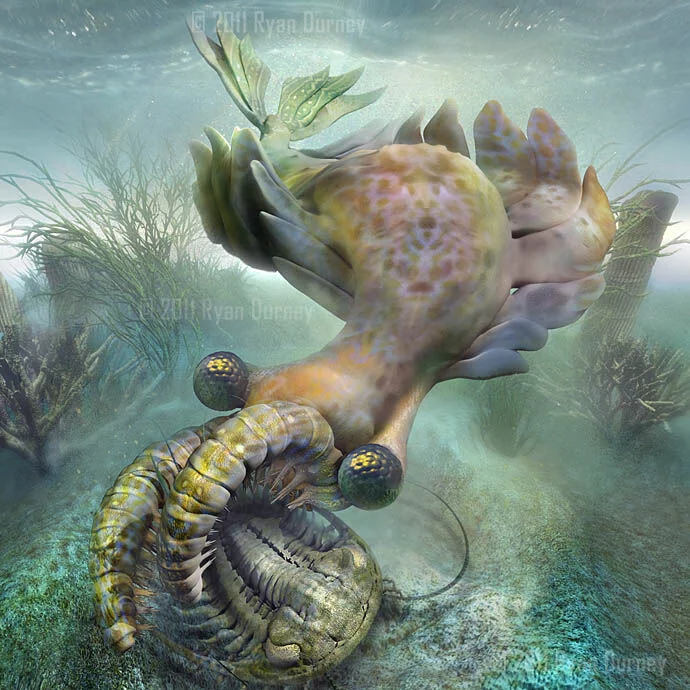
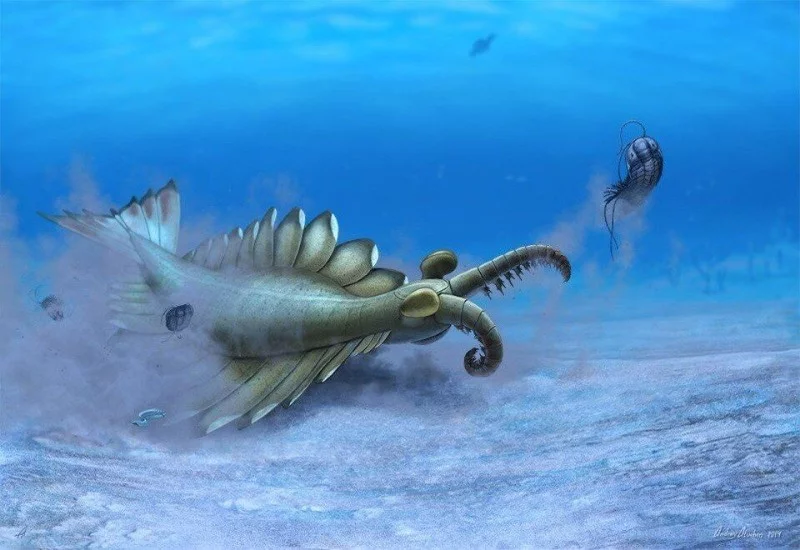
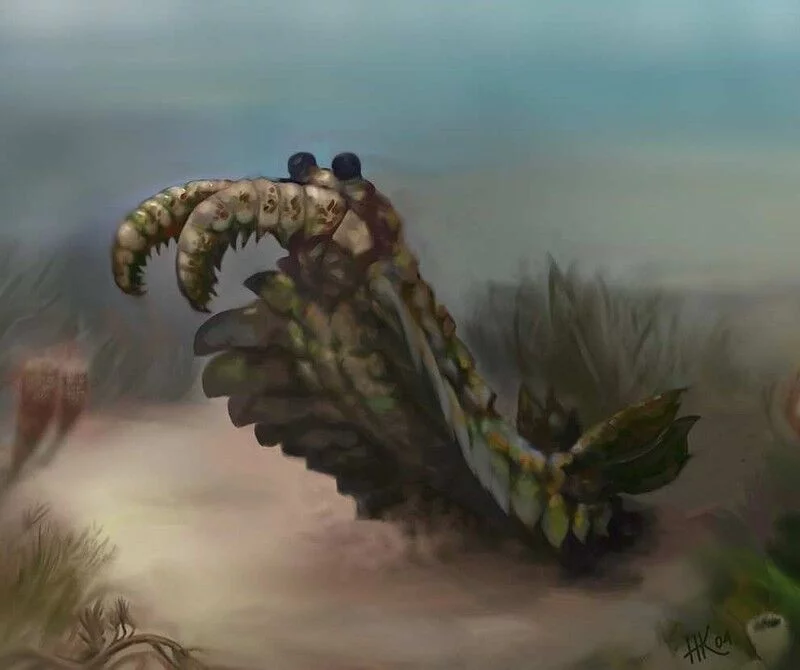
Anomalocaris lived 520-535 million years ago. It is one of the largest predators of the Cambrian, reaching a length of up to 38 cm. Previously, it was believed that it grew up to 1 meter in length, but this estimate seems unlikely due to the ratio of the length of the appendages to the body. On the sides of the body, anomalocaris had blades resembling the parapodia of annelids, with which it actively swam, making undulating movements. The blades were paired: one was located at the top, the other was at the bottom and slightly shifted back, overlapping the nearest blades. This allowed them to act as one big fin. There was a large, fan-shaped tail. Using a controlled model, it was proved that this type of swimming is quite stable, which is why the anomalocaris did not need a developed brain to maintain balance during swimming. The mouth of radiodonts has an unusual structure. Such an oral apparatus is not found in any of the modern and extinct representatives of the arthropod type. The oral cone of anomalocaris was disc-shaped and consisted of several plates. The mouth opening of the anomalocaris resembled a pineapple and had several rows of teeth. The hole could shrink, but there was always a gap of about 5 mm in diameter. In some large individuals, it reached up to a centimeter. In front of the mouth cone was a pair of frontal appendages, reaching a length of up to 18 cm. The frontal appendages of the anomalocaris consisted of 14 podomers, almost each of them carrying a sharp thorn-endite.
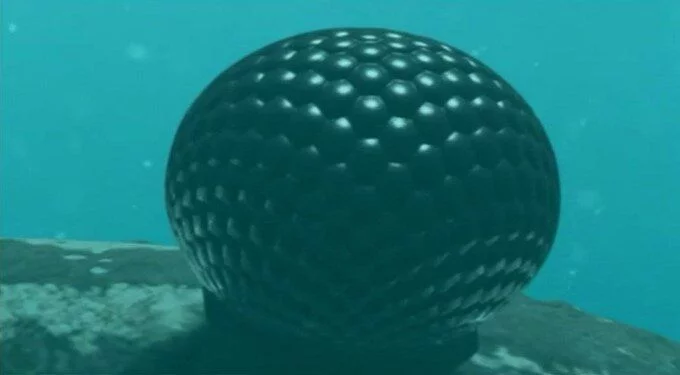
Judging by the findings from the Emu Bay shale, the eyes of anomalocaris A. cf. canadensis were the most powerful among invertebrates. They were 30 times more powerful than the eyes of trilobites, which were previously thought to have the most powerful eyes. Anomalocaris had 16 thousand lenses in the eye, providing a resolution of 3 cm.  
Judging by the findings from the Emu Bay shale, the eyes of anomalocaris A. cf. canadensis were the most powerful among invertebrates. They were 30 times more powerful than the eyes of trilobites, which were previously thought to have the most powerful eyes. Anomalocaris had 16 thousand lenses in the eye, providing a resolution of 3 cm.  

Water magazine No. 19 Anomalocaris

For a long time, it was believed that anomalocaris was one of the oldest predators that hunted trilobites. The structure of the oral cone and the preserved intestinal glands suggest this idea. However, its ability to chew through shells has been questioned.The lack of wear on the oral cones of anomalocaris suggests that they rarely came into contact with the hard shells of trilobites. Rather, they were used to feed soft-bodied organisms by suction, otherwise the cone would have broken. According to one version, anomalocaris grabbed its prey by the back end of the body with its appendages and swung it from side to side. This would cause stress damage in the weak points of the cuticle, which could cause it to rupture, and the predator could gain access to the soft contents of the victim. This hypothesis suggests that in this way anomalocaris exerted evolutionary pressure on trilobites, providing them with the opportunity to collapse in the future.
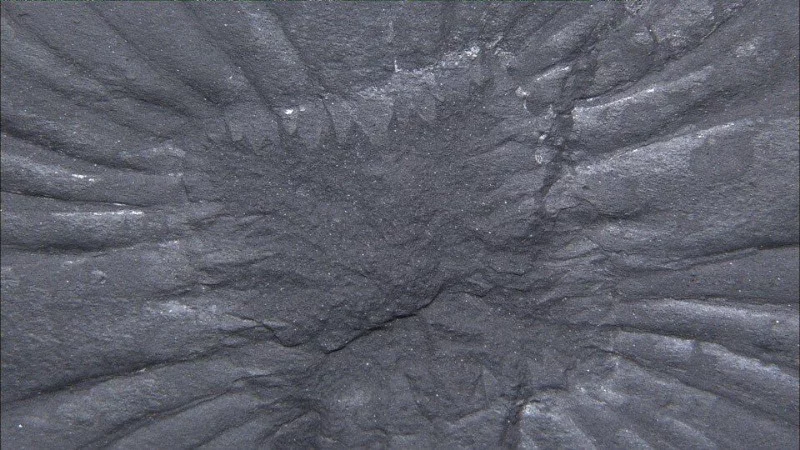
Anomalocaris is part of the large Burgess shale complex, as well as a number of other invertebrate complexes in China and Australia.
Anomalocaris is part of the large Burgess shale complex, as well as a number of other invertebrate complexes in China and Australia.

Water magazine No. 19 Anomalocaris
Tags:Aquatic creaturesKolyajivoy
3
11
14
0comments
12views

Leave a comment

Before commenting, you need to sign in.

Bestcomments (0)

There are no comments for this post yet. Want to leave the first one?

Similar posts

Water magazine No. 27 Wart

It grows up to 35cm. It lives on coral reefs, near muddy algae, in sand, rocks, mud. Due to its mottled-greenish or mottled-brown color, the stone fish easily hides, masking itself in

Water magazine No. 25 Blue angel, Sea Lily.

The blue angel is a species of gastropod mollusks common in the seas of all oceans of the tropical belt. The body length is 5-40 mm. On the sides, perpendicular to the axis of the body, there are three groups of cerata - finger-shaped

Water Magazine No. 23 Mississippian Shell

The Mississippian shellfish is one of the largest freshwater fish: according to experts, its length can reach 3 m with a weight of over 130 kg. The average life span of fish is 40 years. They have a torpedo image

Water magazine No. 22 Ordinary Catfish

Catfish belong to ray–finned fish - the first representatives of this class appeared in the Devonian period, about 390 million years BC. Previously, giant catfish were caught in European rivers for

Water Magazine No. 21 Japanese Spider Crab

The Japanese giant spider crab, although not the heaviest in the underwater world, is however the largest known arthropod. The well-calcined shell is only about 40 cm, but the total length is

Water magazine No. 20 Greenland Shark

The largest individuals can reach 7.3 m and weigh up to 1.5 tons. However, on average, the length of these sharks ranges from 2.44—4.8 m, and the weight does not exceed 400 kg. The head is elongated, the distance from the tip of the snout

Water Magazine No. 18 Green Sea Turtle

The shell of a turtle is characterized by an oval shape, while its length can reach almost 2 meters, although there are mostly individuals with a shell length of no more than 1 meter. You should pay attention to

Water magazine No. 17 Krylatka

  Lionfish is a genus of ray—finned fish belonging to the scorpion family. They are distinguished by elongated feathery fins, bold patterns and extraordinary behavior. Adults reach a length of about 43 cm and a weight of

Water magazine No. 10 Beluga

The gill membranes fused together and formed a free fold under the gill gap. The snout is short, pointed, soft from above and from the sides, devoid of shields. The mouth is large, semi-lunar. Lower

Water magazine No. 8 Whale Shark

The whale shark is the largest shark species currently in existence, as well as the largest of modern fish. Its maximum size reaches at least 12.65 m, possibly more. At the whale a

Water magazine No.5 Fish penis,drop fish, Opisthoproct

Scientifically known as Urechis Caupo, or "fat tavern worm", penis fish is a type of false worm that lives under the soft sediments of the seabed. They can live up to 25 years and grow up to 30

Water magazine No. 3 Som Kandiru, Lamprey

Its thin and skinny, so it is almost transparent. Hungry, kandiru begins to search for a victim — and he is looking for some bigger fish. To find her, even in the murky opaque waters of the Amazon