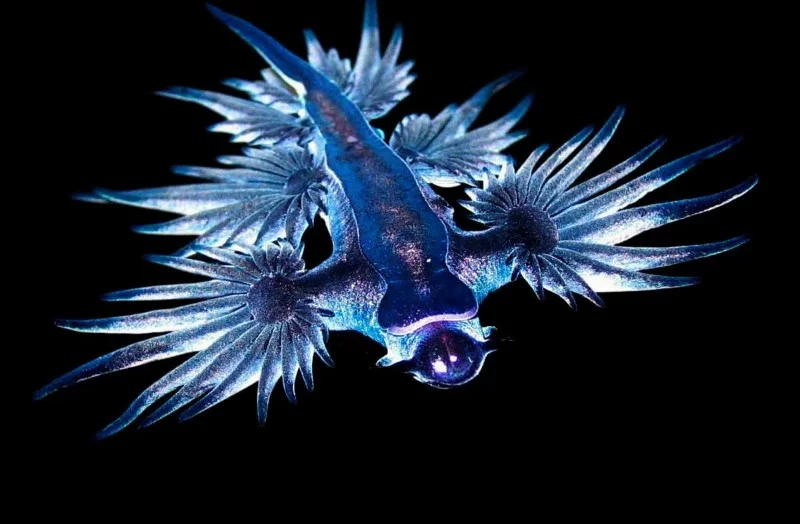
The blue angel is a species of gastropod mollusks common in the seas of all oceans of the tropical belt. The body length is 5-40 mm. On the sides, perpendicular to the axis of the body, there are three groups of cerata - finger-shaped outgrowths, into which branches of the hepatopancreas (digestive gland) enter. The length of the cerata varies significantly in each group, with the longest ones located on the dorsal side. The presence of long outgrowths is considered as one of the mechanisms for increasing buoyancy. The main body tone is silver. The oral tentacles, rhinophores and the lower surface of the cerata are painted in an intense blue color. The dorsal side of different mollusks varies from dark blue to brown. The leg is framed by a blue stripe along the edge. The angel attacks the jellyfish, takes the poison from them and eats them. The sea dragon does not crawl away from the found jellyfish, because it serves as a home and even an incubator! The mollusk attaches its eggs directly to the half-eaten jellyfish. Blue dragons are hermaphrodites, but they cannot self-fertilize.
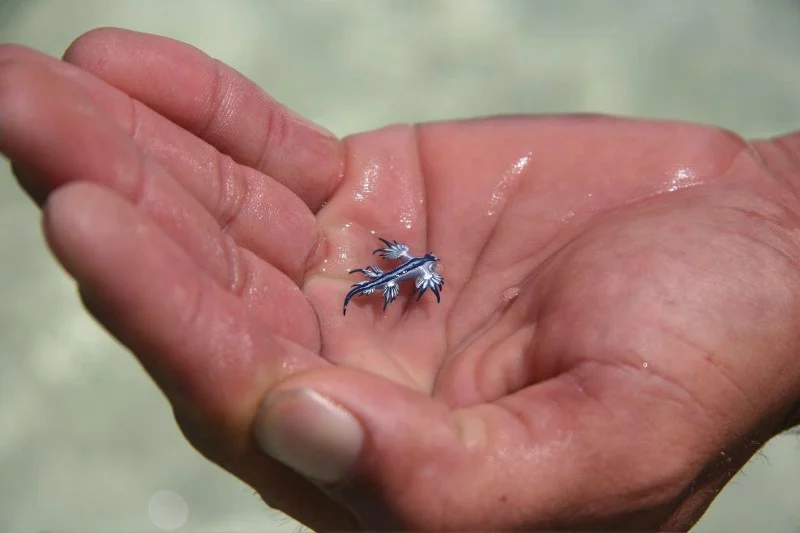
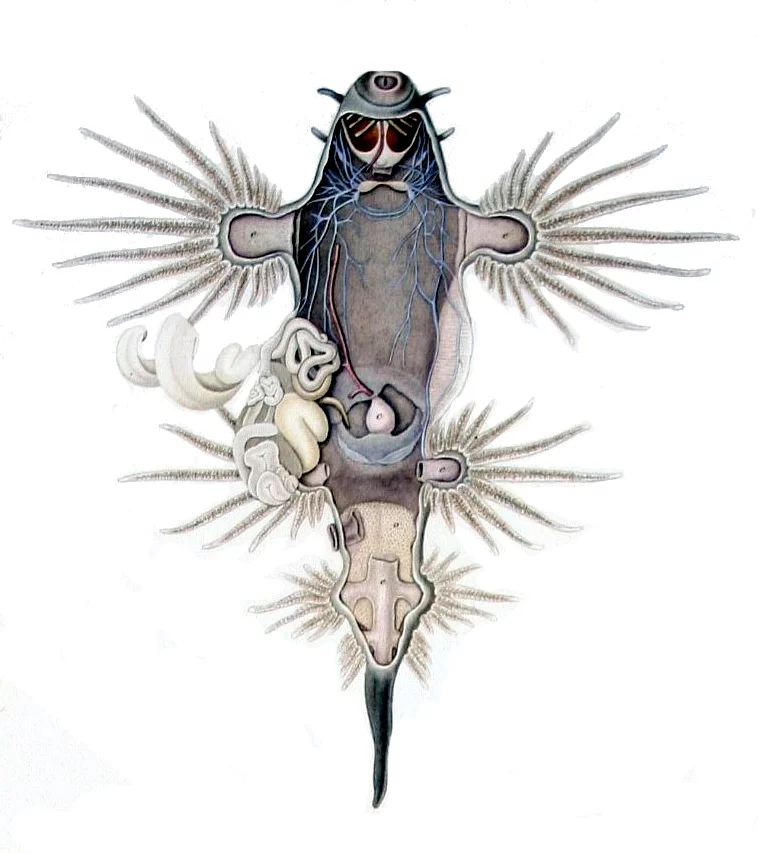
An uncovered clam.
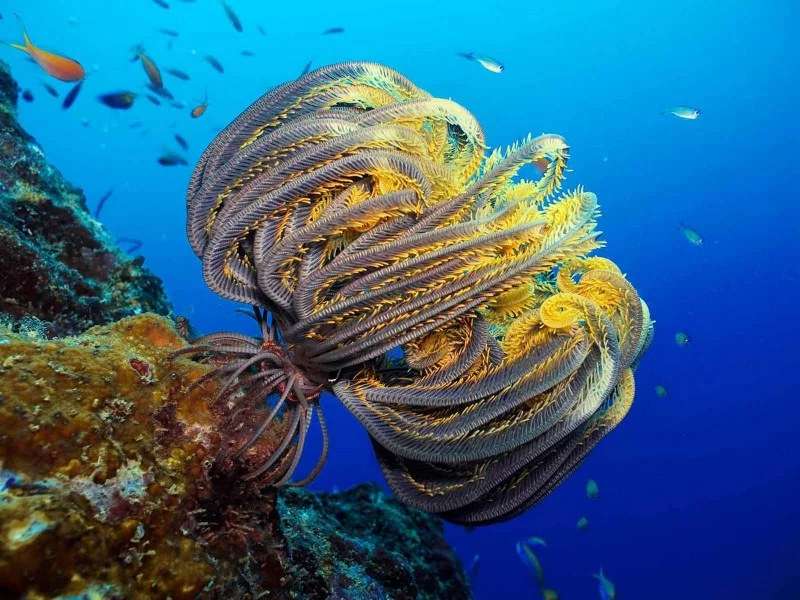
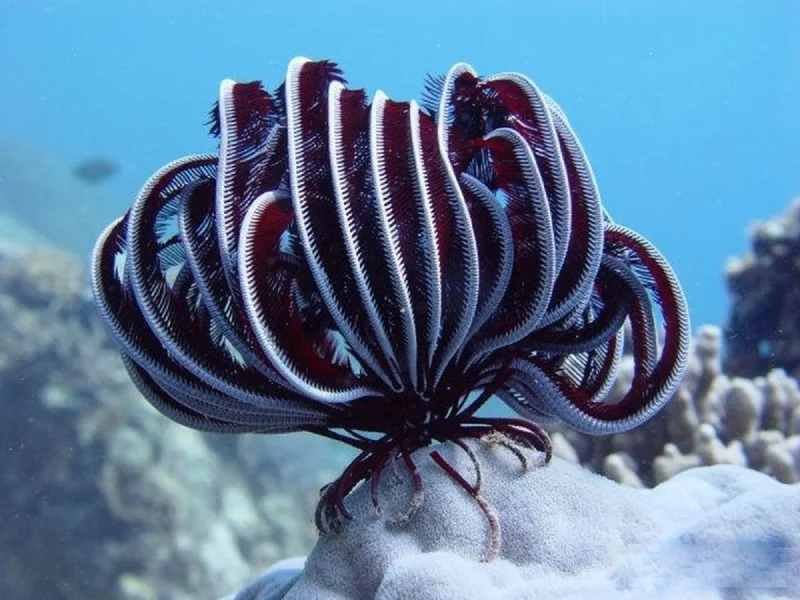
Sea lilies are one of the classes of echinoderms. Bottom animals with a body in the form of a cup, in the center of which there is a mouth, and a corolla of branching rays (arms) goes up. An attachment stalk up to 1 m long extends down from the calyx of stalked sea lilies, growing to the ground and bearing lateral appendages. Sea lilies are the only echinoderms that have preserved the body orientation characteristic of the ancestors of echinoderms: their mouth is turned up, and the dorsal side is turned to the ground surface. As with all echinoderms, the body structure of sea lilies is subject to five-ray radial symmetry. The expanded corolla of the sea lily forms a net for trapping plankton and detritus. Hands on your inner (oral) the sides have mucosal-ciliary ambulacral grooves leading to the mouth; along them, food particles captured from the water are transferred to the mouth opening. Stalked sea lilies lead a sedentary lifestyle and are found at depths from 200 to 9700 m. Stemless, they are most diverse in the shallow waters of tropical seas, often brightly and variegately colored. Approximately 65 % of the stemless sea lilies live at a depth of less than 200 m. In the tropical part In the Pacific Ocean, up to 50 of their species can live on one reef. Stemless lilies are able to detach from the substrate, move along the bottom and float due to the movement of the hands. All sea lilies are passive filters that filter out a nutrient suspension from the water: protozoa (diatoms, foraminifera), invertebrate larvae, small crustaceans and detritus.


Share:
Bestcomments (0)
There are no comments for this post yet. Want to leave the first one?