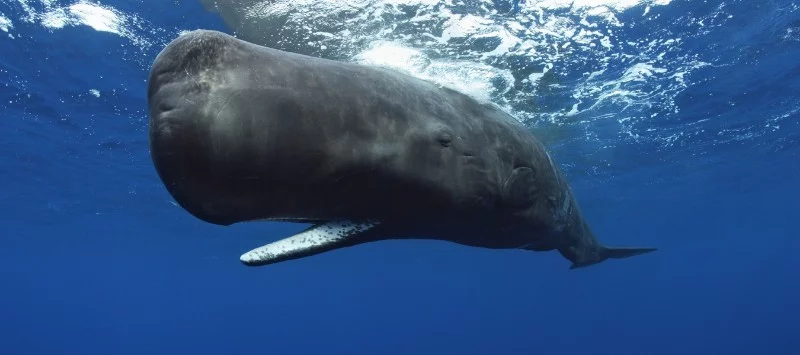
The huge head makes up to a third of the total length of the body, has the appearance of a rectangle. The lower jaw is set with large teeth, of which there are usually 20 pairs, but there are also 8 pairs, there are only 1-3 pairs of teeth on the upper jaw, and often there are none at all. Each tooth weighs about one kilogram. The lower jaw can open vertically downwards, at 90 degrees. The mouth cavity is lined with rough epithelium, which prevents the prey from slipping out. The sperm whale's body expands and becomes thick in the middle, almost round in cross section. Then it narrows again and gradually turns into a caudal stem. The caudal fin of a sperm whale is up to 5 m wide. The sperm whale's skin is wrinkled and folded, and usually has a dark gray tint. Sperm whales grow all their lives, so the older the whale, the larger it is, as a rule; at the same time, males are almost twice as large as females. Males are 18-20 m long and weigh from 40 to 70 tons. The vocal signals of the sperm whale are generally similar to those of other whales. These are three types of sounds — moaning sounds, clicks and a quick crackle, similar to the sound of a mechanical typewriter, and creaking.
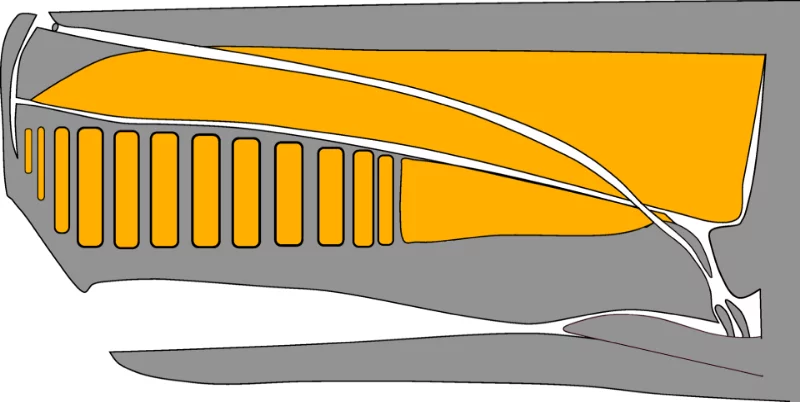
Most of the volume of the head is occupied by a spermaceti sac located above the upper jaw, a spongy mass of fibrous tissue impregnated with spermaceti (a complex composition of adipose tissue). It is believed that this substance and the organ in which it is stored perform a number of tasks at once. The bag helps sperm whales make full use of echolocation by amplifying ultrasonic waves, liquid fat provides the necessary level of buoyancy, which helps whales dive to gigantic depths and surface from them. It is known that male sperm whales collide with each other at a speed of 17 km / h, trying to demonstrate dominance, in such cases the main impact falls on the reservoir with fat. There were cases when whalers themselves became victims of sperm whales, as the latter rammed and sank ships.

The sperm whale has one of the largest ranges in the entire animal world. It is common throughout The world Ocean, except for the northernmost and southernmost cold regions. Sperm whales are more common in warm waters than in cold ones.
Sperm whales are gregarious animals. During migrations, the whale's speed rarely exceeds 10 km/h, and the maximum whale speed is 37 km/h. When feeding, sperm whales can act in well-organized groups of 10-15 individuals, collectively herding prey into dense groups. At the same time, the whales show a high level of interaction. Collective hunting took place at depths up to 1,500 m. Sperm whales often live to be 60 years old. The sperm whale's unique ability to dive extremely deep is known. He dives deeper than any other air-breathing animal. Some sources indicate the possible ability of the sperm whale to dive up to 3000 m. The whale's body is well adapted for such dives due to a number of anatomical features. The enormous pressure of water at depth does not harm the whale, since its body is largely made up of fat and other liquids that are very little compressible by pressure. The lungs of a whale are half as large relative to the body volume as those of land animals, so the sperm whale's body does not accumulate excess nitrogen, which happens in all other living creatures when diving to great depths. Caisson disease, which occurs when nitrogen bubbles enter the blood during ascent, never happens in a sperm whale, since the sperm whale's blood plasma has an increased ability to dissolve nitrogen, preventing this gas from forming microbubbles. The whale stores 41% oxygen in its muscles, while only 9% is stored in its lungs. In addition, the sperm whale's metabolism changes very significantly during deep dives. The pulse drops to 10 beats per minute, and the blood flow is greatly redistributed. The sperm whale actively uses high-frequency and ultrasonic echolocation to detect prey and orient itself. The latter is especially important for him, since this whale plunges to a depth where there is no lighting at all. Sperm whales are polygamous; during the breeding season, males form harems — 10-15 females stay near one male. Sperm whales can give birth at any time of the year.Pregnancy lasts from 15 months to 18 months and sometimes more. The cub is born alone, 3-4 m long and weighing about a ton
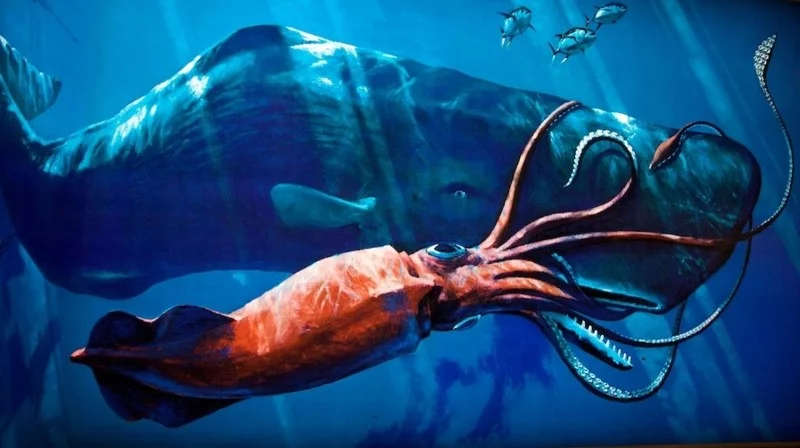
One of the most interesting features in the sperm whale's diet is its eating of giant cephalopods, which it encounters at great depths. Huge squids occupy an important place in the diet of the sperm whale; in any case, it is the sperm whale that is the main natural enemy of giant cephalopods[66]. This applies, in particular, to the largest squid of the genus Architeuthis, whose length can be more than 10 m. Squid suckers leave round marks with a diameter of up to 20 cm on the skin of a sperm whale, at the same time, even the largest squid known to science, at the same time, even the largest squid known to science (even those whose length, together with tentacles, reached 10 meters), the diameter of the suckers did not exceed 5 cm. Most likely, the squid left sucker prints when the sperm whale had not yet reached the full size of an adult whale, and then, when the sperm whale grew up, the scars from the suckers stretched to 15-20 centimeters in diameter
The sperm whale, like all toothed whales, is a predator. The basis of its diet consists of two groups of animals — cephalopods and fish, and cephalopods absolutely predominate.Cephalopods make up about 95% of the total (by weight) the food consumed by sperm whales and fish is less than 5%. An adult sperm whale needs to eat about a ton of cephalopods per day for normal nutrition. The sperm whale catches its prey at a depth of at least 300-400 m, where it has almost no food competitors, with the possible exception of some beaked whales
There are different estimates of the current number of sperm whales in the world's oceans. Most often, estimates converge on the figures of 300-450 thousand. According to estimates provided by the International Union for Conservation of Nature, in 2003, sperm whales on Earth were from 30 to 50% of the number that lived in 1922. The recovery in the number of sperm whales has been observed since the 1980s, when their fishing was finally stopped, but it is extremely slow. Cubs and even adult female sperm whales can be attacked by killer whales — researchers have recorded cases when killer whales inflicted severe wounds on adult females or even tore them apart. Some scientists doubt the ability of killer whales to overcome adult sperm whales (even a herd of females with cubs, acting together, can drive away killer whales). Nevertheless, special studies conducted in 1999 led to the conclusion that attacks with fatal outcomes for sperm whales still happen — for example, a study of the fresh skeleton of a 9.8-meter female sperm whale showed that the whale was torn apart by killer whales. But in general, according to general estimates, the threat to sperm whales from killer whales is very small. Among the causes of natural mortality of these whales are myocardial infarction, stomach ulcer, and bone necrosis, which can occur from the penetration of microscopic nitrogen bubbles during decompression during the whale's ascent from the depths. The sperm whale, like other large whales, grows quite heavily with various crustaceans, which, however, do not cause any damage to the whale's body. This whale is susceptible to infestations of endoparasites, of which the most notable is a giant roundworm (up to 8.5 m long) living in the placenta of females. Marine pollution is an important factor affecting the number of sperm whales in a number of areas of the world Ocean. The catastrophic oil leak in the Gulf of Mexico in the summer of 2010, according to some non-governmental environmental organizations, had a serious negative impact on the local sperm whale population. Sometimes sperm whales are killed or seriously injured in collisions with ships. The death of sperm whales in fishing nets is very rare, but still such cases are recorded. This factor plays the greatest role in The Mediterranean Sea. There have been cases when sperm whales caused damage to fish catches by devouring large fish that had already been hooked during industrial fishing. This behavior of sperm whales has been recorded in Alaska. Fishermen who lost up to 20% of their catch due to the fault of sperm whales even turned to scientists for help
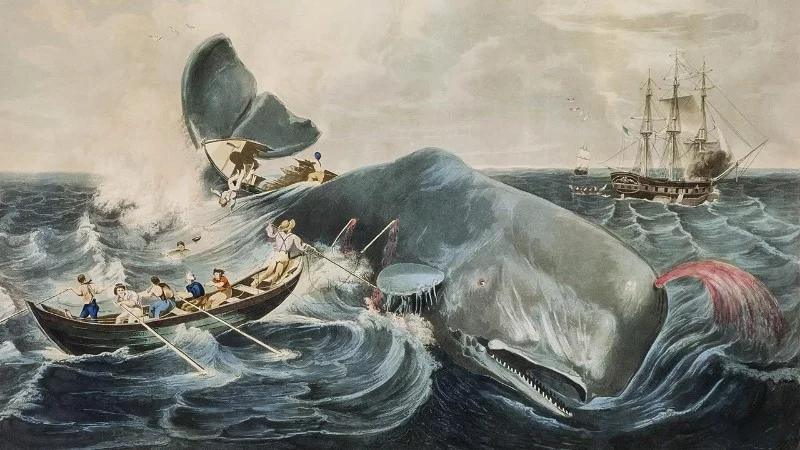
For centuries (until the middle of the XX century), the sperm whale was the most important object of whaling before its prohibition. Until 1948, about 5,000 animals were harvested annually. After that, production volumes increased sharply to 20 thousand heads per year, mainly in the North Pacific and in the Southern Hemisphere. Sperm whale production was severely restricted in the second half of the 1960s, and in 1985, sperm whales, along with other whales, were completely taken under protection. Sperm whale mining in the XVIII—XIX centuries was especially developed in the USA. Its center was Nantucket, which at one time was probably the largest whaling port in the world - up to 150 whaling schooners were assigned to it. With such intensive fishing, male sperm whales were knocked out very badly, which negatively affected not only the livestock, but also the average size of these whales — the average length and weight of sperm whales became noticeably smaller due to the destruction of the largest specimens. The main product of the sperm whale fishery at all times was fat, 12-13 tons were obtained from one sperm whale. Amber is a solid wax—like substance of gray color, formed in the digestive tract of sperm whales, having a complex layered structure. Amber has been used since ancient times and until the middle of the XX century as an incense and as a valuable raw material in the manufacture of perfumes. Spermaceti, it was used to make ointments, lipsticks, etc.; candles were often made. Sperm whale teeth in Europe and North America at the time of intensive whale mining served as a very expensive ornamental material, valued on a par with mammoth tusk and walrus tusk. Sperm whale meat, like the meat of other toothed whales, has a strong, not very pleasant smell compared to the meat of baleen whales, therefore it was extremely rarely eaten by humans. Whaling before its mechanization was associated with increased risk, largely due to the fact that wounded sperm whales, becoming enraged, attacked boats with whalers, and often the whaling ships themselves. The strength of a sperm whale, even a wounded one, was usually enough to smash a boat with a single blow of the head or tail in a retaliatory attack. Thus, sperm whales account for many lives of whaling sailors. Therefore, the extraction of sperm whales was considered a particularly difficult and dangerous occupation among whalers. An incident became widely known when, in 1820, an enraged sperm whale twice headbutted the American 230-ton whaling ship Essex and sank it. At the time of the sinking, the ship was thousands of kilometers from the shore. The crew of the Essex managed to escape and land on a desert island, but people suffered incredible hardships (including cannibalism against comrades who died of hunger or thirst in boats), as a result, only 8 out of 21 sailors survived. The sperm whale is the only whale whose throat theoretically allows you to swallow a person whole without chewing (and, generally speaking, the only animal capable of doing this). However, despite the high number of deaths when hunting sperm whales, these whales seem to have exceptionally rarely swallowed people who got into the water. The only relatively reliable case occurred in 1891. A sperm whale crashed a dinghy from a British whaling schooner, harpooner James Bartley, went missing and was presumed dead. The sperm whale that sank the dinghy was killed a few hours later. By morning, the whalers, having reached the inside of the whale, found James Bartley, who was unconscious, in his stomach. Bartley survived, although not without health consequences. Bartley had to leave whaling, but he was able to earn good money by showing himself at fairs as a man who had been in the belly of a whale.Despite the fact that the incident with James Bartley is usually considered authentic, it remains unclear how a person could survive after spending fifteen hours in the stomach of a whale — without access to air and in an acidic environment. It is possible that the side of the whale and its stomach were pierced by a harpoon and air entered the stomach through this wound. Some sources reasonably doubt the truth of this incident with reference to another case when a sperm whale in 1893 also swallowed a whaler, but the swallowed sailor died immediately from injuries and suffocation, and his body was severely corroded by acidic gastric juice.
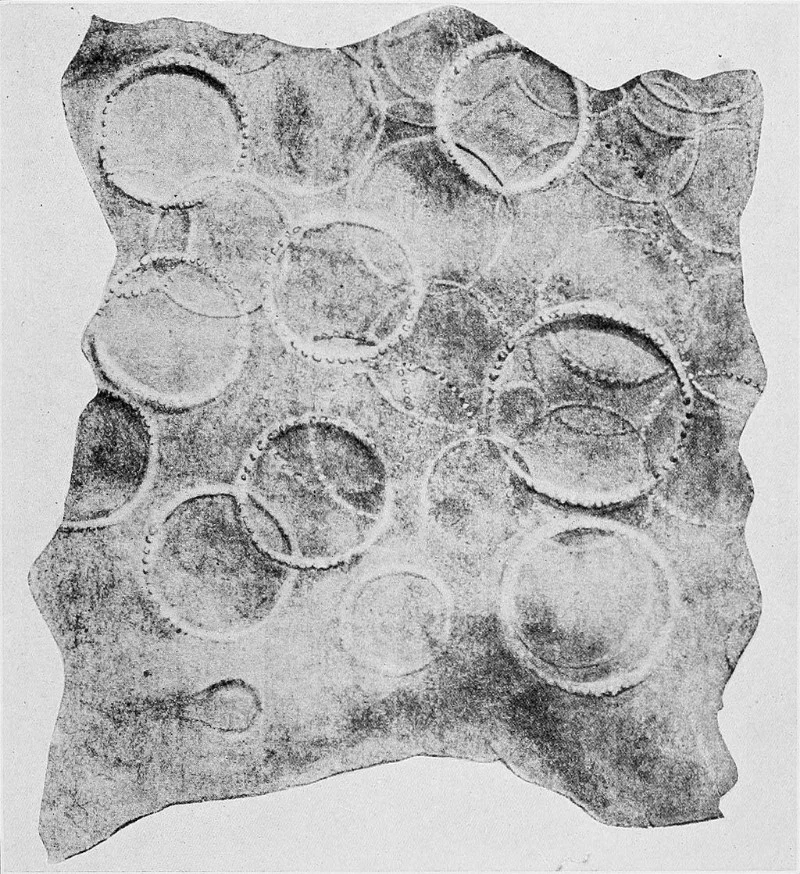
A piece of sperm whale skin covered with traces of giant squid suckers
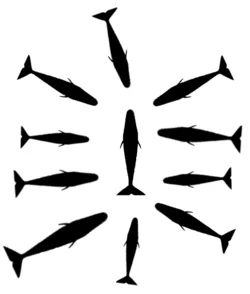
A way to protect cubs by adult sperm whales
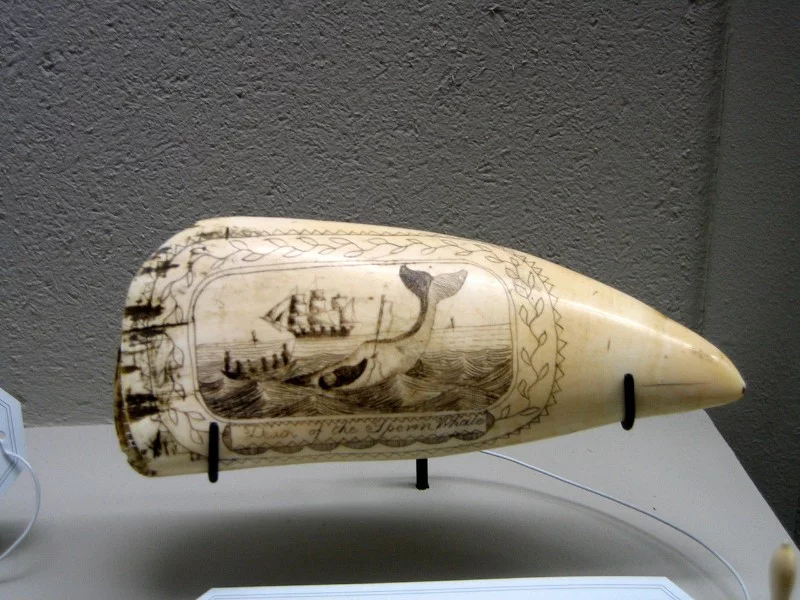
A sperm whale tooth with a carved image
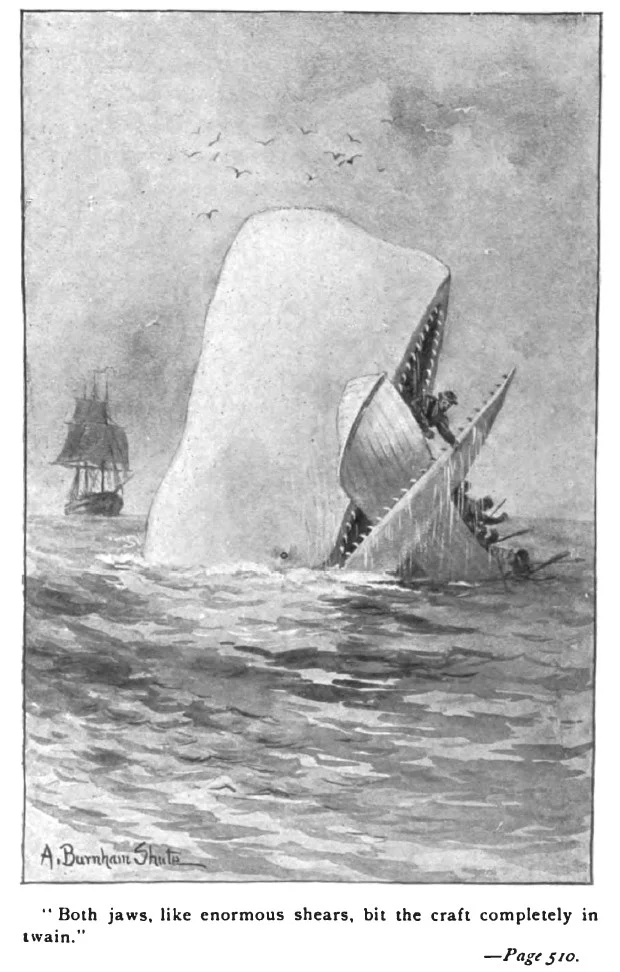
Illustration for Herman Melville's novel "Moby Dick" published in 1892
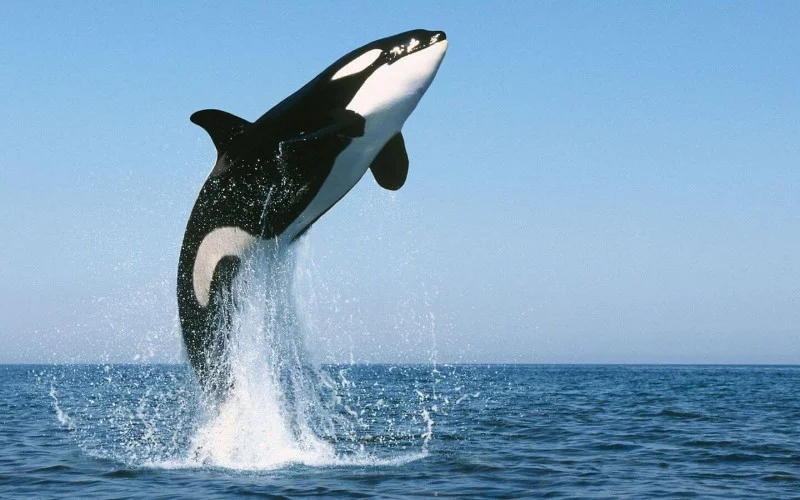
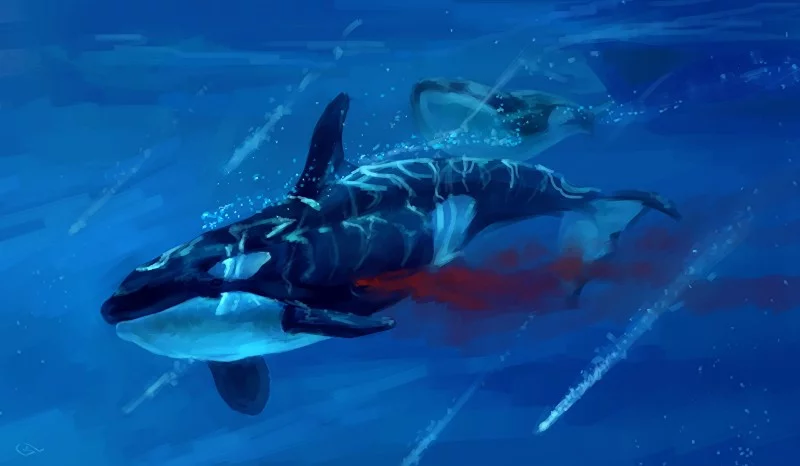
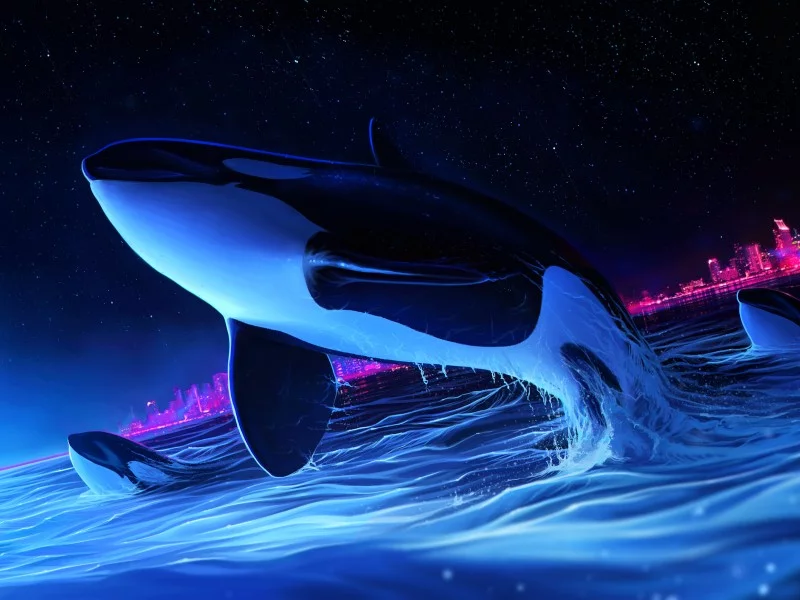
Killer whales are the largest carnivorous dolphins; they differ from other dolphins in their contrasting black and white color. Male killer whales reach a length of 10 m and have a mass of up to 8 tons, females — up to 8.7 m in length. They have massive teeth, up to 13 cm long, adapted to tearing large prey. The color of the killer whale's body is so contrasting that it seems as if its body has been opened with varnish. The location of black and white spots on the body is never repeated, as well as their size and shape. At the same time, we can safely say that the throat area of killer whales is always white, as is the belly area, along which a white longitudinal stripe of arbitrary shape runs. The average life expectancy of killer whales is 50-60 years, but in good conditions they can live much longer.Killer whales can easily dive to a depth of 300 meters, but they can stay underwater for no more than 4 minutes.
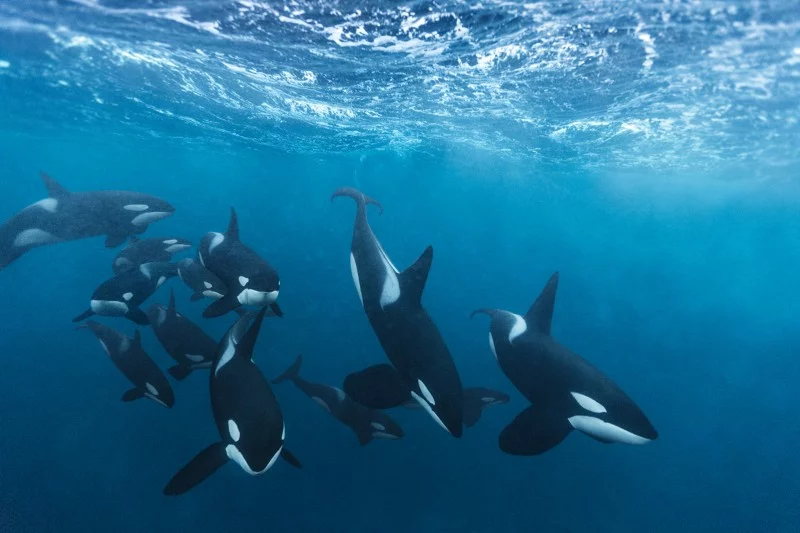
The killer whale is widespread almost everywhere The world Ocean, occurring both near the coast and in open waters, but adheres mainly to the 800 km coastal strip. It is less common in the tropics than in cold and temperate waters. There are no exact data on the total number. The minimum total number is estimated at 50 thousand killer whales
As a rule, killer whales prefer to lead a gregarious lifestyle, forming groups of up to 20 individuals. If the group becomes more numerous, then it is divided into two or more groups. Each group has its own unique set of sounds. Killer whales have a complex social organization, which is inferior in complexity of internal and external social relations only to the social structures of elephants and higher primates. It is based on a matriarchal group (family), usually consisting of a female with cubs of different ages and adult sons.
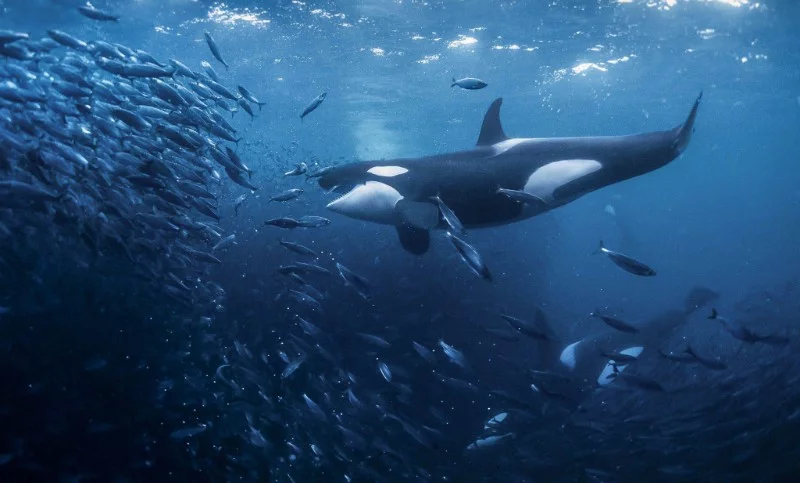
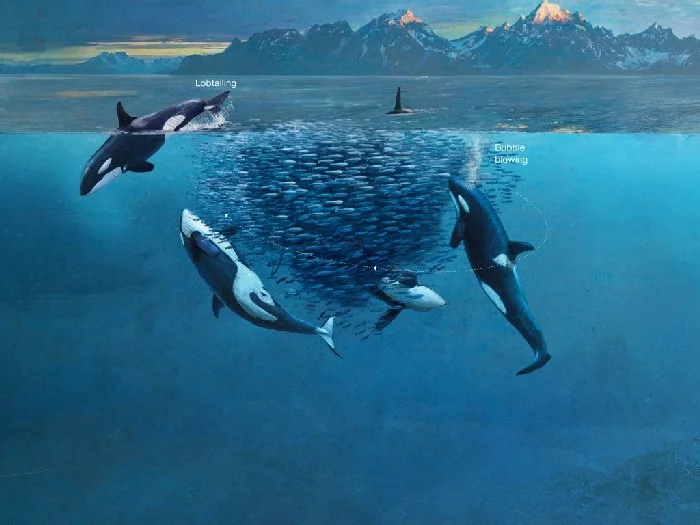
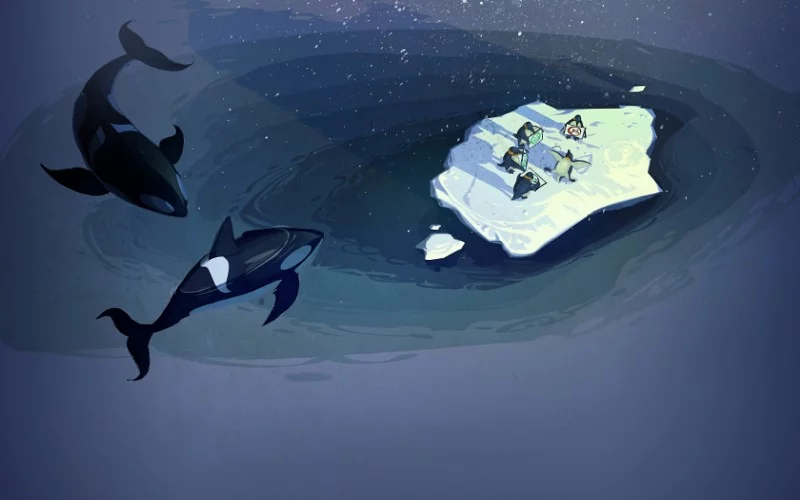
The killer whale is the top of the food chain in marine wildlife, which has virtually no rivals. Nevertheless, killer whales, as very highly developed marine mammals, have complex tactical and even strategic schemes in use, which are used by flocks for food production. In search of fish, flocks of killer whales usually turn around in a chain and swim at a speed of about 5 km/h. At the same time, echolocation signals allow each animal to determine its position relative to others, stay in contact with them and participate in the general activities of the group. Orcas pin a school of fish to the shore or drive it into a dense ball near the surface of the water, take turns diving into its middle and jamming the fish with tail blows. When hunting seals or penguins swimming on an ice floe, killer whales either dive under the ice floe and hit it, or, lining up in a line, with synchronous movements of powerful tail fins, create a directional high wave that washes prey into the sea. To instill in the cub the ability to easily manage prey on the shore, the mother forcibly pushes the cub into shallow water or even onto land, and watches it from the water if the cub is unable to cope with panic and return to the water on its own. The attack on large whales involves mainly males. They simultaneously pounce on the victim, bite her throat and fins, trying to prevent her from rising to the surface. But when attacking female sperm whales, on the contrary, they try to prevent the victim from going deep (killer whales avoid male sperm whales because their strength is great, and their jaws are capable of inflicting a fatal wound). In addition to whales, killer whales hunt white sharks, which on the one hand are seen as a food competitor, on the other hand they highly appreciate shark liver for the nutritional enzymes contained in it. A female killer whale, using hunting techniques, is able to cope alone with a great white shark, which is not much smaller than herself.
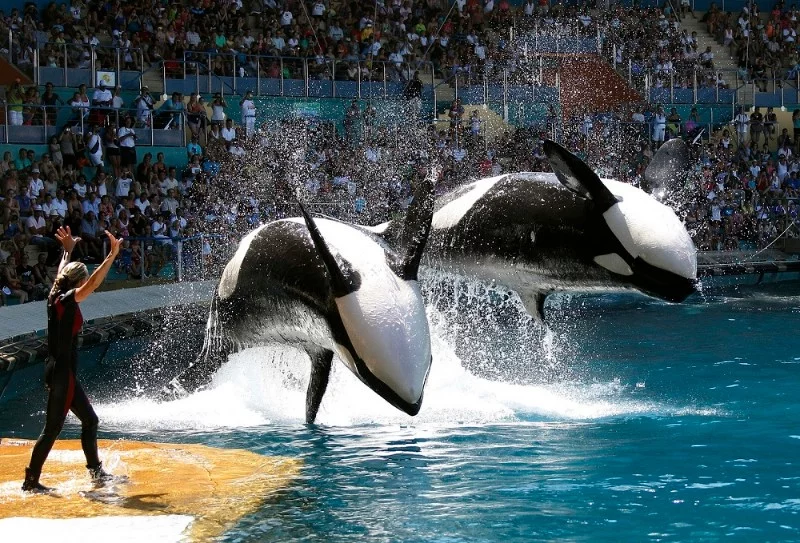
Their commercial extraction was banned in 1982. However, it does not apply to the whaling of indigenous peoples, and to the capture of killer whales for scientific and educational purposes. There are no reliable cases of human death as a result of an attack by a killer whale in the wild, which indicates that they are uninterested in humans as food. Contrary to the idea of killer whales as large and friendly dolphins, they periodically show aggression in captivity. There are individual cases of death of trainers from an attack by killer whales. The killer whales did not attempt to eat the victim whole, bite off a limb from it, chew the victim's torso with their powerful jaws, and the cases of killing people by them can be described as carried out in the least brutal and traumatic way for the dead. This indicates that killer whales are animals with a highly developed psyche, and the reasons for aggression on their part are not limited to a banal search for food, protection of territory and other primitive reasons for attack. Members of packs affected by whaling harbor resentment and can subsequently take it out on boats of equivalent size to the small-tonnage whaling vessels they remember. The experience of studying recorded cases of attacks by foreign researchers indicates that killer whales can attack watercraft, even if they are larger than themselves. At the same time, whalers themselves are not associated in their perception with the ships on which they sail, which suggests that killer whales perceive ships as an independent entity, and not a man-made means of people, and they choose ships, not people, as the object of their revenge. Due to their large size, killer whales are far from the most popular animals in aquariums, today there are about 58 killer whales in captivity around the world. Some of them were born in the wild, others knew nothing but the pool. For many years, discussions have been raging about how humane it is to continue to keep dolphins and killer whales in water parks, but this issue is still very far from being resolved.
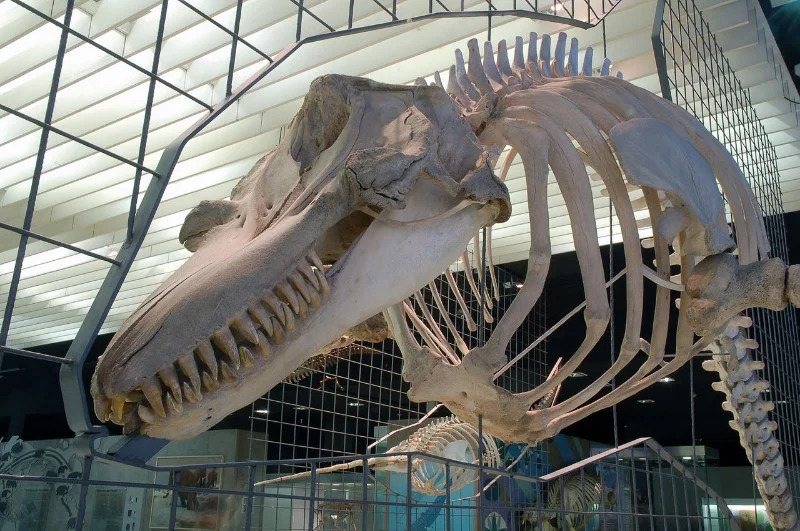
The skeleton of a killer whale
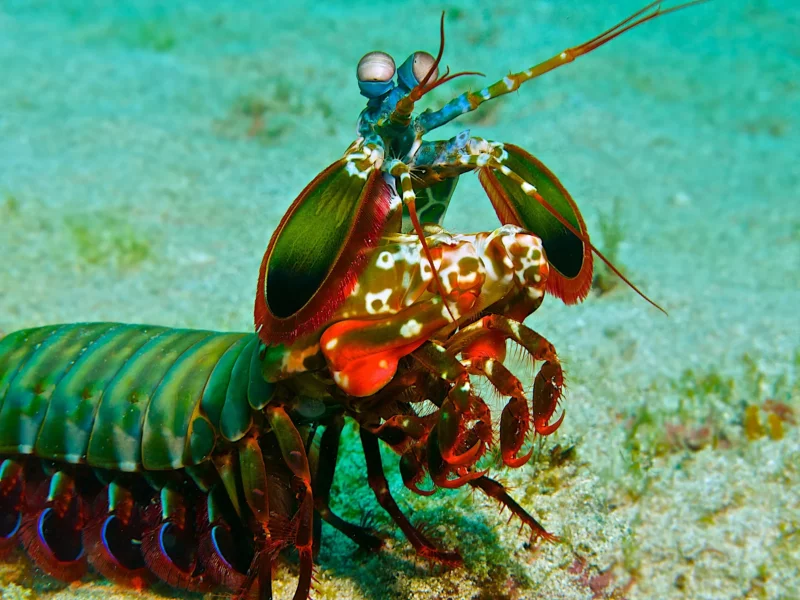
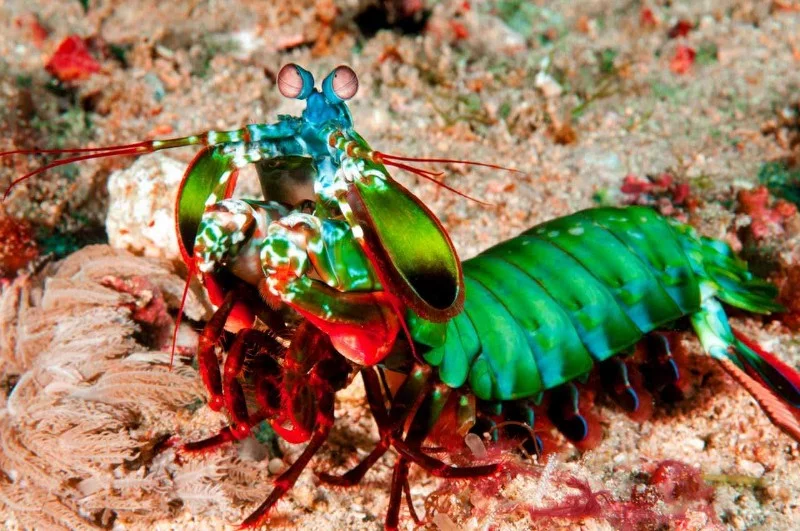
The Peacock mantis has a body size from 10 to 35 cm. The grasping legs have an unusual feature: in them the last segment is sharp, serrated, like a blade and is inserted into the longitudinal furrow of the penultimate segment, like a penknife. The first pair of grasping legs is the largest, they grab the prey, and the rest of the grasping legs hold it. It lives in tropical and subtropical seas at depths from 5 to 10 m (occasionally up to 20 m).They lead a predatory lifestyle. Rotopods spend most of their time in burrows. Climbing out, they crawl along the surface of the ground with the help of their hind pectoral legs, as well as dexterous mandibles, which bend at the same time and on which the cancer relies like crutches. Crayfish can swim quite fast.
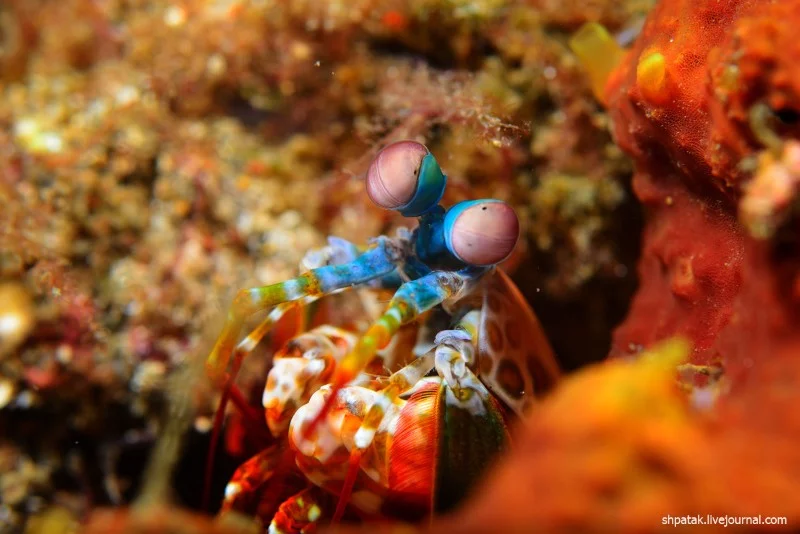
Among the currently existing animals, mantis crabs have the most complex visual system. If humans have three types of color-sensitive cones in their eyes, then mantis crabs have 16 of them. Moreover, mantis crabs can adjust the sensitivity of their long-wave vision to adapt to the environment. The middle band of the eye consists of six rows of specialized ommatidiums — sockets of photosensitive cells. The four rows contain up to 16 different pigments: 12 of them are color-sensitive, and the rest are used as color filters.
The force of the impact of his claws is comparable to the impact of a .22 caliber bullet! Mantis hits with such power that it literally tears up the water on impact. At the point where the claws click, a so-called cavitation bubble is formed: an area filled with red-hot steam and gas released from the burst water. This bubble bursts instantly, after which a powerful shock wave is formed, which by itself can kill the victim. During the impact, the claw moves underwater at a speed of 72 kilometers per hour, so the hunting throw of mantis crayfish is officially recognized as the fastest among all animals. The secret of such speed and tremendous strength lies in the special structure of the hunting paws of mantis crayfish. These animals use the so-called "latch mechanism": their paws contain a large muscle that contracts for a very long time, and a latch that restrains this very muscle. And at the moment of impact, the latch opens, and the muscle spreads with great speed — it turns out something like a shot from a bow or a crossbow. The secret of their strength lies in the content of the mineral hydroxyapatite, which dampens the force of impact. This mineral is also found in the human body: in teeth and bones.
In my blog, I will talk about aquatic life. The first one on my blog will be one of my favorite creatures, the huge Manta Rays
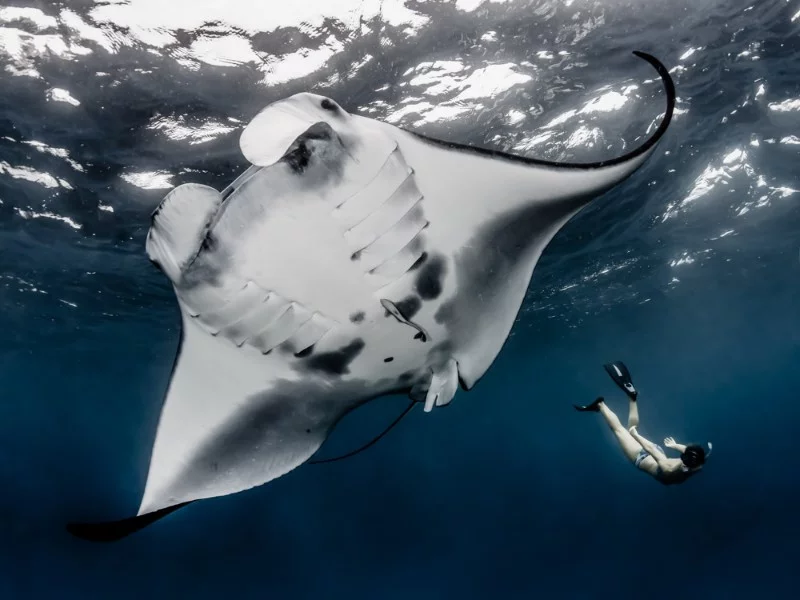
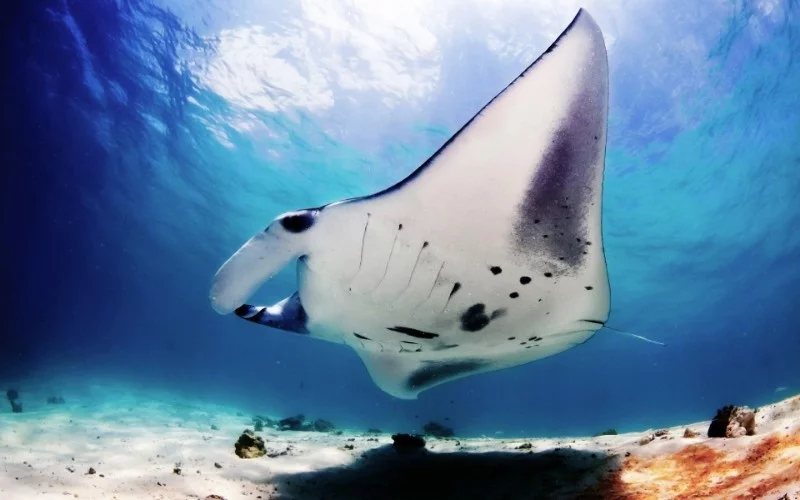
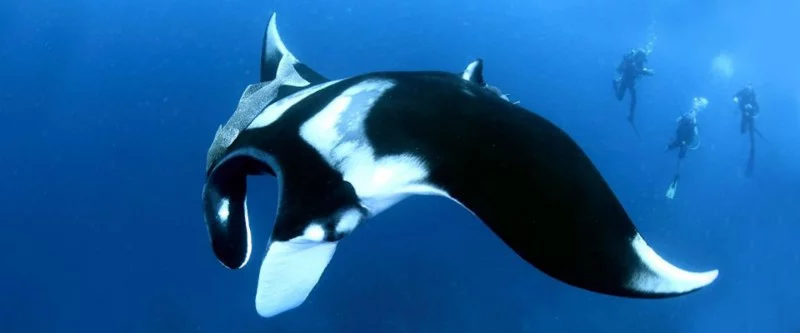
The most common are the so-called medium-sized individuals, whose fin span reaches 4.5 m, and weight is about 1.5-2 tons, some individuals reached 9 m and weighed 3 tons, he is the largest known stingray. They are able to swim at speeds up to 30 km/h. Many of them are also called "Sea Devils" because of the pectoral fins near the face.
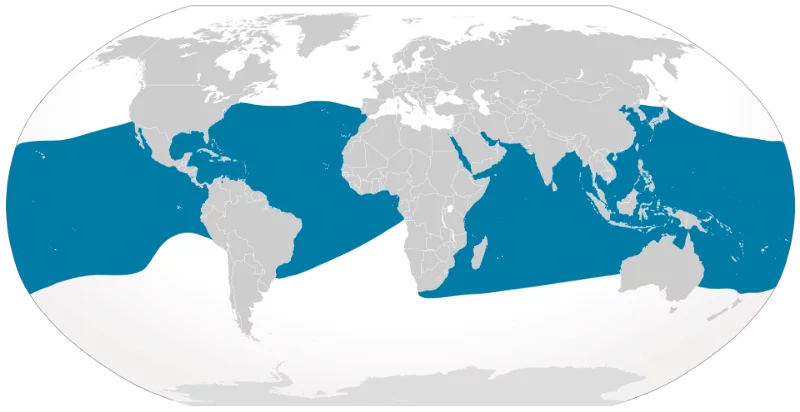
Manta rays are widely but fragmentally distributed in the tropical, subtropical and temperate waters of the Pacific, Atlantic and Indian Oceans. During feeding, breeding and cleaning of parasites, stingrays often form flocks, although not as numerous, less than 30 individuals. They are hardy, make long and long journeys up to 1100 km. They dive to a depth of 1 km. They stick to the shores for a couple of autumn months and in spring, and go into the sea in winter. During the day they are on the surface, at night they sink into the water column. These rays have practically no natural opponents in nature due to their large size. Only carnivorous large sharks and killer whales dare to attack them.
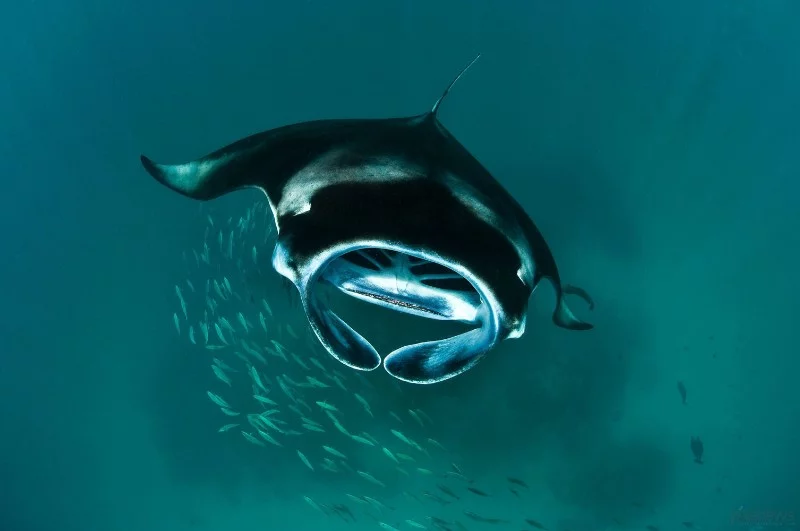
According to the way they are eaten, they can be called large "filters". They have spongy beige-pinkish plates between the gill arches, which are a device for filtration. Their main food is zooplankton and fish eggs.
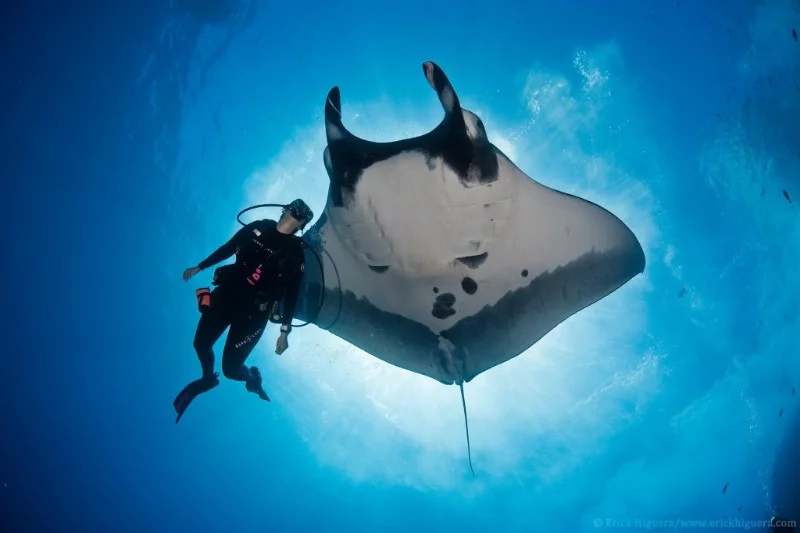
The species does not pose any danger to humans.Manta rays are not the object of targeted fishing, but are caught as by-catch.The number of giant sea devils has decreased significantly over the past 20 years due to overfishing.Recently, there has been an increased demand for the gill stamens of these fish, which are in demand in Chinese medicine. In addition to fishing, manta rays are threatened by habitat degradation. The International Union for Conservation of Nature has assigned this species the protected status of "Vulnerable".Manta rays are incredibly interesting to watch in their natural environment: their smooth, graceful, soaring movements in the water are fascinating. Observation and feeding of stingrays under the guidance of a marine biologist are offered to tourists who are near the habitats of these animals.
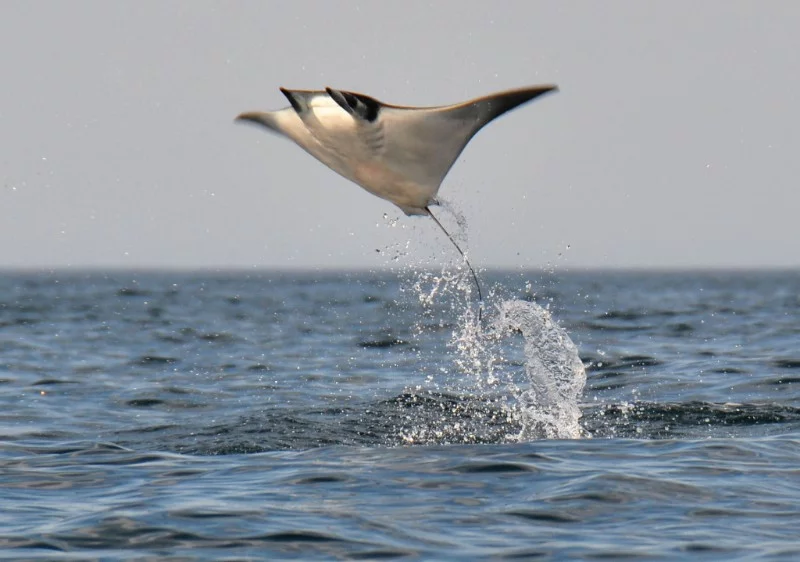
Sometimes the water "flight" of a majestic stingray can turn into a real aerial one. He really soars above the surface of the sea, making something like a jump to a height of up to 1.5 m. It is unclear why this is happening, but the spectacle is truly magnificent. There are several assumptions: so he tries to get rid of parasites on the body, or exchanges signals with other individuals, or silences the fish with a blow of a powerful body on the water. At this moment, it is undesirable to be near him, he can turn the boat over.
This is my first post, I hope it wasn't that bad.I will try to stick to the release schedule, since I do not have a premium, then most likely the posts will be published on Mon Wed Fri
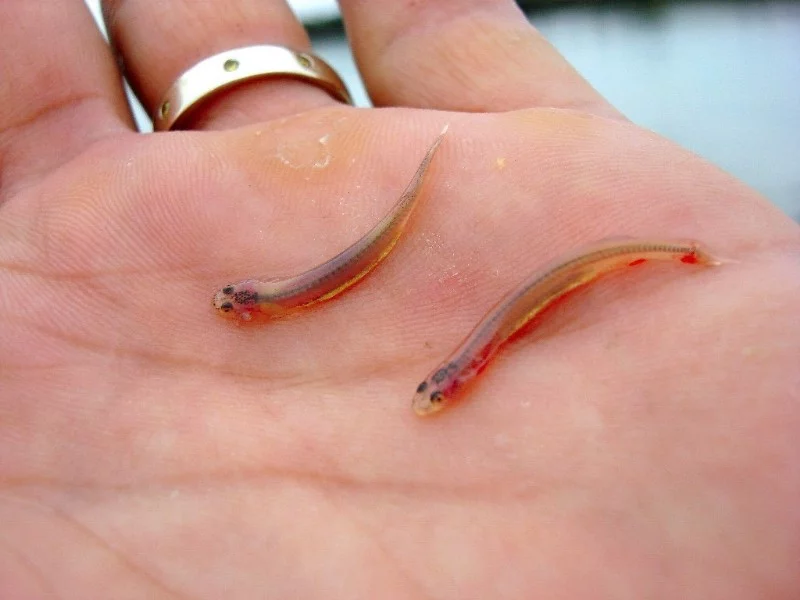
Despite its small size — 2-3 mm in thickness, the locals are more afraid of it than piranhas.
Its thin and skinny, so it is almost transparent. Hungry, kandiru begins to search for a victim — and he is looking for some bigger fish. An excellent sense of smell helps to find it, even in the murky opaque waters of the Amazon. When the kandiru feels the characteristic jet of water ejected by the fish through the gills when breathing, besides, the catfish catches the smell of ammonia (a metabolic product of fish, which is partially excreted from their body through breathing), it rushes forward. Having found the fish, the candiru literally crawls into the gap under the gill cover, and then securely attaches itself to the gills of its victim. He does this with the help of special spikes located on his fins so much so that no forces can get rid of him now, even the most powerful stream of water passing through the gills. He expertly bites a hole in the tissues of the fish gills, from which blood begins to ooze, and kandiru proceeds to a bloody meal. He eats quickly, and it takes only half a minute to two minutes for a meal to be fully saturated. After that, kandiru detaches himself from the victim and swims away from her. But what happens if a fish confuses a person with a fish?

The smell of water flowing from the gills of a catfish can be confused with the smell of a stream of urine released in the water by a mammal or a human. Then kandiru can mistakenly get into the body of a human or some animal. In this case, the parasite can get into the anus or vagina, and small specimens of catfish can enter the human penis, and further down to the bladder itself. Human lesions are extremely rare, but the consequences for the victim are severe. Without medical help, human injury with a candiru catfish can lead to death. But the important thing is that kandiru cannot get out of this unusual situation himself, he will be stuck there for a long time. Here, the catfish necessarily always dies, since it cannot get out of the human body. Candiru penetrate into the human genitourinary organs and, having reached the urethra, open the gill spines, thus strengthening themselves in the human body.

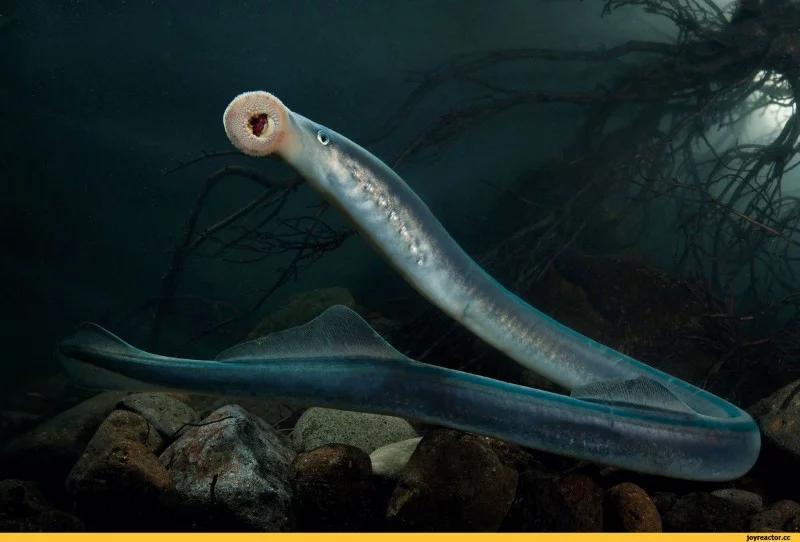
Lampreys live mainly in coastal and fresh waters and are found in most temperate regions. Adults outwardly resemble eels in that they have scaly, elongated bodies and can have a length of 13 to 100 cm
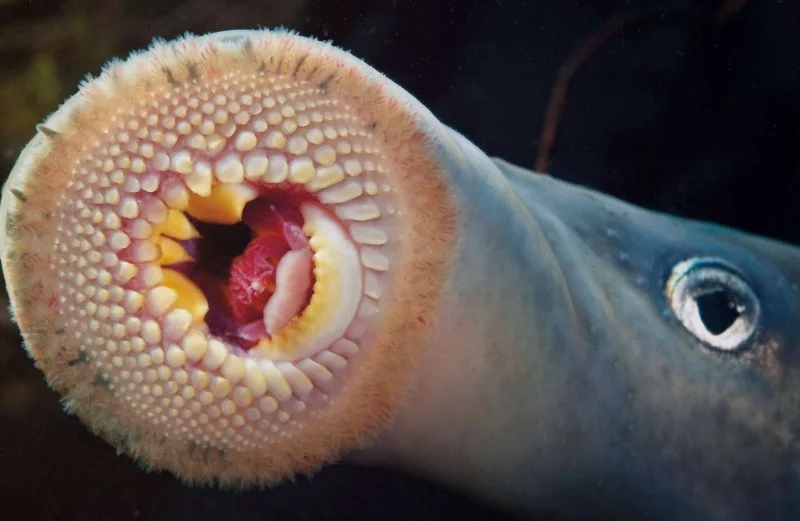
The lamprey's feeding process is very interesting due to the unique structure of its mouth. It lacks a chewing mechanism, and all the lamprey can do is stick to the body, attaching itself with sharp teeth and tongue.First, the lamprey, having chosen a victim, firmly adheres to her body. Then she bites through even the densest skin with sharp teeth and starts drinking blood. Thanks to the special substances in the lamprey's saliva – anticoagulants, the victim's blood does not clot and continues to flow while the lamprey is on the victim's body. The lamprey can eat for several hours, since its oral cavity does not serve for respiratory functions. Together with the blood, the lamprey eats the victim's saliva-softened tissues that enter the area of her mouth. Sometimes lampreys suck so hard that they eat into the very internal organs. The victims, of course, die from such wounds and blood loss.
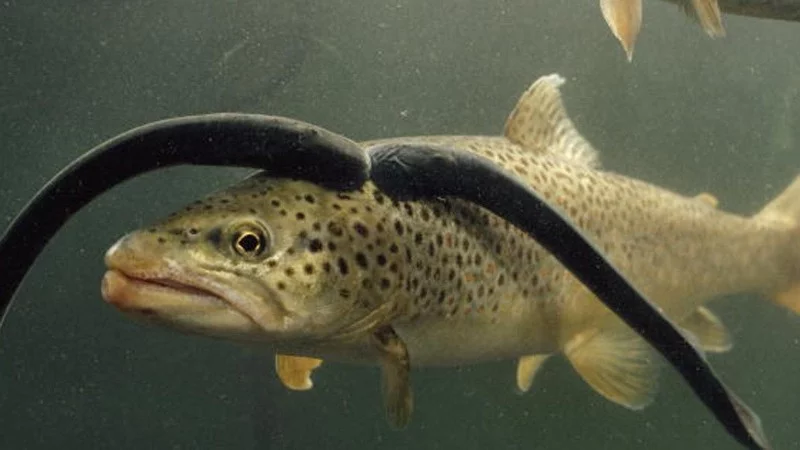
In this issue, I have accommodated two creatures at once. I hope it was interesting. I want to say a big thank you to The Cat Dog for giving me a premium, so I will try to release 6 issues a week. If you want any creature, write in the comments.
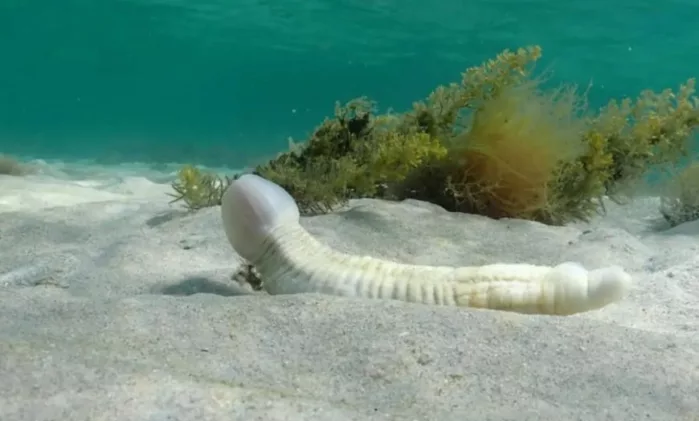
Scientifically known as Urechis Caupo, or "fat tavern worm", penis fish is a type of false worm that lives under the soft sediments of the seabed. They can live up to 25 years and grow up to 30cm. These creatures are designed to live underground, feeding on plankton, bacteria and other small particles that fall into their mucus traps. Using contractions (peristalsis) to pump water through its burrow, the worm sucks in plankton, bacteria and other particles. It lives in shallow water.In Korea, they are eaten as food, often raw with salt and sesame oil or gochujang. They are common in Korea, Japan and the Pacific coast. After storms that massively destroy their burrows, they can be thrown out in large quantities by waves on beaches.
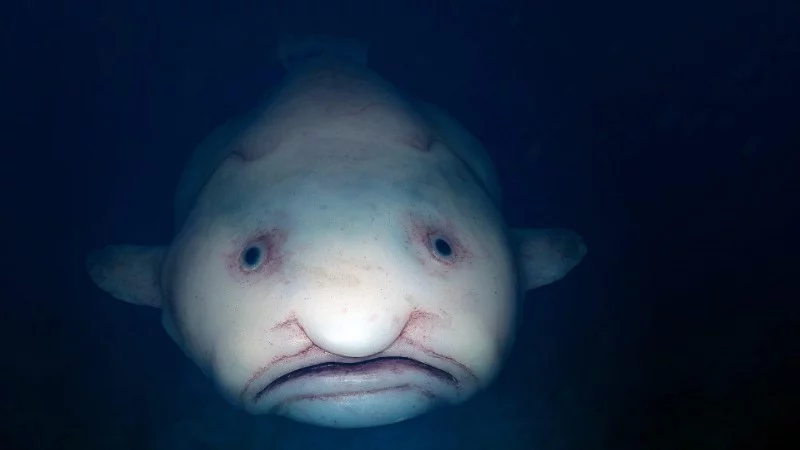
The dropfish is a very unusual and little–studied creature inhabiting the oceanic depths. This fish still remains a mystery in many ways, all its habits and lifestyle have not been studied enough anyway, because it prefers an inconspicuous, secretive lifestyle, it is rare and at great depths. She lives in the Pacific, Atlantic and Indian Oceans, or rather, in their mysterious depths. It is most often found by fishermen along the coast of the Australian continent and near the island of Tasmania. The depth at which it lives varies from 600 to 1200 meters. The pressure of the water masses there is 80 times greater than at shallow depths near the surface. She has adapted to the constant darkness in the water column, so her eyesight is well developed, the fish moves smoothly and steadily, without rushing anywhere. The drop has no muscle mass at all, so it cannot swim fast, because of this, it also has no opportunity to chase its prey. The fish sits in one place and waits for its snack, its huge mouth wide open, like a trap. Due to the inability to move quickly, excessive slowness, these fish often remain hungry, constantly malnourished. These unearthly creatures live from 5 to 14 years. As for the natural, natural enemies that can harm the fish drop, then nothing is known about them either. At great depths, where this strange fish lives, there are not so many living creatures as near the surface of the water, therefore, no special detractors have been found in this fish, all because of the lack of knowledge of this amazing organism. Although the drop has no special obvious enemies, the population of this fish has been constantly declining. There is a ban on catching this species of fish, but it continues to fall into the nets of fishermen when they fur the bottom with them in search of a completely different catch.
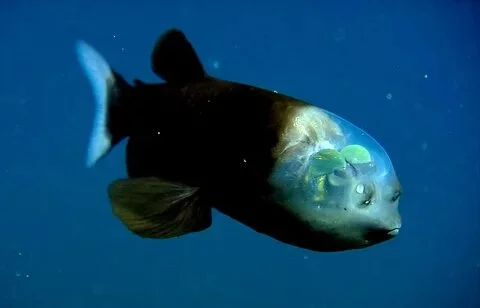
Opisthoproctes are widespread in tropical and moderately warm waters of the World Ocean. They usually live at a depth of 500 to 700 meters. The maximum size of most species does not exceed 10 cm. The complexity of the structure and, as one might think, the high efficiency of the opisthoproctovs' organs of vision indicate that the eyes play a very important role in their lives. Some of them are very rare and are known from single specimens, others are more common, because of this, this family is almost unexplored. They have a transparent head and luminous eyes.It mainly preys on bioluminescent siphonophores.
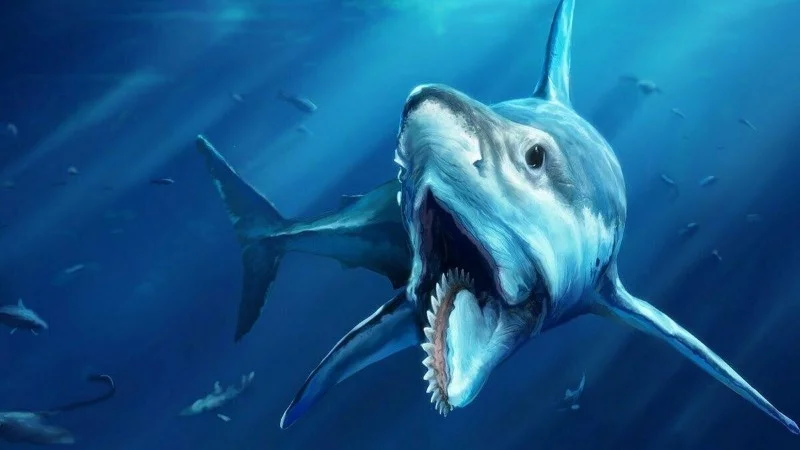
Helicoprion is an extinct genus of cartilaginous fish from the Carboniferous and Permian periods. The complete remains of the helicoprion have not yet been found. It is not entirely clear exactly how the spiral grew. Initially, it was believed that the largest teeth were the newest and, accordingly, were located closer to the place of attachment of the "spiral" on the jaw (the lower jaw could be bent down). Academician L. P. Tatarinov considered this unlikely — most likely, the teeth grew from the center of the spiral, and the smallest teeth are the youngest. This is confirmed by the direction of the "spurs" on the teeth — in all related species they are directed backwards. As they grew, the larger old teeth were pushed forward and shed. The spiral was "packed" into the symphysis cavity and only large "old" teeth were visible from the outside. The dental spiral of helicoprion is one of the most mysterious fossils of the Permian period. It consists of a series of sharp teeth-blades having a common spiral-rolled root with 80-190 teeth. The diameter of the spiral of the typical type of helicoprion reached 25 cm. This assumes the length of the entire fish is about 2-3 meters. Spirals up to 90 cm in diameter are described in the literature. The length of their owner could reach up to 9-12 meters. These fish are not sharks in the modern sense of the word, but representatives of primitive cartilaginous, close to the ancestors of chimeras and sharks.
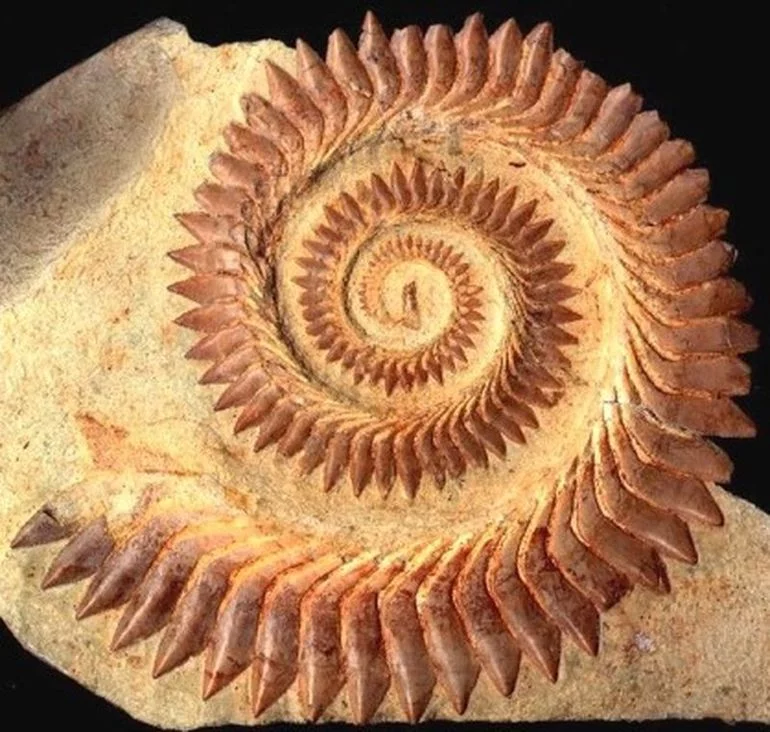
Helicoprion Dental Spiral
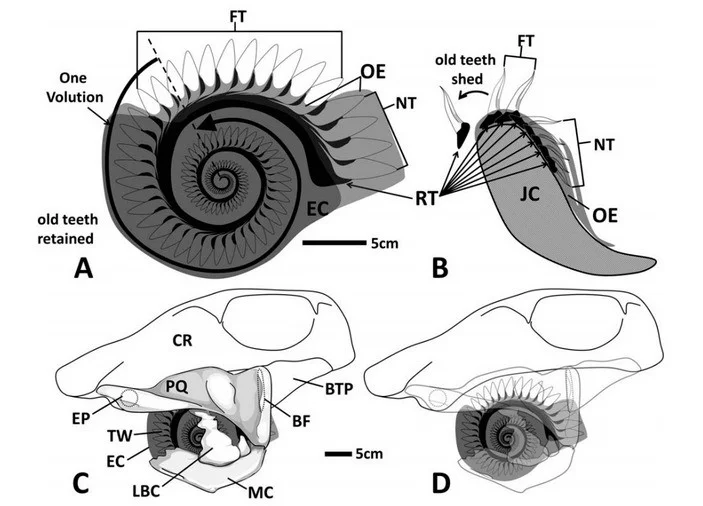
Comparison of the growth of the dental spiral of a helicoprion with the jaw of a shark: in helicoprions, old teeth were preserved in a spiral, in sharks they fall out (FT — functioning teeth, NT — new, not yet functioning teeth). A is the dental spiral of the helicoprion, B is the jaw of a shark, C, D is a schematic representation of the position of the spiral in the jaw of the helicoprion. CR — skull; EC, JC, LBC — cartilage; OE — epithelium of the oral cavity; PQ — palatine-squared cartilage (upper jaw); MC — Meckel's cartilage (lower jaw); RT — tooth root; TW — dental spiral.
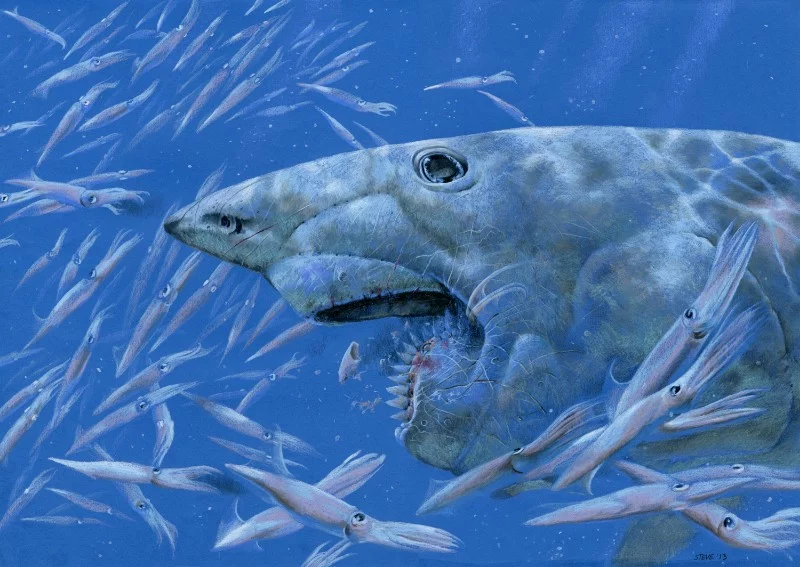
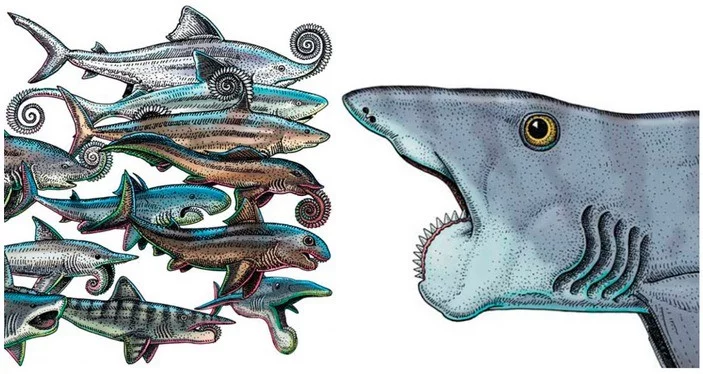
Options for reconstructing the appearance of the Helicopter, starting from the earliest (top left — Karpinski reconstruction) to later (bottom left), the most modern reconstruction is shown on the right.

