Scroll to top

Vodniy Jurnal

kolyajivoy

Water Magazine No. 23 Mississippian Shell

Water Magazine No. 23 Mississippian Shell

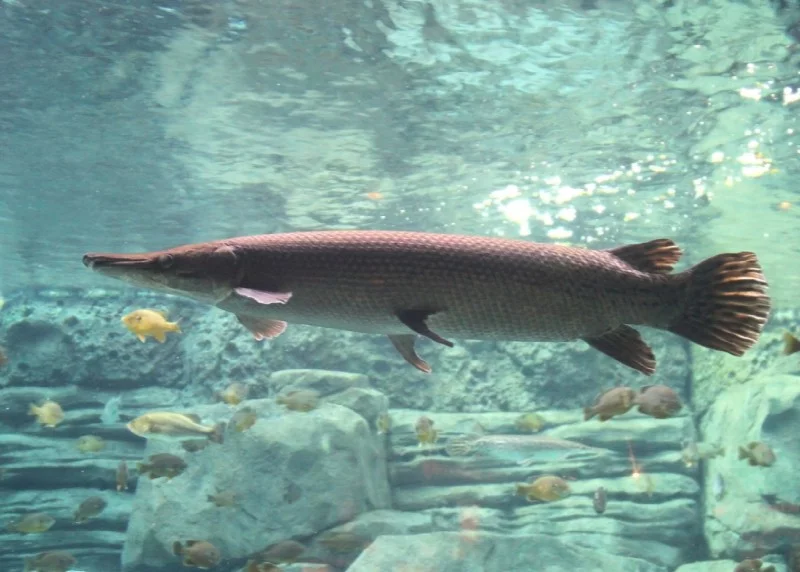
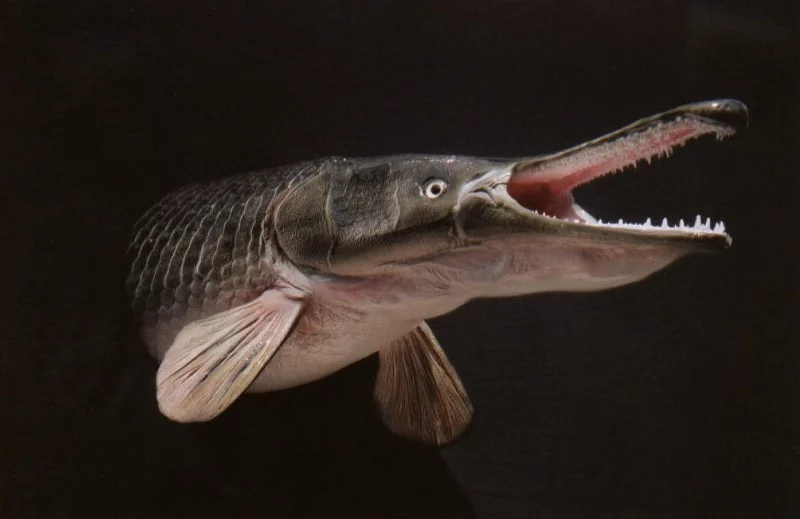
The Mississippian shellfish is one of the largest freshwater fish: according to experts, its length can reach 3 m with a weight of over 130 kg. The average life span of fish is 40 years. They have a torpedo-shaped body, adults have wide heads, short wide muzzles and a double row of sharp teeth on the upper jaw. The teeth of the lower jaw enter the grooves between the two upper rows. The color of the fish is usually brown or olive with a lighter gray or yellow abdominal surface. The skin is covered with a layer of thick, diamond–shaped and almost impenetrable scales - it does not lend itself to a knife. She protects Gar's alligator from real alligators. Adult carapaces have no other enemies (except humans). The jaws are also special, you can compare them with a beak. They help the fish capture and hold prey before swallowing. The peculiarity of the Mississippian shell is the amazing structure of the internal organs. Unlike most other fish species, the shell has a developed vascular network of the swim bladder. Blood vessels run throughout the swim bladder and connect to the esophagus. Thus, the bubble not only provides buoyancy, but also allows the fish to breathe air. Therefore, they can inhabit reservoirs in which most other fish would die of suffocation. Fish have a long life and late maturation. The fertility of females is high – 4.1 eggs per gram of body weight. After a couple of weeks, the independently living fry already feed on plankton, invertebrates, amphibians and fish.
The area

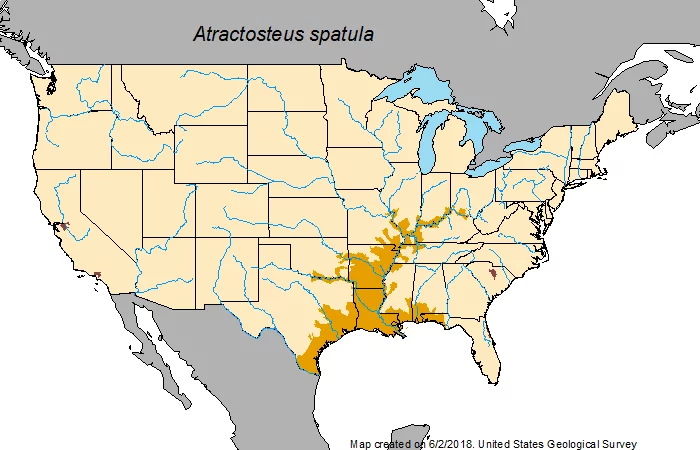
The adjective "Mississippian" in the name of the fish indicates its main habitat. The natural distribution range is the lower reaches of the Mississippi River, the Gulf coast of the southern United States and Mexico. The alligator pike is considered an ancient or primitive representative of aquatic species, since its existence dates back to prehistoric times. They are often called "living fossils". The physiology of the Mississippian shellfish comes from its ancestors. They are members of an ancient order of finned fish that has existed since the end of the Cretaceous period, hundreds of millions of years ago, when dinosaurs still walked the Earth.
The adjective "Mississippian" in the name of the fish indicates its main habitat. The natural distribution range is the lower reaches of the Mississippi River, the Gulf coast of the southern United States and Mexico. The alligator pike is considered an ancient or primitive representative of aquatic species, since its existence dates back to prehistoric times. They are often called "living fossils". The physiology of the Mississippian shellfish comes from its ancestors. They are members of an ancient order of finned fish that has existed since the end of the Cretaceous period, hundreds of millions of years ago, when dinosaurs still walked the Earth.

Food

Water Magazine No. 23 Mississippian Shell

Mississippian shellfish have a very good appetite. Prey trapped in powerful jaws is first captured across the body (Fig. 8), and then turns its head to the throat in short lateral jerks and is swallowed. The same principle of capturing prey during hunting is used by an ordinary pike. Adults eat everything they come across. Fish, turtles, crustaceans, birds, small mammals, and sometimes carrion – everything gets on the dining table of this predator. For hunting, the fish uses the ambush method. She lurks somewhere in the river thickets, waiting for the victim, and then with a sharp lateral movement captures the prey with her jaws. Young fish usually hunt collectively. They drive the victim to the riverbank, pounce on it and eat it. 
Relationship with a person

Water Magazine No. 23 Mississippian Shell

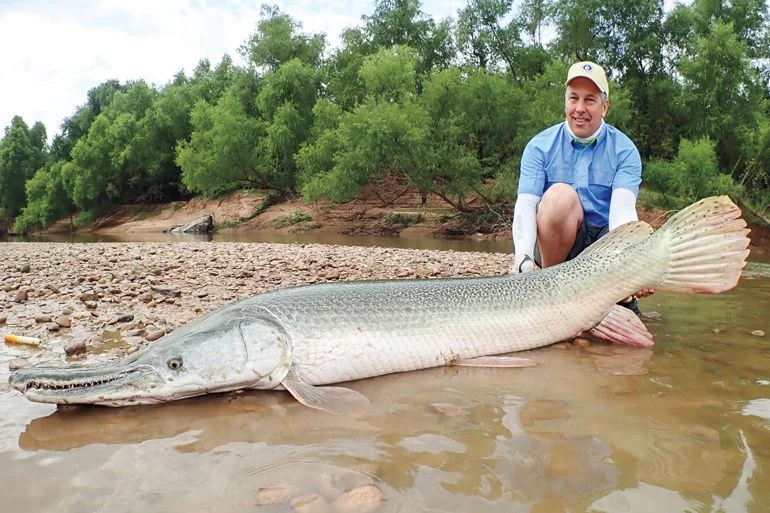
Perhaps the deadliest enemy of this fish is man. Despite their fearsome size and predatory behavior, not a single case of Mississippian shellfish attacking humans has been reported. Industrial activities such as dam construction and dredging, as well as uncontrolled fishing, have led to the destruction of the natural habitat of these freshwater inhabitants and to the extermination of the alligator pike in most of its historical range. For almost half a century, the alligator pike has been considered a "garbage fish" that should not be caught because of its bones and tough scales, as well as a "harmful species" due to its tendency to hunt sport fish. However, many are still trying to catch the Mississippian Shellfish and appreciate its fighting abilities. Despite this, the alligator pike plays an important ecological role as apex predators on many waterways. Alligator pikes have been granted protection through limited fishing licensing.
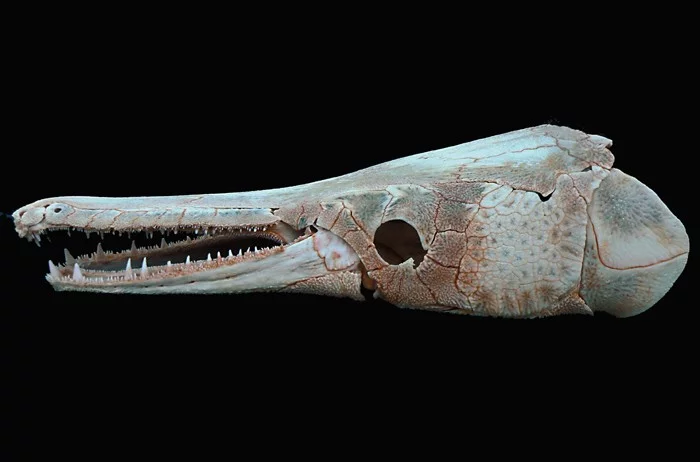
Skull

Skull

  A giant specimen of the Mississippian shellfish in March 1910  

  A giant specimen of the Mississippian shellfish in March 1910  

Tags:Aquatic creaturesKolyajivoy
3
11
14
0comments
9views

Leave a comment

Before commenting, you need to sign in.

Bestcomments (0)

There are no comments for this post yet. Want to leave the first one?

Similar posts

Water magazine No. 27 Wart

It grows up to 35cm. It lives on coral reefs, near muddy algae, in sand, rocks, mud. Due to its mottled-greenish or mottled-brown color, the stone fish easily hides, masking itself in

Water magazine No. 25 Blue angel, Sea Lily.

The blue angel is a species of gastropod mollusks common in the seas of all oceans of the tropical belt. The body length is 5-40 mm. On the sides, perpendicular to the axis of the body, there are three groups of cerata - finger-shaped

Water magazine No. 22 Ordinary Catfish

Catfish belong to ray–finned fish - the first representatives of this class appeared in the Devonian period, about 390 million years BC. Previously, giant catfish were caught in European rivers for

Water Magazine No. 21 Japanese Spider Crab

The Japanese giant spider crab, although not the heaviest in the underwater world, is however the largest known arthropod. The well-calcined shell is only about 40 cm, but the total length is

Water magazine No. 20 Greenland Shark

The largest individuals can reach 7.3 m and weigh up to 1.5 tons. However, on average, the length of these sharks ranges from 2.44—4.8 m, and the weight does not exceed 400 kg. The head is elongated, the distance from the tip of the snout

Water magazine No. 19 Anomalocaris

Anomalocaris lived 520-535 million years ago. It is one of the largest predators of the Cambrian, reaching a length of up to 38 cm. Previously, it was believed that it grew up to 1 meter in length, but this estimate seems small

Water Magazine No. 18 Green Sea Turtle

The shell of a turtle is characterized by an oval shape, while its length can reach almost 2 meters, although there are mostly individuals with a shell length of no more than 1 meter. You should pay attention to

Water magazine No. 17 Krylatka

  Lionfish is a genus of ray—finned fish belonging to the scorpion family. They are distinguished by elongated feathery fins, bold patterns and extraordinary behavior. Adults reach a length of about 43 cm and a weight of

Water magazine No. 10 Beluga

The gill membranes fused together and formed a free fold under the gill gap. The snout is short, pointed, soft from above and from the sides, devoid of shields. The mouth is large, semi-lunar. Lower

Water magazine No. 8 Whale Shark

The whale shark is the largest shark species currently in existence, as well as the largest of modern fish. Its maximum size reaches at least 12.65 m, possibly more. At the whale a

Water magazine No.5 Fish penis,drop fish, Opisthoproct

Scientifically known as Urechis Caupo, or "fat tavern worm", penis fish is a type of false worm that lives under the soft sediments of the seabed. They can live up to 25 years and grow up to 30

Water magazine No. 3 Som Kandiru, Lamprey

Its thin and skinny, so it is almost transparent. Hungry, kandiru begins to search for a victim — and he is looking for some bigger fish. To find her, even in the murky opaque waters of the Amazon