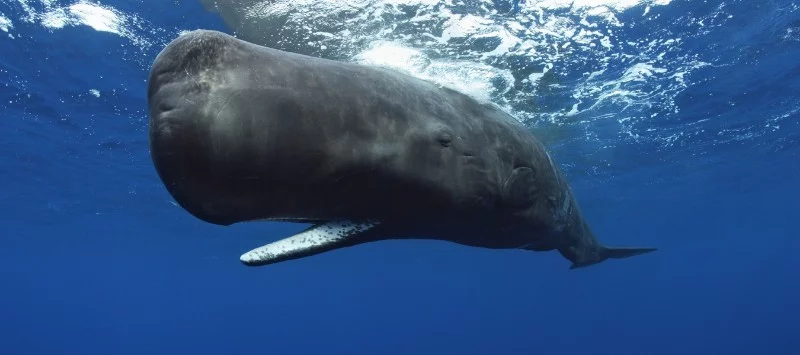
The huge head makes up to a third of the total length of the body, has the appearance of a rectangle. The lower jaw is set with large teeth, of which there are usually 20 pairs, but there are also 8 pairs, there are only 1-3 pairs of teeth on the upper jaw, and often there are none at all. Each tooth weighs about one kilogram. The lower jaw can open vertically downwards, at 90 degrees. The mouth cavity is lined with rough epithelium, which prevents the prey from slipping out. The sperm whale's body expands and becomes thick in the middle, almost round in cross section. Then it narrows again and gradually turns into a caudal stem. The caudal fin of a sperm whale is up to 5 m wide. The sperm whale's skin is wrinkled and folded, and usually has a dark gray tint. Sperm whales grow all their lives, so the older the whale, the larger it is, as a rule; at the same time, males are almost twice as large as females. Males are 18-20 m long and weigh from 40 to 70 tons. The vocal signals of the sperm whale are generally similar to those of other whales. These are three types of sounds — moaning sounds, clicks and a quick crackle, similar to the sound of a mechanical typewriter, and creaking.
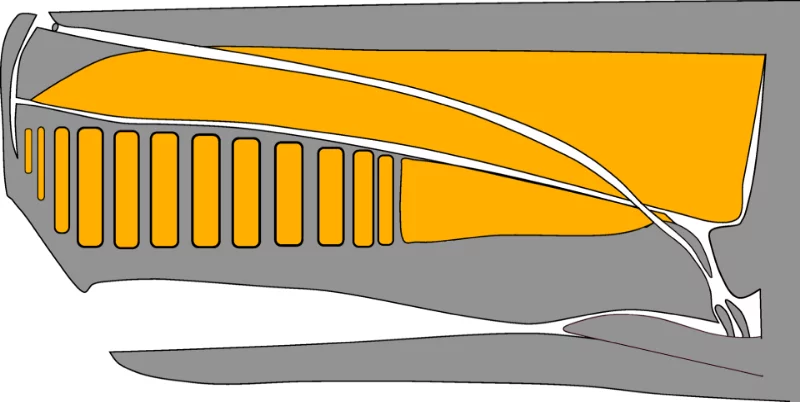
Most of the volume of the head is occupied by a spermaceti sac located above the upper jaw, a spongy mass of fibrous tissue impregnated with spermaceti (a complex composition of adipose tissue). It is believed that this substance and the organ in which it is stored perform a number of tasks at once. The bag helps sperm whales make full use of echolocation by amplifying ultrasonic waves, liquid fat provides the necessary level of buoyancy, which helps whales dive to gigantic depths and surface from them. It is known that male sperm whales collide with each other at a speed of 17 km / h, trying to demonstrate dominance, in such cases the main impact falls on the reservoir with fat. There were cases when whalers themselves became victims of sperm whales, as the latter rammed and sank ships.

The sperm whale has one of the largest ranges in the entire animal world. It is common throughout The world Ocean, except for the northernmost and southernmost cold regions. Sperm whales are more common in warm waters than in cold ones.
Sperm whales are gregarious animals. During migrations, the whale's speed rarely exceeds 10 km/h, and the maximum whale speed is 37 km/h. When feeding, sperm whales can act in well-organized groups of 10-15 individuals, collectively herding prey into dense groups. At the same time, the whales show a high level of interaction. Collective hunting took place at depths up to 1,500 m. Sperm whales often live to be 60 years old. The sperm whale's unique ability to dive extremely deep is known. He dives deeper than any other air-breathing animal. Some sources indicate the possible ability of the sperm whale to dive up to 3000 m. The whale's body is well adapted for such dives due to a number of anatomical features. The enormous pressure of water at depth does not harm the whale, since its body is largely made up of fat and other liquids that are very little compressible by pressure. The lungs of a whale are half as large relative to the body volume as those of land animals, so the sperm whale's body does not accumulate excess nitrogen, which happens in all other living creatures when diving to great depths. Caisson disease, which occurs when nitrogen bubbles enter the blood during ascent, never happens in a sperm whale, since the sperm whale's blood plasma has an increased ability to dissolve nitrogen, preventing this gas from forming microbubbles. The whale stores 41% oxygen in its muscles, while only 9% is stored in its lungs. In addition, the sperm whale's metabolism changes very significantly during deep dives. The pulse drops to 10 beats per minute, and the blood flow is greatly redistributed. The sperm whale actively uses high-frequency and ultrasonic echolocation to detect prey and orient itself. The latter is especially important for him, since this whale plunges to a depth where there is no lighting at all. Sperm whales are polygamous; during the breeding season, males form harems — 10-15 females stay near one male. Sperm whales can give birth at any time of the year.Pregnancy lasts from 15 months to 18 months and sometimes more. The cub is born alone, 3-4 m long and weighing about a ton

One of the most interesting features in the sperm whale's diet is its eating of giant cephalopods, which it encounters at great depths. Huge squids occupy an important place in the diet of the sperm whale; in any case, it is the sperm whale that is the main natural enemy of giant cephalopods[66]. This applies, in particular, to the largest squid of the genus Architeuthis, whose length can be more than 10 m. Squid suckers leave round marks with a diameter of up to 20 cm on the skin of a sperm whale, at the same time, even the largest squid known to science, at the same time, even the largest squid known to science (even those whose length, together with tentacles, reached 10 meters), the diameter of the suckers did not exceed 5 cm. Most likely, the squid left sucker prints when the sperm whale had not yet reached the full size of an adult whale, and then, when the sperm whale grew up, the scars from the suckers stretched to 15-20 centimeters in diameter
The sperm whale, like all toothed whales, is a predator. The basis of its diet consists of two groups of animals — cephalopods and fish, and cephalopods absolutely predominate.Cephalopods make up about 95% of the total (by weight) the food consumed by sperm whales and fish is less than 5%. An adult sperm whale needs to eat about a ton of cephalopods per day for normal nutrition. The sperm whale catches its prey at a depth of at least 300-400 m, where it has almost no food competitors, with the possible exception of some beaked whales
There are different estimates of the current number of sperm whales in the world's oceans. Most often, estimates converge on the figures of 300-450 thousand. According to estimates provided by the International Union for Conservation of Nature, in 2003, sperm whales on Earth were from 30 to 50% of the number that lived in 1922. The recovery in the number of sperm whales has been observed since the 1980s, when their fishing was finally stopped, but it is extremely slow. Cubs and even adult female sperm whales can be attacked by killer whales — researchers have recorded cases when killer whales inflicted severe wounds on adult females or even tore them apart. Some scientists doubt the ability of killer whales to overcome adult sperm whales (even a herd of females with cubs, acting together, can drive away killer whales). Nevertheless, special studies conducted in 1999 led to the conclusion that attacks with fatal outcomes for sperm whales still happen — for example, a study of the fresh skeleton of a 9.8-meter female sperm whale showed that the whale was torn apart by killer whales. But in general, according to general estimates, the threat to sperm whales from killer whales is very small. Among the causes of natural mortality of these whales are myocardial infarction, stomach ulcer, and bone necrosis, which can occur from the penetration of microscopic nitrogen bubbles during decompression during the whale's ascent from the depths. The sperm whale, like other large whales, grows quite heavily with various crustaceans, which, however, do not cause any damage to the whale's body. This whale is susceptible to infestations of endoparasites, of which the most notable is a giant roundworm (up to 8.5 m long) living in the placenta of females. Marine pollution is an important factor affecting the number of sperm whales in a number of areas of the world Ocean. The catastrophic oil leak in the Gulf of Mexico in the summer of 2010, according to some non-governmental environmental organizations, had a serious negative impact on the local sperm whale population. Sometimes sperm whales are killed or seriously injured in collisions with ships. The death of sperm whales in fishing nets is very rare, but still such cases are recorded. This factor plays the greatest role in The Mediterranean Sea. There have been cases when sperm whales caused damage to fish catches by devouring large fish that had already been hooked during industrial fishing. This behavior of sperm whales has been recorded in Alaska. Fishermen who lost up to 20% of their catch due to the fault of sperm whales even turned to scientists for help
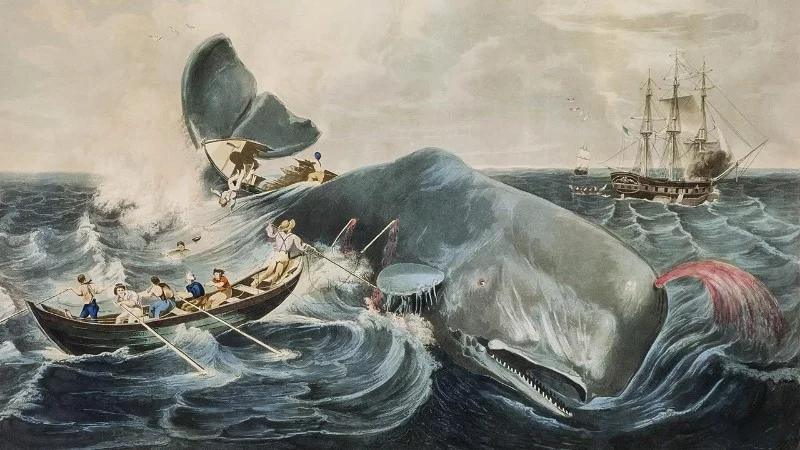
For centuries (until the middle of the XX century), the sperm whale was the most important object of whaling before its prohibition. Until 1948, about 5,000 animals were harvested annually. After that, production volumes increased sharply to 20 thousand heads per year, mainly in the North Pacific and in the Southern Hemisphere. Sperm whale production was severely restricted in the second half of the 1960s, and in 1985, sperm whales, along with other whales, were completely taken under protection. Sperm whale mining in the XVIII—XIX centuries was especially developed in the USA. Its center was Nantucket, which at one time was probably the largest whaling port in the world - up to 150 whaling schooners were assigned to it. With such intensive fishing, male sperm whales were knocked out very badly, which negatively affected not only the livestock, but also the average size of these whales — the average length and weight of sperm whales became noticeably smaller due to the destruction of the largest specimens. The main product of the sperm whale fishery at all times was fat, 12-13 tons were obtained from one sperm whale. Amber is a solid wax—like substance of gray color, formed in the digestive tract of sperm whales, having a complex layered structure. Amber has been used since ancient times and until the middle of the XX century as an incense and as a valuable raw material in the manufacture of perfumes. Spermaceti, it was used to make ointments, lipsticks, etc.; candles were often made. Sperm whale teeth in Europe and North America at the time of intensive whale mining served as a very expensive ornamental material, valued on a par with mammoth tusk and walrus tusk. Sperm whale meat, like the meat of other toothed whales, has a strong, not very pleasant smell compared to the meat of baleen whales, therefore it was extremely rarely eaten by humans. Whaling before its mechanization was associated with increased risk, largely due to the fact that wounded sperm whales, becoming enraged, attacked boats with whalers, and often the whaling ships themselves. The strength of a sperm whale, even a wounded one, was usually enough to smash a boat with a single blow of the head or tail in a retaliatory attack. Thus, sperm whales account for many lives of whaling sailors. Therefore, the extraction of sperm whales was considered a particularly difficult and dangerous occupation among whalers. An incident became widely known when, in 1820, an enraged sperm whale twice headbutted the American 230-ton whaling ship Essex and sank it. At the time of the sinking, the ship was thousands of kilometers from the shore. The crew of the Essex managed to escape and land on a desert island, but people suffered incredible hardships (including cannibalism against comrades who died of hunger or thirst in boats), as a result, only 8 out of 21 sailors survived. The sperm whale is the only whale whose throat theoretically allows you to swallow a person whole without chewing (and, generally speaking, the only animal capable of doing this). However, despite the high number of deaths when hunting sperm whales, these whales seem to have exceptionally rarely swallowed people who got into the water. The only relatively reliable case occurred in 1891. A sperm whale crashed a dinghy from a British whaling schooner, harpooner James Bartley, went missing and was presumed dead. The sperm whale that sank the dinghy was killed a few hours later. By morning, the whalers, having reached the inside of the whale, found James Bartley, who was unconscious, in his stomach. Bartley survived, although not without health consequences. Bartley had to leave whaling, but he was able to earn good money by showing himself at fairs as a man who had been in the belly of a whale.Despite the fact that the incident with James Bartley is usually considered authentic, it remains unclear how a person could survive after spending fifteen hours in the stomach of a whale — without access to air and in an acidic environment. It is possible that the side of the whale and its stomach were pierced by a harpoon and air entered the stomach through this wound. Some sources reasonably doubt the truth of this incident with reference to another case when a sperm whale in 1893 also swallowed a whaler, but the swallowed sailor died immediately from injuries and suffocation, and his body was severely corroded by acidic gastric juice.
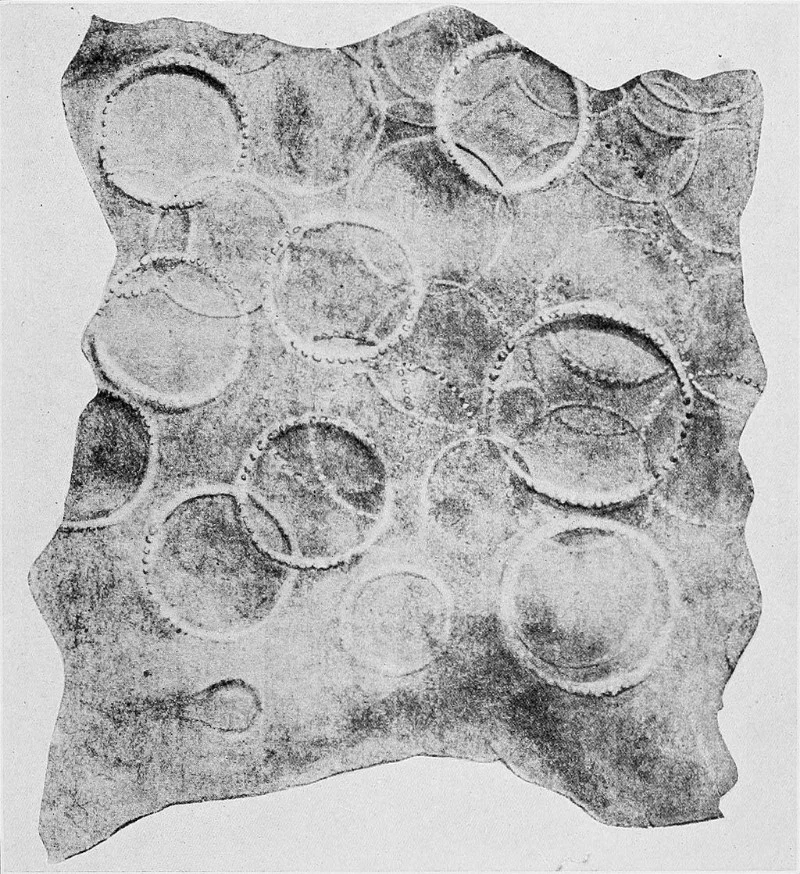
A piece of sperm whale skin covered with traces of giant squid suckers

A way to protect cubs by adult sperm whales
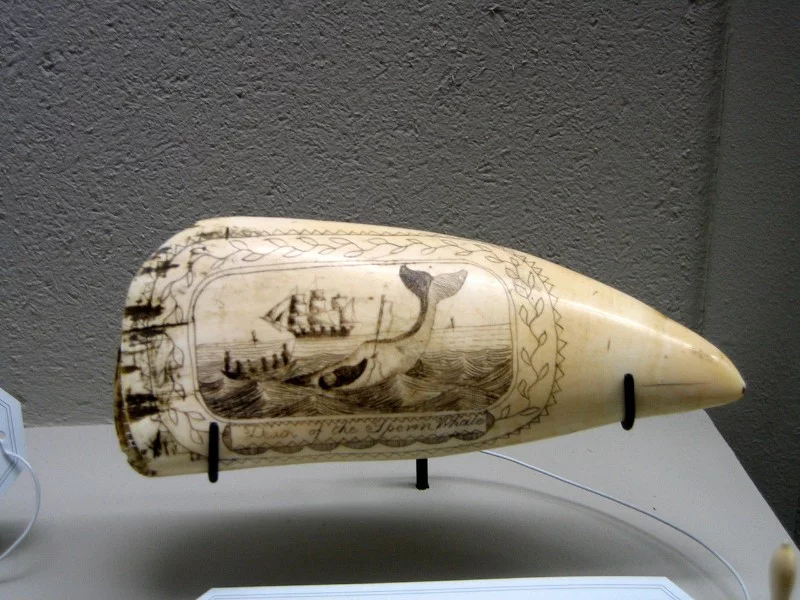
A sperm whale tooth with a carved image
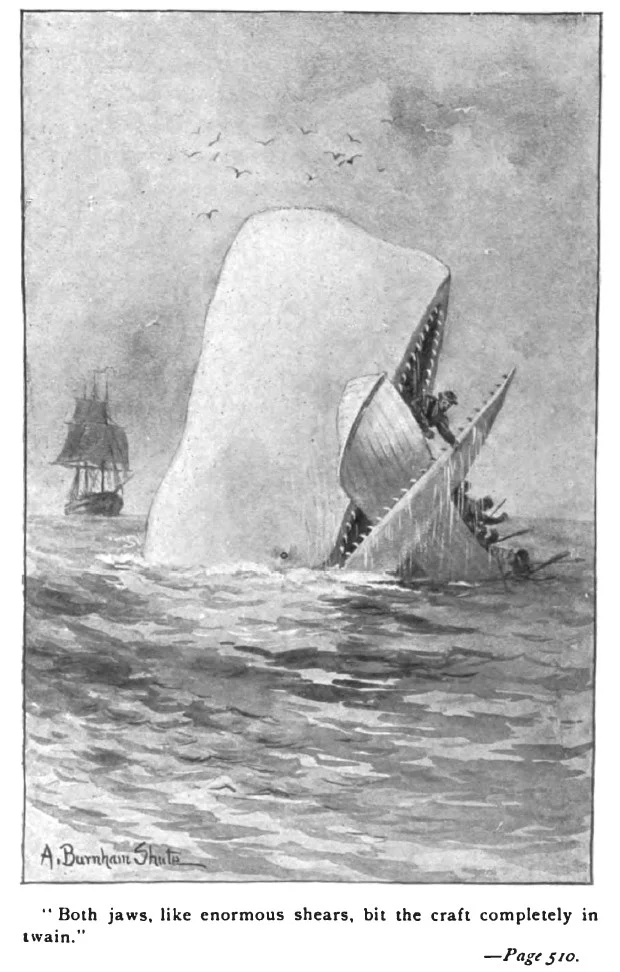
Illustration for Herman Melville's novel "Moby Dick" published in 1892


Share:
Bestcomments (0)
There are no comments for this post yet. Want to leave the first one?