Scroll to top

Vodniy Jurnal

kolyajivoy

Water Magazine No. 1 Manta Ray

In my blog, I will talk about aquatic life. The first one on my blog will be one of my favorite creatures, the huge Manta Rays 
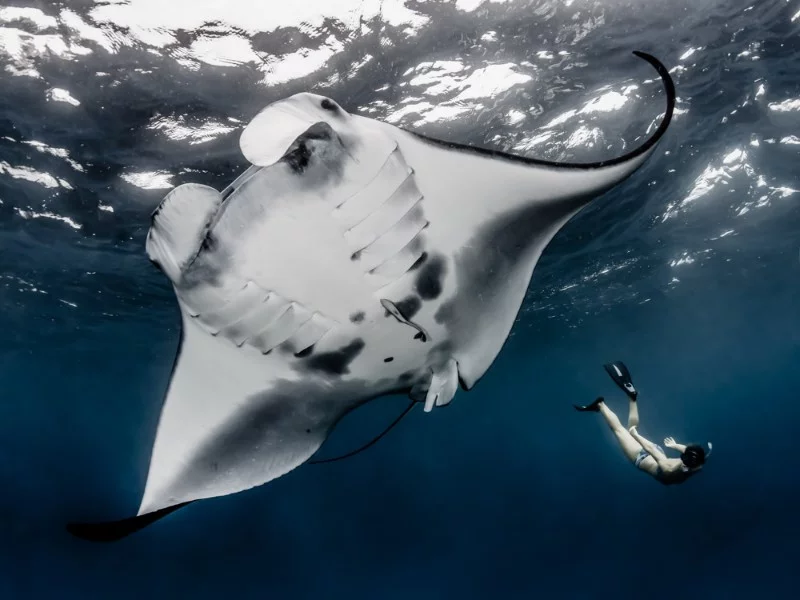
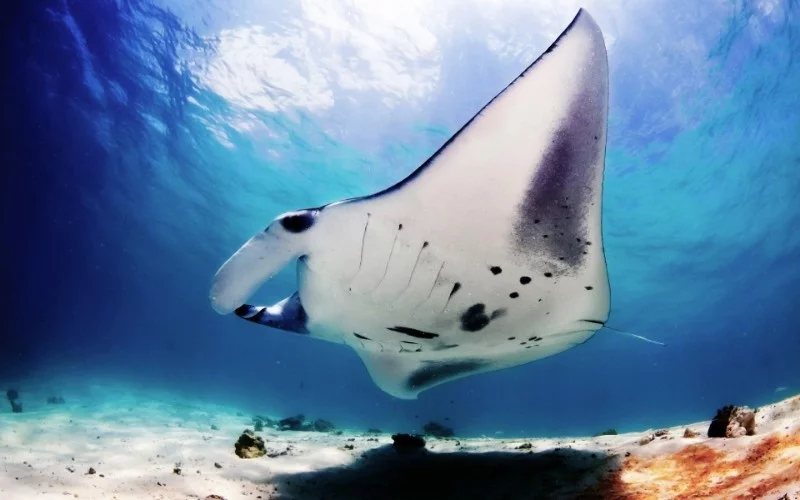
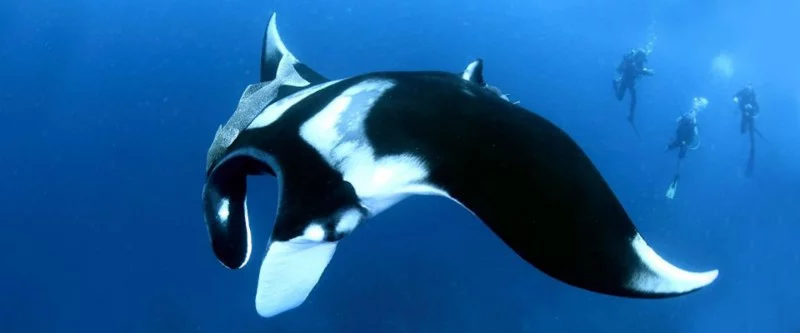
The most common are the so-called medium-sized individuals, whose fin span reaches 4.5 m, and weight is about 1.5-2 tons, some individuals reached 9 m and weighed 3 tons, he is the largest known stingray. They are able to swim at speeds up to 30 km/h. Many of them are also called "Sea Devils" because of the pectoral fins near the face.
The most common are the so-called medium-sized individuals, whose fin span reaches 4.5 m, and weight is about 1.5-2 tons, some individuals reached 9 m and weighed 3 tons, he is the largest known stingray. They are able to swim at speeds up to 30 km/h. Many of them are also called "Sea Devils" because of the pectoral fins near the face.

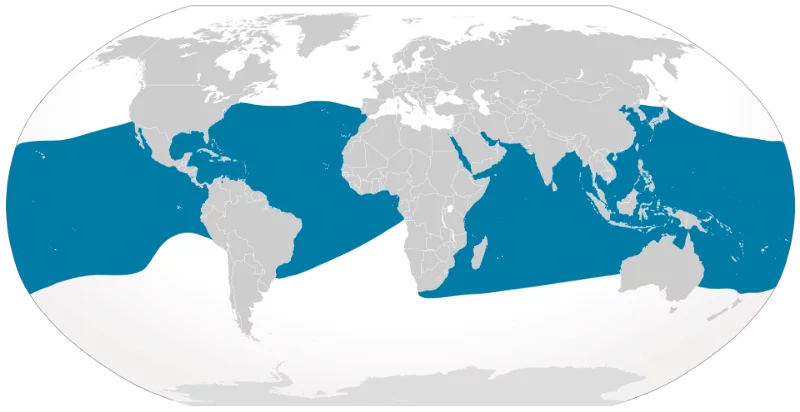
Manta rays are widely but fragmentally distributed in the tropical, subtropical and temperate waters of the Pacific, Atlantic and Indian Oceans. During feeding, breeding and cleaning of parasites, stingrays often form flocks, although not as numerous, less than 30 individuals. They are hardy, make long and long journeys up to 1100 km. They dive to a depth of 1 km. They stick to the shores for a couple of autumn months and in spring, and go into the sea in winter. During the day they are on the surface, at night they sink into the water column. These rays have practically no natural opponents in nature due to their large size. Only carnivorous large sharks and killer whales dare to attack them.
Manta rays are widely but fragmentally distributed in the tropical, subtropical and temperate waters of the Pacific, Atlantic and Indian Oceans. During feeding, breeding and cleaning of parasites, stingrays often form flocks, although not as numerous, less than 30 individuals. They are hardy, make long and long journeys up to 1100 km. They dive to a depth of 1 km. They stick to the shores for a couple of autumn months and in spring, and go into the sea in winter. During the day they are on the surface, at night they sink into the water column. These rays have practically no natural opponents in nature due to their large size. Only carnivorous large sharks and killer whales dare to attack them.

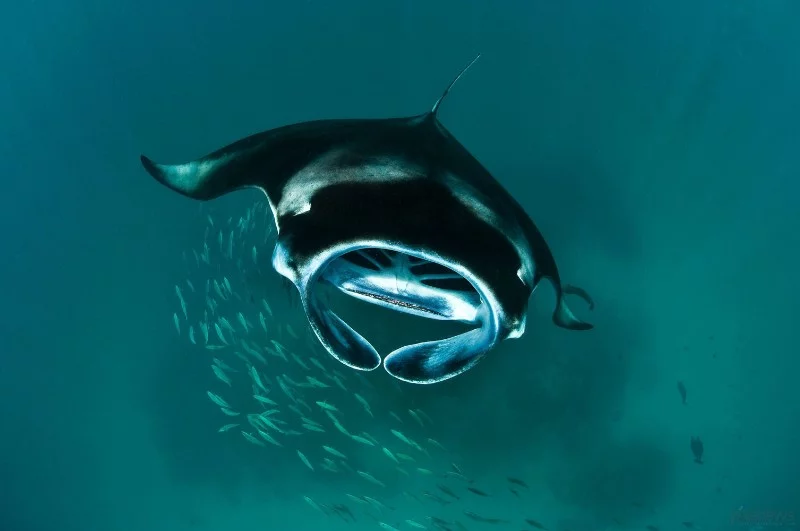
According to the way they are eaten, they can be called large "filters". They have spongy beige-pinkish plates between the gill arches, which are a device for filtration. Their main food is zooplankton and fish eggs.
According to the way they are eaten, they can be called large "filters". They have spongy beige-pinkish plates between the gill arches, which are a device for filtration. Their main food is zooplankton and fish eggs.

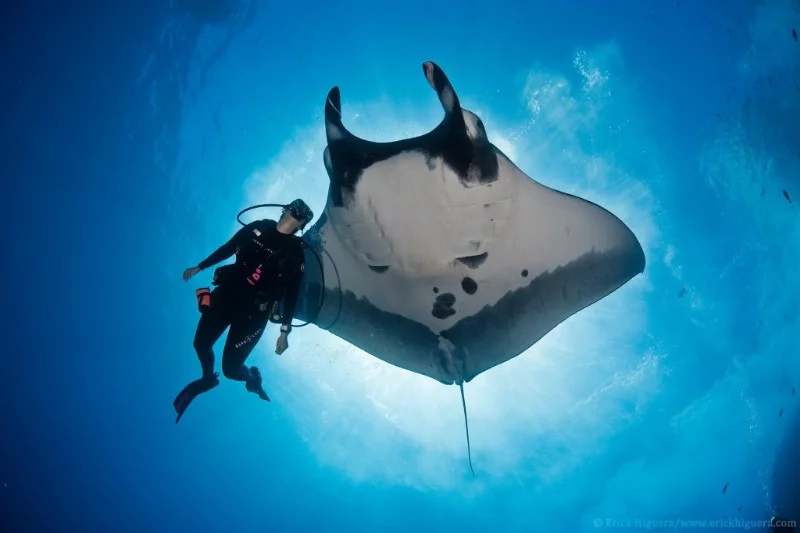
The species does not pose any danger to humans.Manta rays are not the object of targeted fishing, but are caught as by-catch.The number of giant sea devils has decreased significantly over the past 20 years due to overfishing.Recently, there has been an increased demand for the gill stamens of these fish, which are in demand in Chinese medicine. In addition to fishing, manta rays are threatened by habitat degradation. The International Union for Conservation of Nature has assigned this species the protected status of "Vulnerable".Manta rays are incredibly interesting to watch in their natural environment: their smooth, graceful, soaring movements in the water are fascinating. Observation and feeding of stingrays under the guidance of a marine biologist are offered to tourists who are near the habitats of these animals.
The species does not pose any danger to humans.Manta rays are not the object of targeted fishing, but are caught as by-catch.The number of giant sea devils has decreased significantly over the past 20 years due to overfishing.Recently, there has been an increased demand for the gill stamens of these fish, which are in demand in Chinese medicine. In addition to fishing, manta rays are threatened by habitat degradation. The International Union for Conservation of Nature has assigned this species the protected status of "Vulnerable".Manta rays are incredibly interesting to watch in their natural environment: their smooth, graceful, soaring movements in the water are fascinating. Observation and feeding of stingrays under the guidance of a marine biologist are offered to tourists who are near the habitats of these animals.

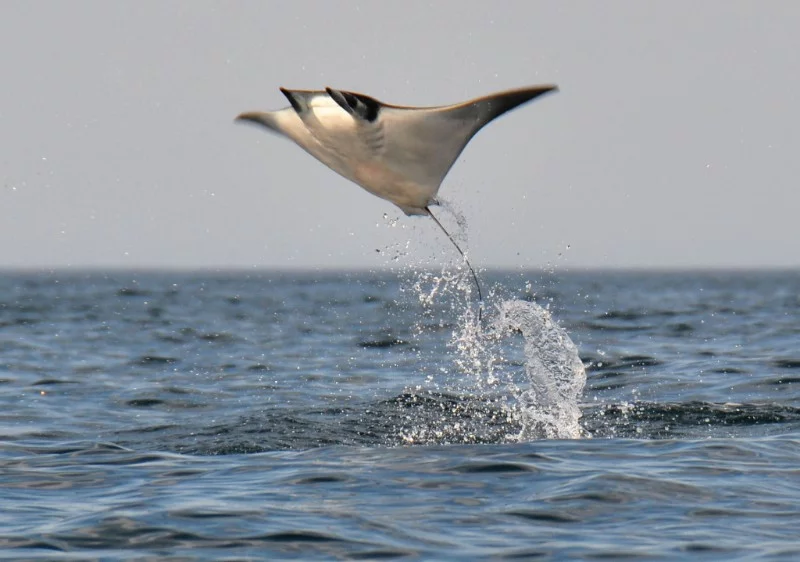
Sometimes the water "flight" of a majestic stingray can turn into a real aerial one. He really soars above the surface of the sea, making something like a jump to a height of up to 1.5 m. It is unclear why this is happening, but the spectacle is truly magnificent. There are several assumptions: so he tries to get rid of parasites on the body, or exchanges signals with other individuals, or silences the fish with a blow of a powerful body on the water. At this moment, it is undesirable to be near him, he can turn the boat over.
Sometimes the water "flight" of a majestic stingray can turn into a real aerial one. He really soars above the surface of the sea, making something like a jump to a height of up to 1.5 m. It is unclear why this is happening, but the spectacle is truly magnificent. There are several assumptions: so he tries to get rid of parasites on the body, or exchanges signals with other individuals, or silences the fish with a blow of a powerful body on the water. At this moment, it is undesirable to be near him, he can turn the boat over.

Water Magazine No. 1 Manta Ray Water Magazine No. 1 Manta Ray

This is my first post, I hope it wasn't that bad.I will try to stick to the release schedule, since I do not have a premium, then most likely the posts will be published on Mon Wed Fri 

Tags:AnimalsAquatic creaturesKolyajivoy
3
11
14
0comments
3views

Leave a comment

Before commenting, you need to sign in.

Bestcomments (0)

There are no comments for this post yet. Want to leave the first one?

Similar posts

Water magazine No. 27 Wart

It grows up to 35cm. It lives on coral reefs, near muddy algae, in sand, rocks, mud. Due to its mottled-greenish or mottled-brown color, the stone fish easily hides, masking itself in

Water magazine No. 25 Blue angel, Sea Lily.

The blue angel is a species of gastropod mollusks common in the seas of all oceans of the tropical belt. The body length is 5-40 mm. On the sides, perpendicular to the axis of the body, there are three groups of cerata - finger-shaped

Water Magazine No. 23 Mississippian Shell

The Mississippian shellfish is one of the largest freshwater fish: according to experts, its length can reach 3 m with a weight of over 130 kg. The average life span of fish is 40 years. They have a torpedo image

Water magazine No. 22 Ordinary Catfish

Catfish belong to ray–finned fish - the first representatives of this class appeared in the Devonian period, about 390 million years BC. Previously, giant catfish were caught in European rivers for

Water Magazine No. 21 Japanese Spider Crab

The Japanese giant spider crab, although not the heaviest in the underwater world, is however the largest known arthropod. The well-calcined shell is only about 40 cm, but the total length is

Water magazine No. 20 Greenland Shark

The largest individuals can reach 7.3 m and weigh up to 1.5 tons. However, on average, the length of these sharks ranges from 2.44—4.8 m, and the weight does not exceed 400 kg. The head is elongated, the distance from the tip of the snout

Water magazine No. 19 Anomalocaris

Anomalocaris lived 520-535 million years ago. It is one of the largest predators of the Cambrian, reaching a length of up to 38 cm. Previously, it was believed that it grew up to 1 meter in length, but this estimate seems small

Water Magazine No. 18 Green Sea Turtle

The shell of a turtle is characterized by an oval shape, while its length can reach almost 2 meters, although there are mostly individuals with a shell length of no more than 1 meter. You should pay attention to

Water magazine No. 17 Krylatka

  Lionfish is a genus of ray—finned fish belonging to the scorpion family. They are distinguished by elongated feathery fins, bold patterns and extraordinary behavior. Adults reach a length of about 43 cm and a weight of

Water magazine No. 10 Beluga

The gill membranes fused together and formed a free fold under the gill gap. The snout is short, pointed, soft from above and from the sides, devoid of shields. The mouth is large, semi-lunar. Lower

Water magazine No. 8 Whale Shark

The whale shark is the largest shark species currently in existence, as well as the largest of modern fish. Its maximum size reaches at least 12.65 m, possibly more. At the whale a

Water magazine No.5 Fish penis,drop fish, Opisthoproct

Scientifically known as Urechis Caupo, or "fat tavern worm", penis fish is a type of false worm that lives under the soft sediments of the seabed. They can live up to 25 years and grow up to 30