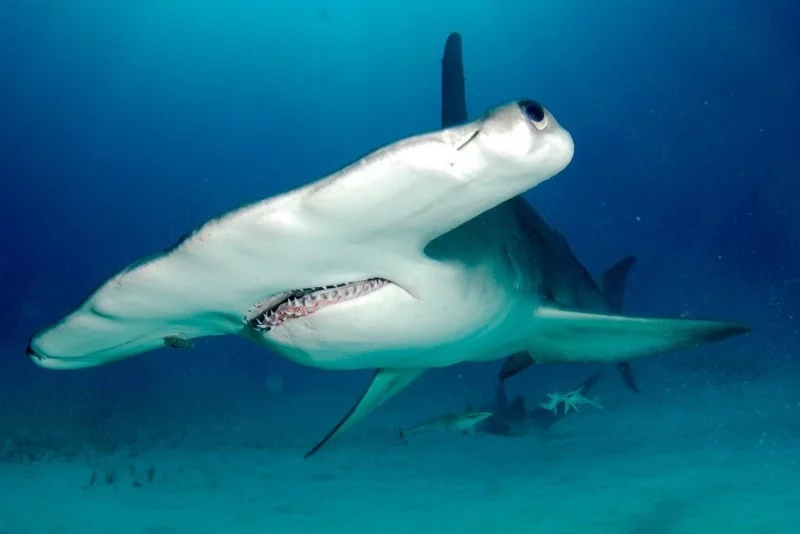
The giant hammerhead shark is a species of the genus Sphyrna from the hammerhead shark family. The width of the wings of the "hammer" is 23-27% of the body length. The teeth are triangular with strongly serrated edges, and they have an increasing inclination towards the corners of the mouth. There are 17 rows of teeth in the mouth on each side of the upper jaw. The average length of a giant hammerhead shark is 3.5 m and weighs more than 230 kg. Females are usually larger than males. There is evidence that a hammerhead shark with a length of 7 meters 89 centimeters and a weight of 363 kilograms was caught off the coast of New Zealand. The female, caught off the coast of Florida in 2006, weighed 580 kg with a length of 5.5 m. Such a large weight is explained by the fact that the female was pregnant, there were 55 embryos inside her.
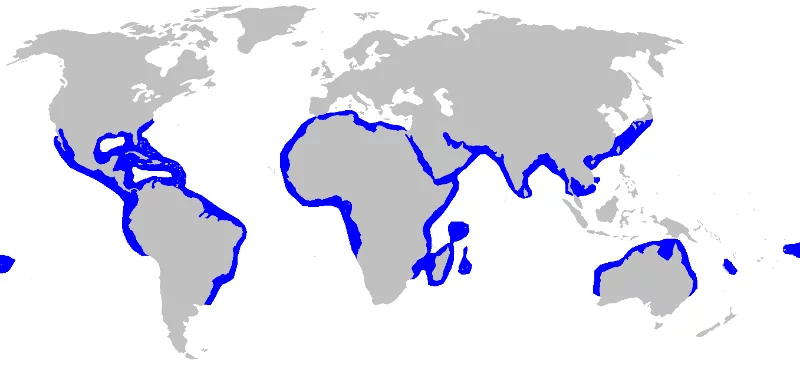
Giant hammerhead fish can be found both in shallow water and at depths up to 80 m. She prefers to stay near coral reefs, as well as on the continental shelf and in lagoons. It makes seasonal migrations.
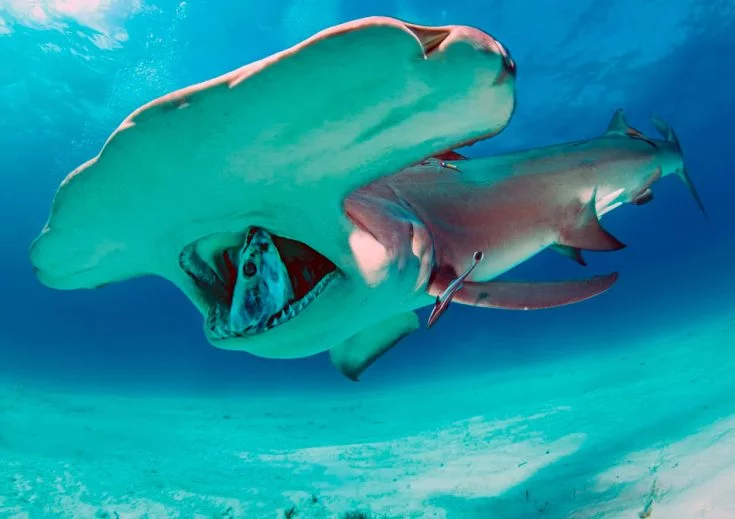
The giant hammerhead shark is a solitary nomadic predator that, as a rule, shuns other reef sharks. Immature individuals sometimes fall victim to large sharks, for example, a blunt-nosed shark, adults do not have natural enemies in nature. The giant hammerhead shark is an active predator. Its diet is diverse, it includes invertebrates such as crabs, lobsters, squid, octopuses, and bony fish such as tarpon, sardines, sea catfish and small sharks, such as common marten sharks. There are known cases of eating individuals of their own species. The favorite prey of the giant hammerhead shark are stingrays, about 50 sea cats were found in the stomach of one shark. Venomous stingray spikes are often found in the mouths of these sharks, but they do not seem to cause them discomfort; one specimen caught off the coast of Florida had 96 spikes in its mouth. Giant hammerhead sharks mainly hunt at dawn or dusk. We watched giant hammerhead sharks hunting American tailgaters. First, the shark nailed the stingray to the bottom with a powerful blow of the head from above, and then pressed it with its head and bit on both sides, which actually paralyzed the stingray. Then she would take him in her mouth and tear him apart with quick jerks of her head. Like other members of their genus, giant hammerhead sharks are viviparous. Female giant hammerhead sharks can reproduce by parthenogenesis, i.e. without mating with a male. In parthenogenesis, DNA is transmitted to cubs only from the mother. Pregnancy lasts 11 months. The average life expectancy is 20-30 years, and the maximum is 40-50 years.
Due to its large size and large teeth, the giant hammerhead shark is certainly capable of causing fatal injuries to humans. This species has a (perhaps undeservedly) reputation for aggression and is the most dangerous of the hammerhead shark family. In a collision, he may show aggression. Some scuba divers report that giant hammerhead sharks, as a rule, behave timidly, or do not express interest in people. However, there are reports that they swam close to scuba divers and even attacked when diving swimmers into the water. By 2011, there were 34 hammerhead shark attacks on the list, of which 17 were unprovoked and one was fatal. Giant hammerhead sharks are a regular target of commercial and amateur fishing in the tropics, they are caught using longlines, fixed bottom nets, trawls and hooks. Although meat is rarely consumed, their fins are highly prized as an ingredient for soup. Many sharks die in shark nets installed on the beaches of Australia and South Africa. The giant hammerhead shark is extremely sensitive to overfishing due to its small population size and slow reproduction cycle. The International Union for Conservation of Nature has assigned this species the status of "endangered species". Due to intensive fishing, the population of giant hammerhead sharks decreased by 73% from 1978 to 2003.
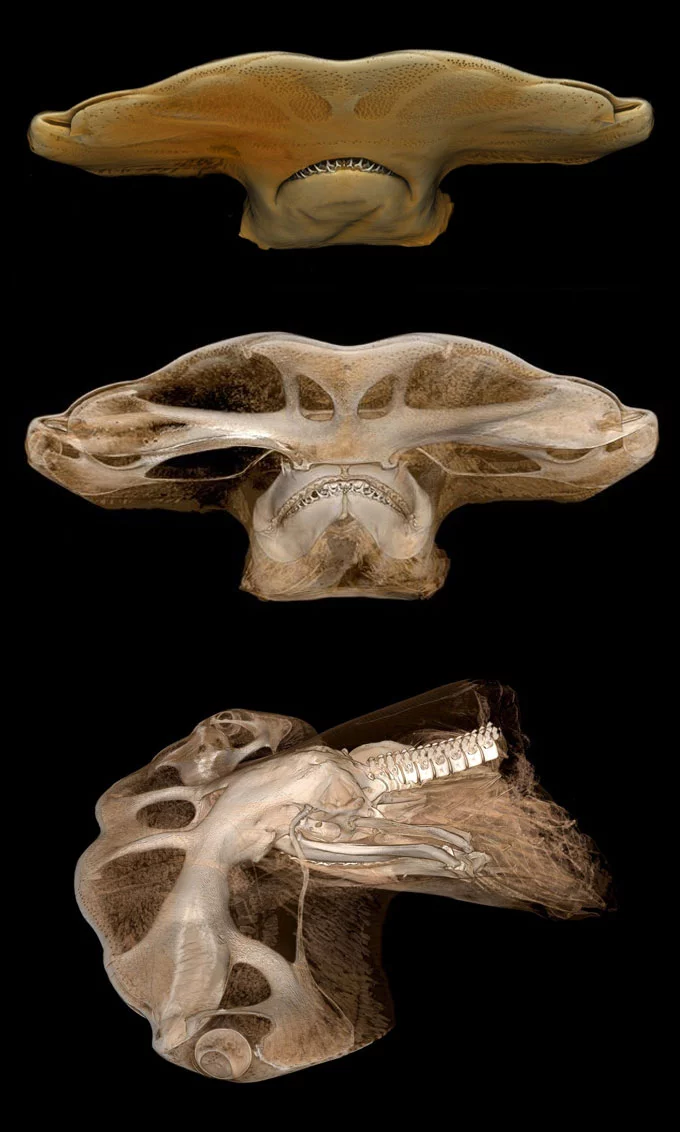
Photo of the hammerhead shark


Share:
Bestcomments (0)
There are no comments for this post yet. Want to leave the first one?