Hoi hoi, dear friends, Valtharix is with you!
You all probably know Tolkien's book The Hobbit, and you've probably watched the movie. Personally, I'm a fan of this wonderful Cinematic universe, and I like the Lord of the Rings even more than the Hobbit, and today I decided to draw a map of middle-earth from the Lord of the Rings. Today I will tell you how I did it and what I got in the end. Have fun reading!
In general, I chose the most realistic map of middle-earth. I had already drawn a map from the Hobbit universe, but it was much simpler, and I had quite a long job ahead of me.
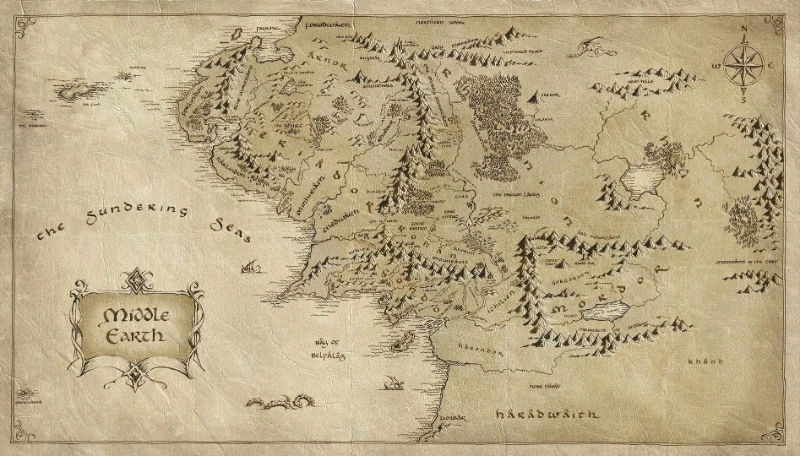
This is the map I decided to draw.
It took a long time to draw, especially since I had only one pencil at my disposal. The work was laborious, as I had to draw small details, mountains and paths. I also often confused letters with geographical objects, and in the end I gave up on the inscriptions, wrote only the largest and most important ones. There were really a lot of small marks, and I often got lost and forgot to draw an object, but in the end I got something.:
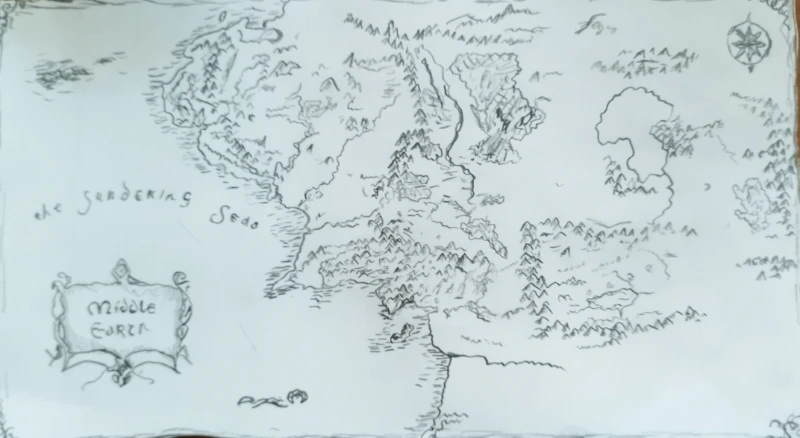
It's not exactly beautiful, but there is some result)
I wanted my map to be as realistic and sample-like as possible, so I had to depict the aging effect (paper yellowing). I decided to try to do this using tea leaves, although I wasn't sure what would happen because the tea leaves were quite pale in color. It didn't work out very well, but there was another stage ahead)
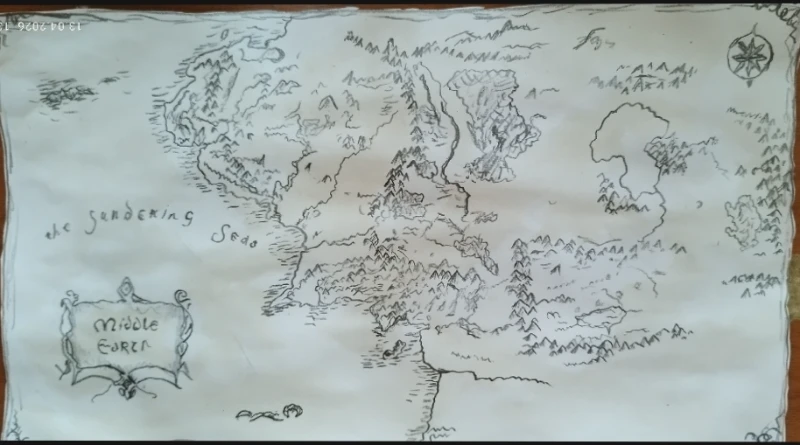
As I said, the tea leaves were too pale
Since I couldn't make the paper old enough, I decided to add something else on my own - to burn the paper a little. Of course, some places were burned more than I thought, but it was still cool.:
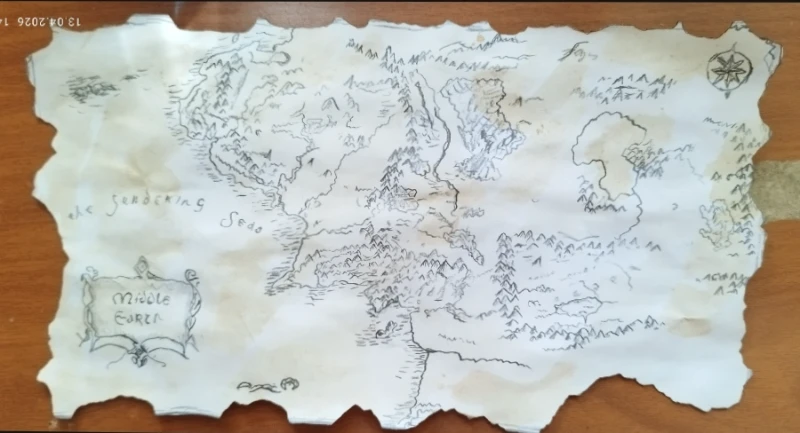
It turned out more or less, plus I found a darker brew and adjusted the map.
* * *
Well, anyway, as far as I'm concerned, normis, I also hung this map on my wall). Well, I say goodbye to you, until the new post!
J. R. R. Tolkien wrote: "I wisely started with a map, and made the story fit (generally with meticulous care for distances). The other way about lands one in confusions and impossibilities, and in any case it is weary work to compose a map from a story — as I fear you have found".
The maps of Middle-earth deserve a special attention, right? I will show you fragments and talk about the main thing: how geographical objects relate to each other.

Let's start with forests. They have an important role to play.
Top 3 largest forests in Middle-earth by area:
1. Mirkwood
2. Fangorn
3. Lorien
And now remember how much time the characters spent in each of these forests.
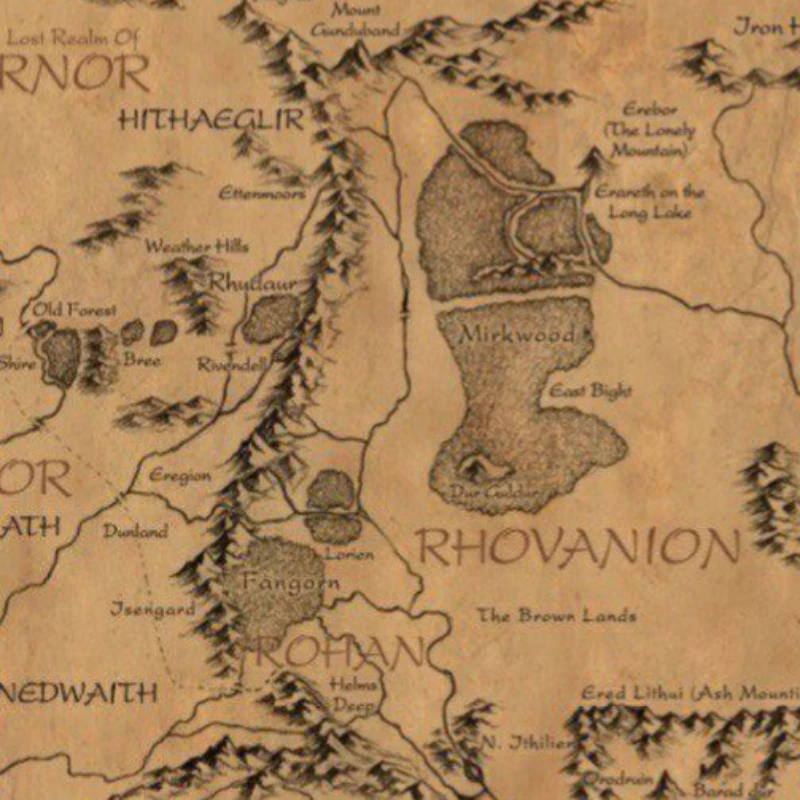
Look at the map. That's why you're here.
The second thing I want to draw your attention to is the Misty mountains. It is a mighty mountain range that cuts Middle-earth in two. But the mountains don't just split the continent. This is where Frodo and Bilbo's paths diverge.
There are 77 years between their journeys. Let's see their itineraries on one map. They reached Rivendell by the same route. Then they tried to cross the mountain range (Bilbo succeeded, but Frodo had to go under the mountains, through Moria). After they crossed the Misty Mountains, Bilbo headed northeast to the Lonely Mountain, Frodo headed southeast to Mordor.
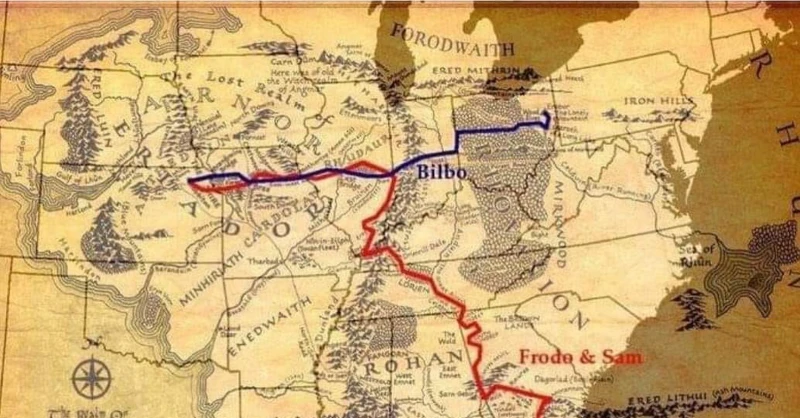
A kind person drew the routes of Bilbo and Frodo on the same map. Thanks.
Now let's look at the location of human lands. Gondor and Rohan are very close neighbors and, fortunately, allies.
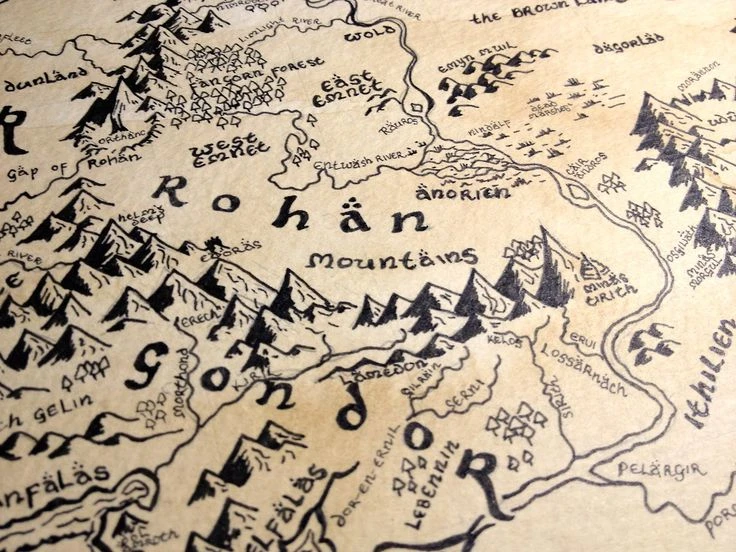
Where was Gondor when the Westfold fell?!
In the year 2510 of the Third Age, the Beacon-hills were created as a means of communication between Gondor and Rohan. The system could be used in both directions.
During the War of the Ring, the beacons on the northern Beacon-hills were lit on March 9 when news came to Minas Tirith from Lebennin that a large fleet Corsairs of Umbar were coming near to the Ethir Anduin. As the Rohirrim rode to Gondor's aid through Anórien they travelled close to all seven northern Beacon-hills on their way to Minas Tirith.
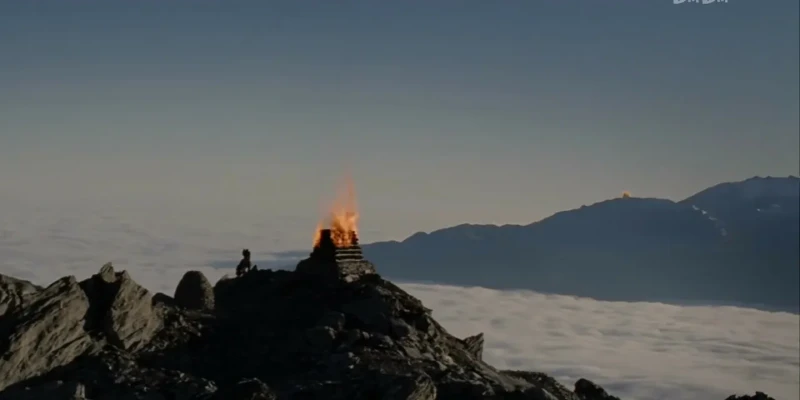
Wonderful!
Keep your allies close and your enemies even closer...
Let's go back to the map. If we zoom it out, we'll find another neighbor, and a pretty dangerous one. Gondor and Rohan have a common border with Mordor.
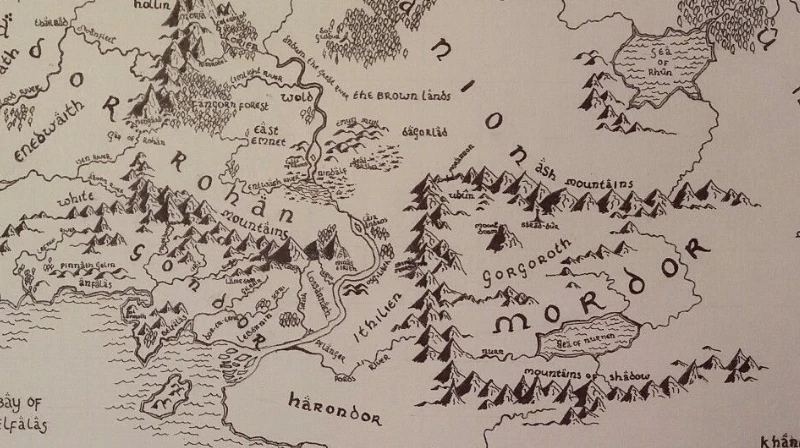
Surprise!
That's all!
This was the cursory acquaintance with the map of Middle-earth. We glanced at the most notable objects without going into details.
Finally, take a look at the entire map of Middle-earth, maybe you'll notice something interesting for yourself!
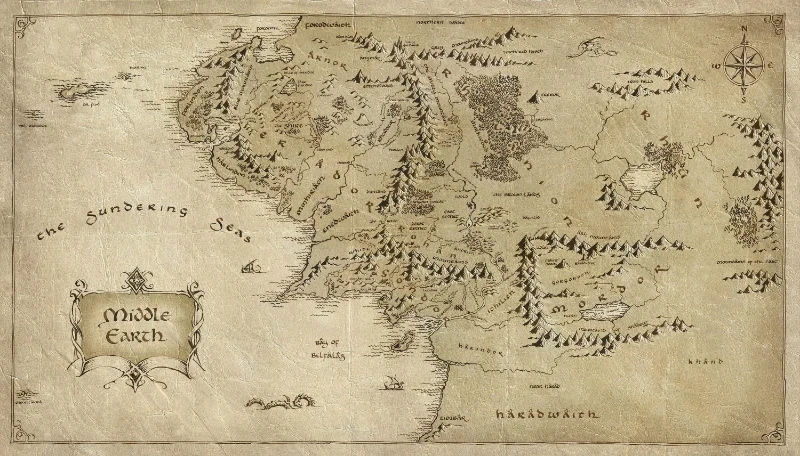
Look at the map, I said!
Shall we continue?2
Hello, cherries! I think everyone has heard about such an attraction as the Eiffel Tower at least once in their life. And if you haven't heard, I'll tell you about this wonderful place in my post. Sit back, enjoy reading!
The Eiffel Tower is a metal tower in the center of Paris, its most recognizable architectural landmark. It is named after chief designer Gustave Eiffel. The construction of the tower was timed to coincide with the 1889 World's Fair and the 100th anniversary of the French Revolution. It originally served as an arch at the entrance to the World's Fair. The Eiffel Tower is considered the most visited paid and most photographed landmark in the world. It is visited by 6-7 million tourists annually, and more than 250 million people have visited it throughout its history.
The tower is 330 meters (1,083 ft) tall, about the height of an 81-story building, and it is the tallest structure in Paris. Its base is square, with a side of 125 meters (410 ft). During construction, the Eiffel Tower surpassed The Washington Monument became the tallest man-made structure in the world. She held this title for 41 years, until the construction was completed in 1930. The Chrysler Building in New York. It was the first building in the world, the height of which exceeded 200 and 300 meters. Due to the addition of an antenna at the top of the tower in 1957, it became 5.2 meters (17 ft) taller than the Chrysler Building. Excluding the transmitters, the Eiffel Tower is the second tallest freestanding structure in France after the Millau Viaduct.
The tower has three levels for visitors, with restaurants on the first and second levels. The upper platform on the upper level is 276 m (906 ft) above the ground, making it the highest viewing platform available to the public in the European Union. Tickets can be purchased for climbing stairs or by elevator to the first and second levels. The ascent from the first floor to the second floor takes more than 300 steps, as well as the ascent from the second floor to the third, so the entire ascent takes 600 steps. Although there is a staircase leading to the top floor, it is usually only accessible by elevator. On the upper, third floor, there is a private apartment built for Gustave Eiffel's personal use. He furnished it with Jean Lachaise furniture and invited friends such as Thomas Edison.

The proposed tower became the subject of controversy and criticism from those who did not believe it was possible and those who objected on aesthetic grounds. Before the Eiffel Tower was built, no structure reached a height of 300 m or even 200 m, for that matter, and many people considered this impossible. These objections were an expression of a long-standing dispute in France about the relationship between architecture and engineering. The situation escalated when work began on the Champ de Mars: a "Committee of Three Hundred" was formed (one member for each meter of tower height) under the direction of the outstanding architect Charles Garnier and with the participation of some of the most prominent artists such as William-Adolphe Bouguereau, Guy de Maupassant, Charles Gounod and Jules Massenet. A petition entitled "Artists against the Eiffel Tower" was sent to the Minister of Public Works and Commissioner of the Exhibition, Adolphe Alphand, and published in Le Temps on February 14, 1887.
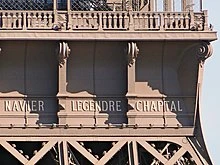
Gustave Eiffel engraved the names of 72 French scientists, engineers and mathematicians on the tower in recognition of their contributions. Eiffel chose this "call to science" because of his concern about the artists' protest. At the beginning of the 20th century, the engravings were painted over, but in 1986-1987 they were restored by the Société Nouvelle d'exploitation de la Tour Eiffel, which manages the tower.
As one of the most famous landmarks in the world, the Eiffel Tower has served as the inspiration for the creation of many replicas and similar towers. One of the earliest examples is the Blackpool Tower in England. The mayor of Blackpool, Sir John Bickerstaff, was so impressed when he saw the Eiffel Tower at the 1889 exhibition that he commissioned the construction of a similar tower in his city. It was opened in 1894 and has a height of 158.1 m (519 ft). Tokyo Tower in Japan, built in 1958 as a TV tower, was also inspired by the Eiffel Tower. The Petrshin Observation Tower in Prague.
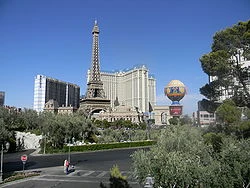
A replica of the Eiffel Tower in a hotel in the USA
I hope my post was not too tedious and very informative. 1-2 more posts are planned today, let's look at the circumstances) See you soon for new cherry meetings!
Did you like the post?1
I just want to create a post. Why not?
I'm not going to fully return to picuco, but I want to create some unnecessary posts or tests.
First of all:
Countries whose territories are divided into states:
1. Nigeria, which includes 36 states.
2. Mexico, it consists of 31 states.
3. Brazil, which consists of 26 states.
4. India, which consists of 28 states.
5. Venezuela, which includes 23 states.
6. Malaysia, which includes 13 states.
7. Australia has 6 states in its composition.
8. Micronesia, it consists of only 4 states.
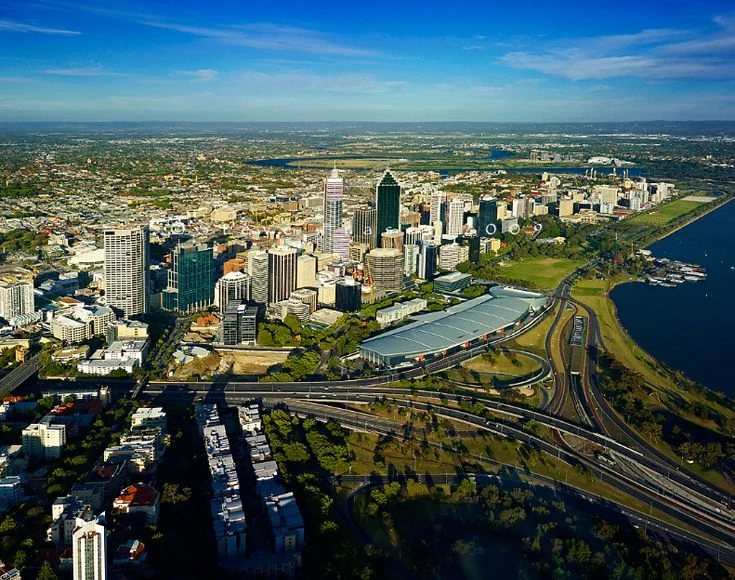
1. Western Australia(Australia) 2,529,875 km2 The largest of the Australian states, occupying a third of the continent's territory.
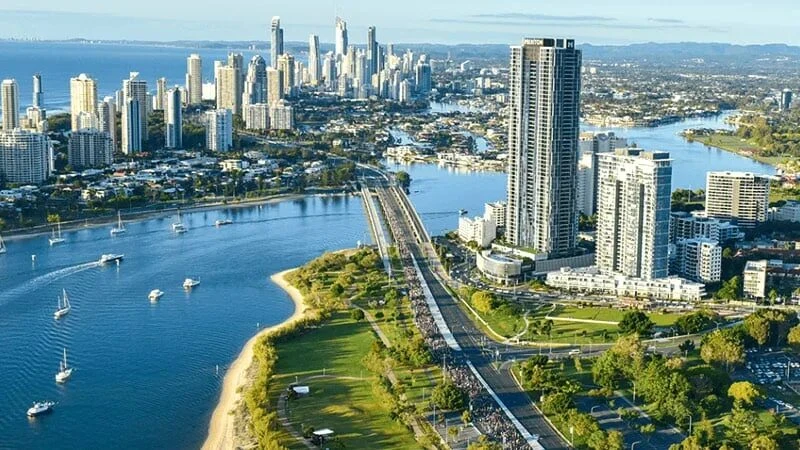
2. Queensland (Australia) is a 1,730,648 km2 state in the northeast of the Australian mainland. The capital and largest city is Brisbane.
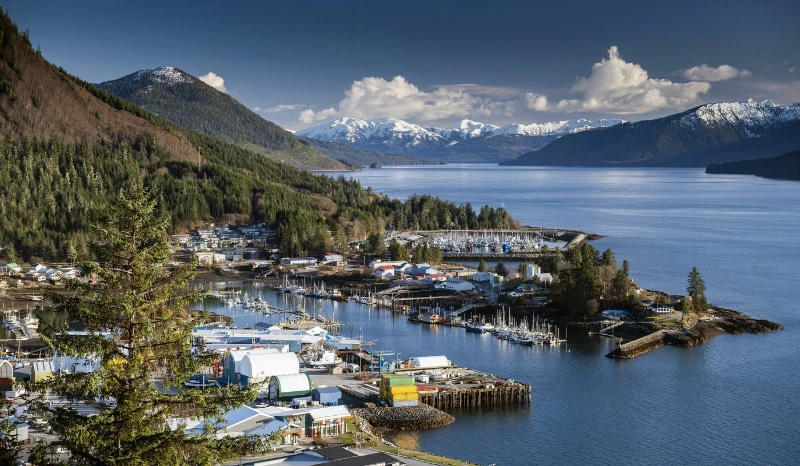
3. Alaska (USA) 1,723,337 km2 is the northernmost and largest state in the USA. It is located in the north-west of North America. It has a maritime border with Russia in the Bering Strait.
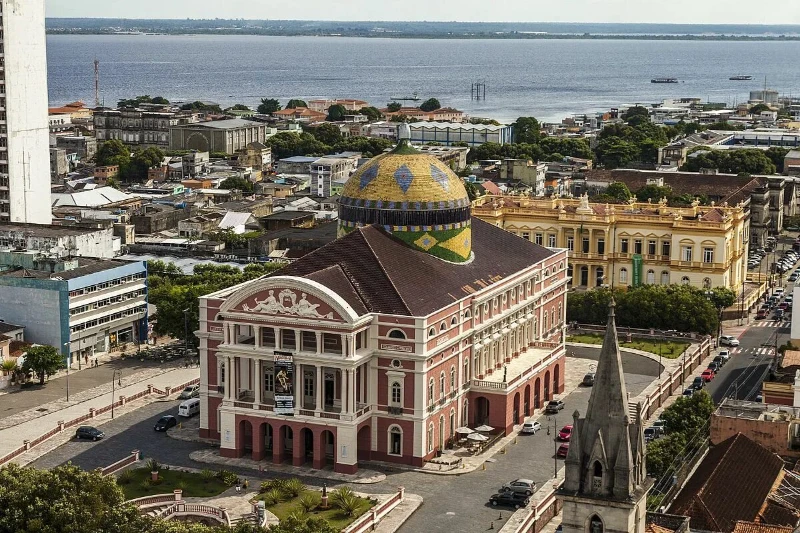
4. Amazonas (Brazil) 1,559,161 km2 The administrative center is the city of Manaus, the largest state in Brazil by area. It occupies more than 18 % of the country's territory
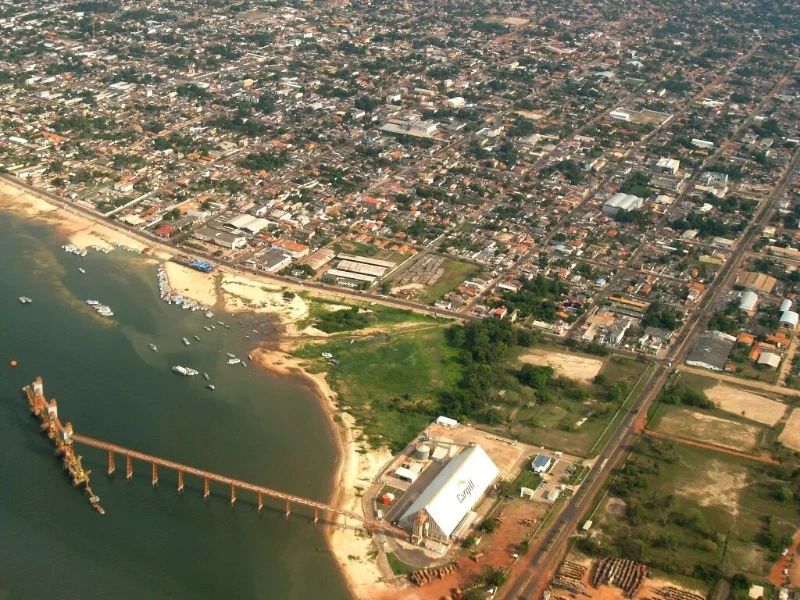
5. Para (Brazil) is a 1,247,950 km2 state in the north of Brazil. The administrative center is the city of Belen.
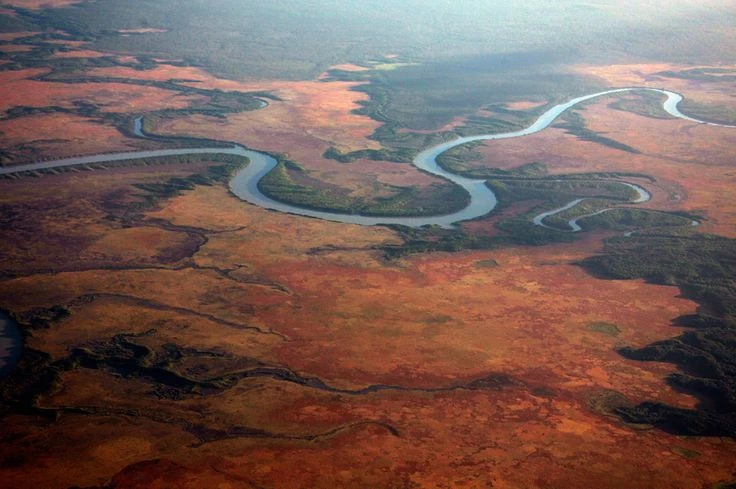
6. The Northern Territory (Australia) is 1,349,129 km2 a federal subject within Australia, in the north of the mainland of the country. The capital and largest city is Darwin.
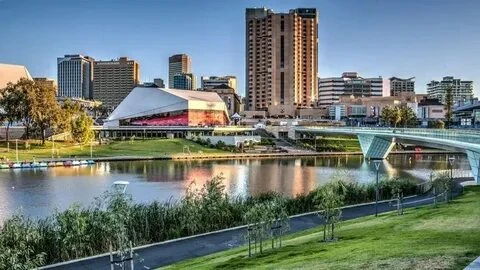
7. South Australia (Australia) 983,482 km2 is a state in the center of the southern part of Australia. The administrative center is the city of Adelaide.
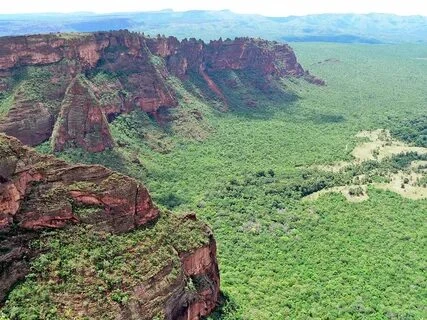
8. Mato Grosso (Brazil) is a 903,329 km2 state in the central part of Brazil. The administrative center is the city of Cuiaba. Mato Grosso is the third largest state in Brazil by area.
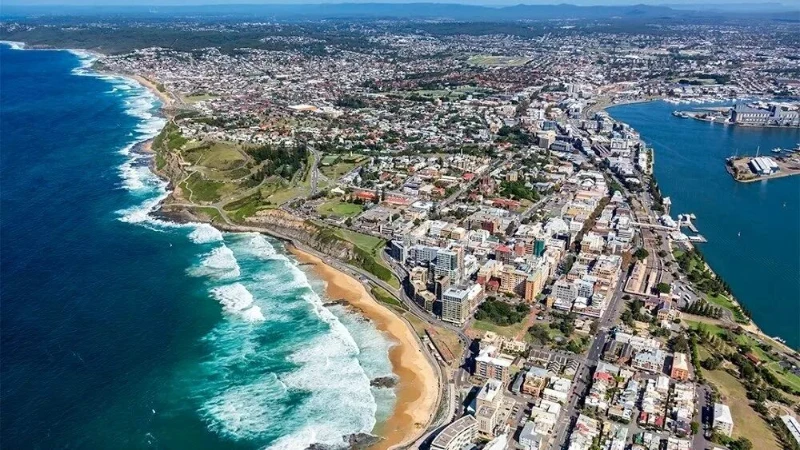
9. New South Wales (Australia) is an 800,642 km2 state in southeastern Australia, the oldest and most densely populated administrative-territorial unit of the country.
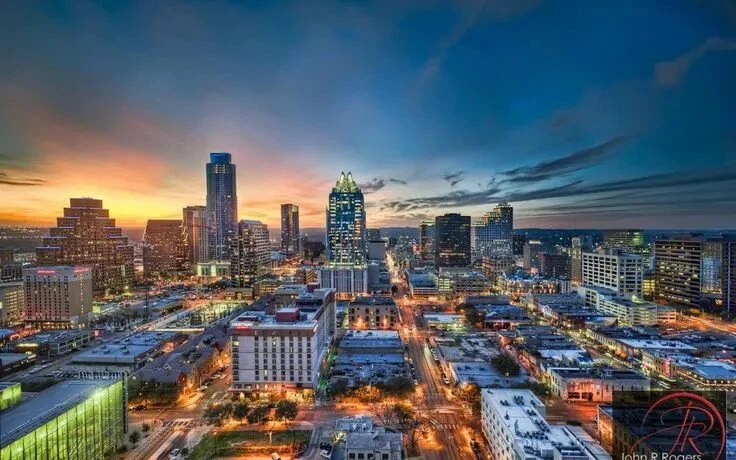
10. Texas (USA) is a 695,662 km2 state in the south of the USA. The state capital is Austin. It ranks 2nd in terms of territory in the United States.
Among these states are:
- 5 states from Australia
- 3 states from Brazil
- 2 states from the USA
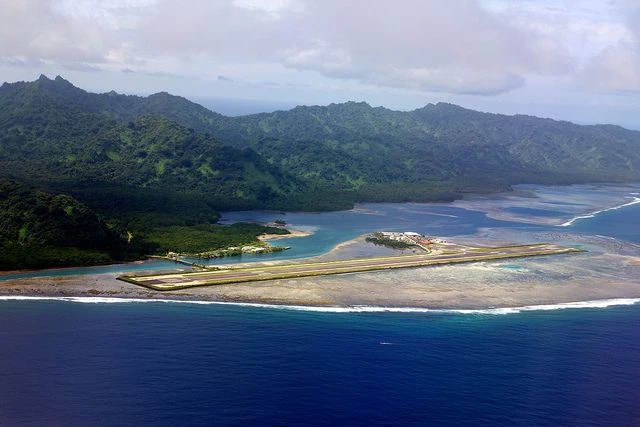
1. Kusaie (Micronesia) 109 km2 One of the four states of the Federated States of Micronesia. It is located in the east of the country.

2. Yap(Micronesia) 122 km2 It includes the Yap Islands and atolls to the east and south of the islands. It is located in the west of the country.
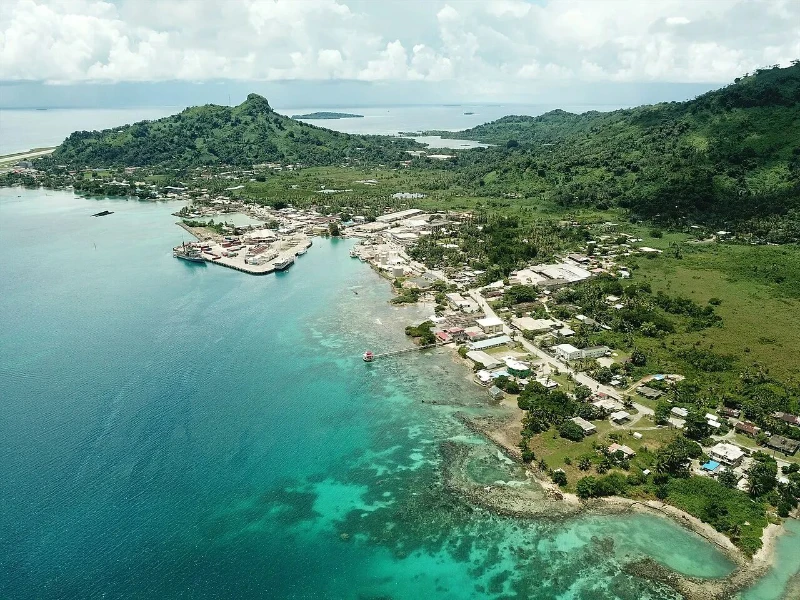
3. Chuuk (Micronesia) 127 km2 is located in the western Pacific Ocean 1,440 km east of Yap Island.
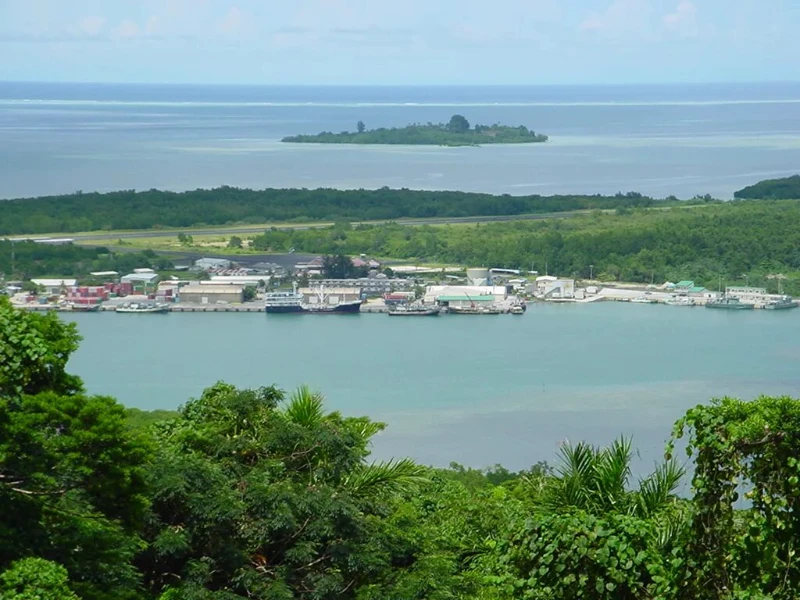
4. Pohnpei (Micronesia) 344 km2 Until 1984, the state was called Ponape. It is located in the central-eastern part of the FSM on the island of Pohnpei and small coral islands
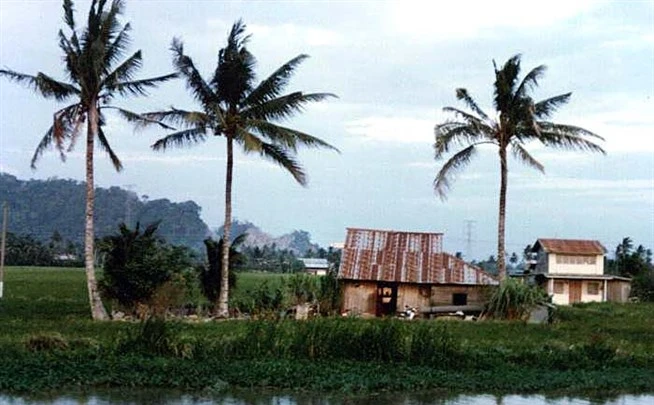
5. Perlis (Malaysia) is a 795 km2 state in Western Malaysia, in the extreme northwest of the Malacca Peninsula.
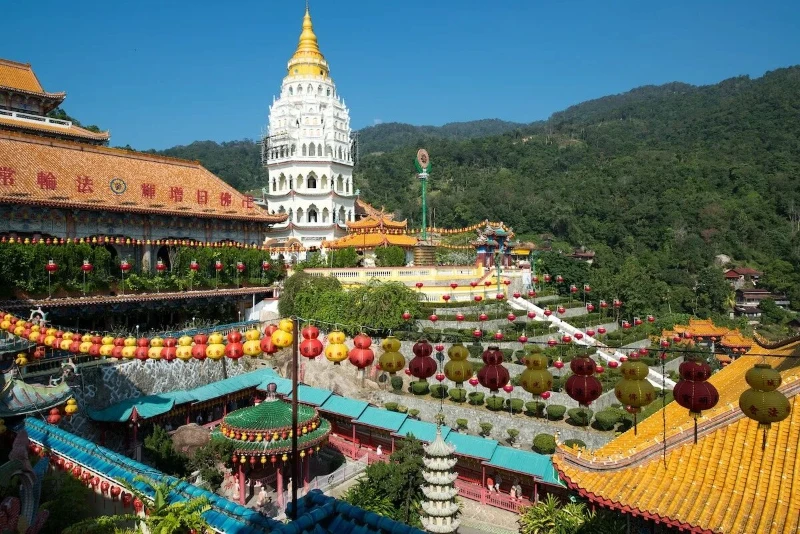
6. Penang (Malaysia) is a 1,031 km2 state in Malaysia, located on the northwestern coast of the Malacca Peninsula, in the Strait of Malacca.
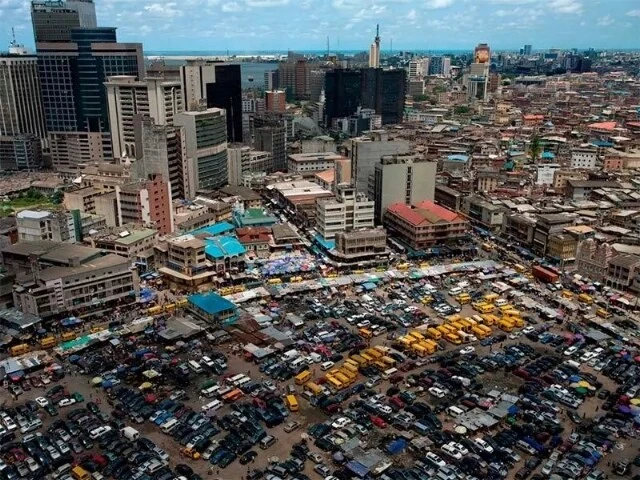
7. Lagos (Nigeria) is a 1,171 km2 state in southern Nigeria. It is the smallest in area and the second most populous (after Kano) among the states of Nigeria, as well as one of the most economically developed states.
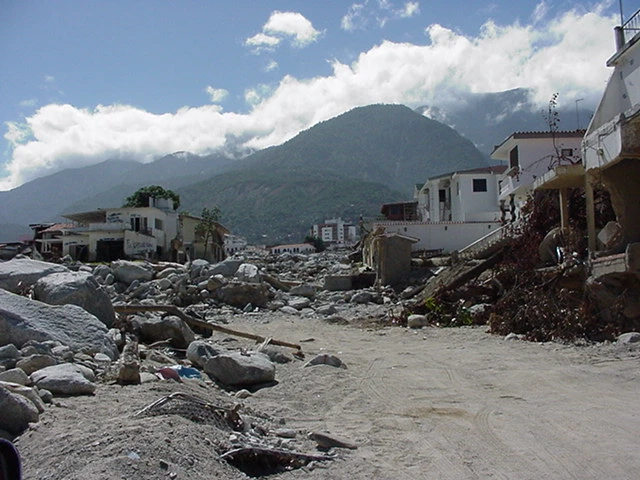
8. Vargas (Venezuela) 1,496 km2 One of the 23 states of Venezuela. The administrative center of the state is the city of La Guaira. The population is 352,920 people.
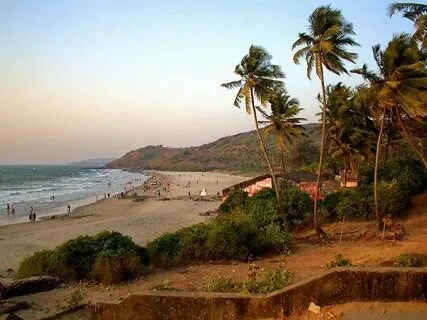
9. Goa (India) is a 3,702 km2 state in southwestern India, the smallest among the states in terms of area and the 26th (out of 29) in terms of population. A former Portuguese colony on the Indian Subcontinent.
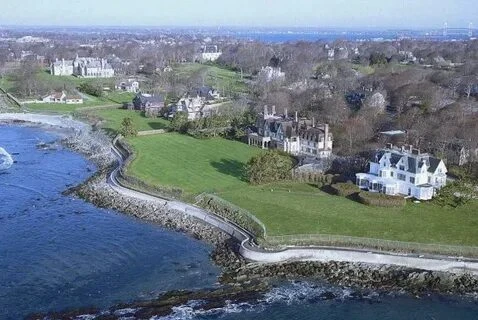
10. Rhode Island (USA) is a 4002 km2 US state, part of the New England region and located on the Atlantic Ocean. It is the smallest state in the United States by area.
Among these states are:
- 4 states of Micronesia (all its states)
- 2 state of Malaysia
- 1 state of Nigeria
- 1 state of Venezuela
- 1 state of India
- 1 US state
I hope you enjoyed this post. You can suggest ideas for posts in the comments.
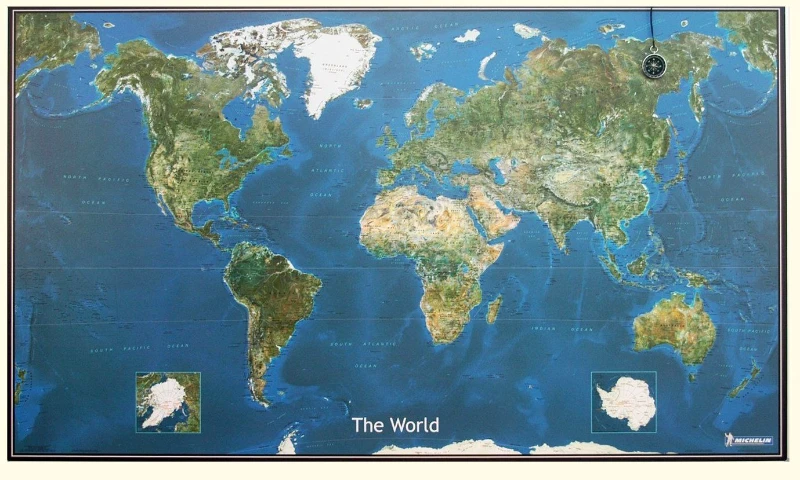
Did you know that there are states bigger than Alaska?0
Hello everyone
Unfortunately, I travel quite rarely. To be precise, almost never. But at the same time, I love reading various posts, articles and texts about the countries of the world. Reviews from those who live there, all sorts of economic reports or even just local news. And I thought, "What if we look at a map of the world? Which country would I find outright wonderful?". In short, he put himself in the place of an ordinary man in the street.
And I realized that there are several countries that are sufficiently overrated. And today I will tell you about seven of them.
But first, a disclaimer.
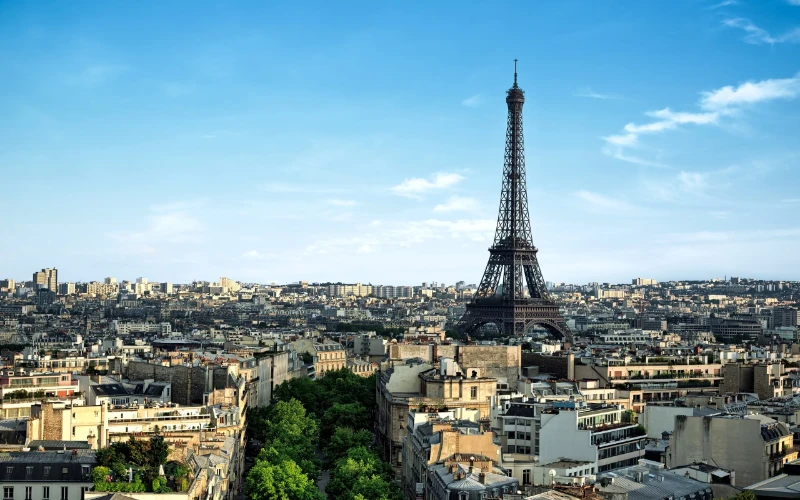
I've been deciding for a long time whether to include France here.
On the one hand, such a decision may be colored (even unconsciously) by the current political processes in the country. And there have already been five more serious candidates.
On the other hand, Napoleon's homeland leaves a very strong imprint on the mind. That's why such an unusual format is the top 7.
Speaking of France, almost everyone will have very strong images in their head. Eiffel Tower, baguettes, cheeses, beautiful Parisian autumn, Provence, etc. And this is certainly the case. You can also touch on the culture of France, which for centuries has been the standard for the entire civilization and the object of admiration and imitation.
However, we must try to look soberly. France is also a slum on the outskirts of cities. This is a bunch of migrants from Africa and the Middle East. This is not the most adequate government. This is dirt that is not very visible behind the facade of the well-groomed streets of Paris, Marseille or Toulouse.
And do not forget the protest traditions of this country. Riots are common here. The same football fans, migrants, leftists, rightists and anyone else. Many people rebel and they rebel often.
However, the advantages, in my humble opinion, are somewhat outweighed. Therefore, only the sixth place.
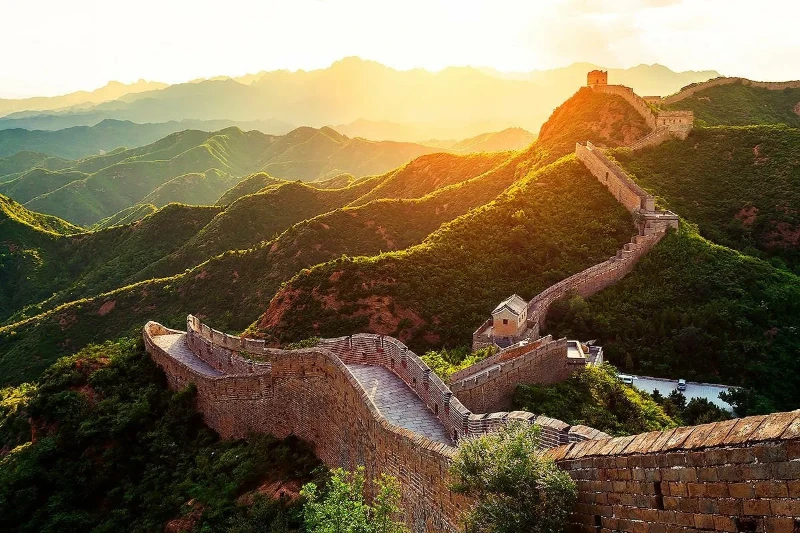
In this post, it is about mainland China.
On the one hand, China is history. The story is great and interesting, despite the fact that I am not particularly interested in the East. It's an art, a special charm and the like.
But at the same time, this culture can be very frightening for the least prepared person. I have come across the Chinese several times and I can say that the company is not for everyone. Among other things, China is quite dirty, not the most welcoming from an economic point of view, and very, very strict in terms of rules and restrictions.
Their "zero covid" policy alone is worth something. And you can also recall the limitations of the digital space and the general censorship of society.
And, of course, an excessive overestimation of China's power should be highlighted as a separate point. From the category of statements that the Celestial Empire will soon overtake the United States. There is a very interesting post by Akarakot on this topic, but I will try to briefly express my opinion.
China was not bad and developed through the distillation of almost free labor from villages to cities, as well as a relatively free economic policy. The current situation and the usurpation of power, which violates China's political institutions, also destroys the prospects for economic superiority.
Therefore, despite the general orgasming of our propagandists and "nationalists" on the topic of China's power, I am almost sure that he will lose the war (both literally and commercially) with the West.
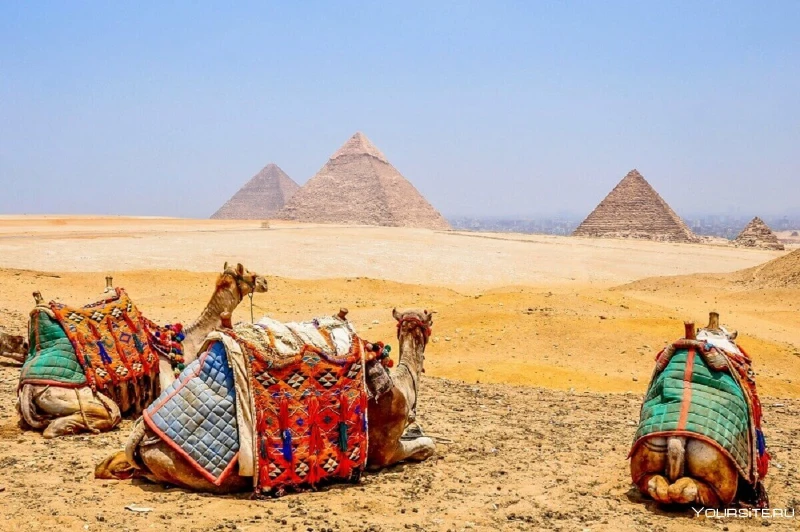
Egypt, in fact, is still a hole and a cesspool.
But besides the personal reasons for disliking this country (first of all, the heat), there are others, including such an unfair popularity of the country.
Egypt is a poor country, one might even say poor. Very dangerous. Not only is the terrorist threat high, but also the local population, which will not let you feel comfortable. And especially if you're a girl. Well, among other things, you need to remember that Egypt is a Muslim country. Remember the fucking rules.
But then why only fifth place? It's simple - they mostly go to Egypt for the sake of beach and hotel tourism. And it seems to be relatively well developed. At least it doesn't color the general shit much.

Judging by the latest tests on Pikuko, it would be possible to put Korea higher. However, this phenomenon is undulating, soon there will be less K-pop (just in case, I have nothing against it), probably.
But what are Korea's problems? In general, they are typical for East Asia. There is very serious social pressure at all stages of life, the strong tightness of public life, the most serious social inequality and not so well-developed capitalist institutions (chaebols inherited create a very bad practice of oligopolies).
Of course, Korea has done a very good job of promoting itself among the masses. Moreover, it is better than any country in the world (only two can compete with it). But behind this screen, Korea's common problems are hidden, which can be worse than even ours.
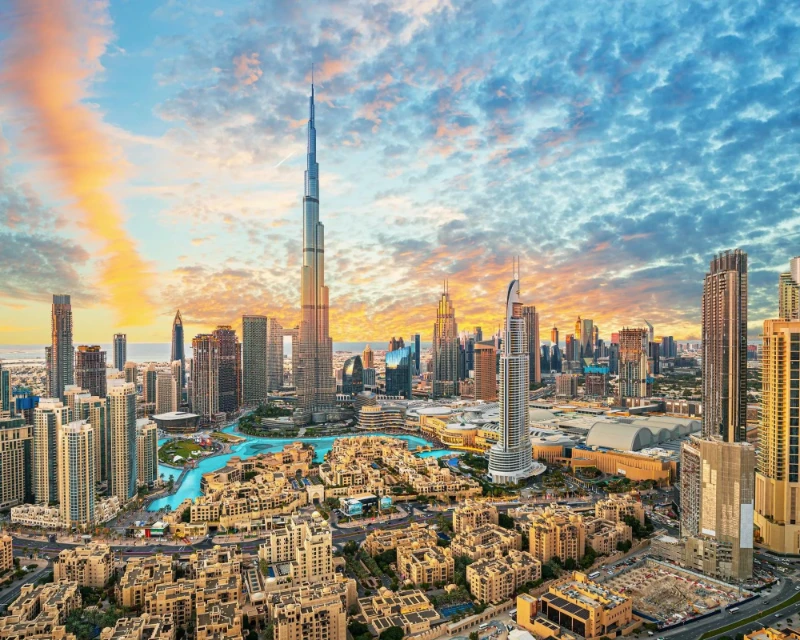
The UAE is my sore point.
Every relatively major friend of mine has boasted at least once (and usually more than once) that he flew to Dubai. Our "elite" flies to the UAE, and sometimes lives there.
In my opinion, the UAE (namely Dubai and Abu Dhabi, because they usually do not fly to other emirates) is a standard of bad taste. Incongruous glass dildos in the middle of the desert mixed with the impoverished huts of workers from Pakistan. There is something similar in the cities of East Asia, but there it is at least a little aesthetically pleasing.
I can compare the popular part of the UAE with a shopping mall. There's nothing to do there for more than three or four days, unless you work there. Well, and the rest of the Emirates... tell me, have you heard a lot about holidays in Sharjah, Ras al Khaimah or, there, El Fujairah. So I'm not, so I'm only talking about the two most popular regions.
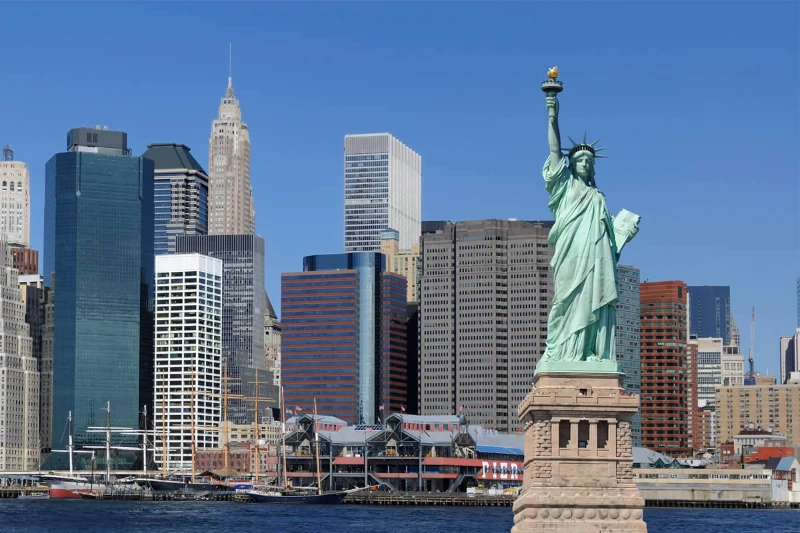
Yes, maybe I shocked someone. No, I didn't become a harsh hater of the Pendos. I still like American culture, history, and aesthetics, and I still consider the United States the greatest country in history (along with France and the Roman Empire). However, let's be honest.
That's how many times have you seen beautiful American images in movies, TV series, literature, YouTube videos? The already boring phrase "The American Dream" and a way of thinking based solely on an extremely competent policy of promoting the image of the country.
There are a lot of problems in the USA that I would never want to live there, even though I like this country (yes, paradoxically). The emphasis on cars, low-rise buildings (although, for many, this is rather a plus), very serious racial differences, tax and legislative policy, and just a completely different way of life, which takes a very long time to get used to.
Therefore, I will probably always study the USA and enjoy the part of its culture that I like. But there is no way to live there on a permanent basis.
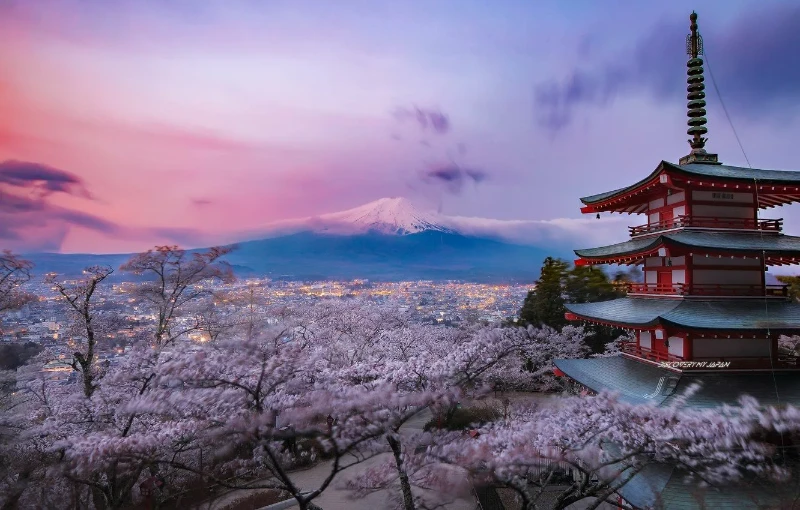
Although they have a somewhat local audience, but the images of Japan are probably stuck in their heads so that no ticks can get them out of there.
Sakura, anime, mountains, architecture, traditions, cuisine - all this can compete with such a monstrous machine of soft power as the United States. However, do not forget that there are also a number of problems in Japan.
In general, it is possible to copy the paragraph about South Korea, with the only condition that in Japan these problems are superimposed on even greater demographic and economic crises. Read something about Japan's lost decade. Yes, many countries have faced this, but not all have been selected and returned to the previous level (or even become better).
Of course, I would like to visit Japan as a tourist. But if I were given a choice - to be born in Japan or in Russia, I would not ironically choose Russia. Because, of course, I don't want to downplay someone's problems, but if you think that society is putting pressure on you, then compared to Japan, you live in a happy world of progressivism and rainbow ponies.
Well, that's all for now. I hope it was interesting for you to read.
If there are good ratings for this post, then I will release a part about the most underrated countries.
Which of the listed countries is more overrated?5
Hello again!
Most recently, I published a post with the most, in my opinion, overrated countries. And since he collected well, I'm writing a sequel - the most underrated countries in the world. Also, in my highly subjective opinion.
The disclaimer is the same. Everything presented here is my subjective opinion, which does not pretend to be academic.
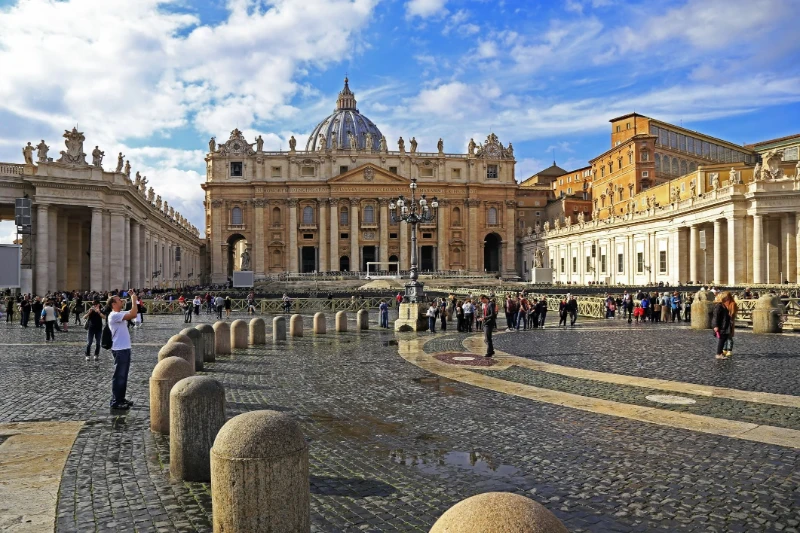
Actually, I was lying a little bit. This post will focus not so much on the Vatican, but on the Holy See, which governs the Vatican.
It would seem to be a religious, theocratic organization that owns a dwarf state and a couple of pieces of land around the world. However, it is worth paying attention to one small detail. Just the smallest thing. The head of this organization is, in fact, considered the main person for 1.3 billion people on the planet. Even more senior than the leaders of their countries.
And it is worth noting that the Vatican is one of the main places of pilgrimage, and the Pope is a moral reference point for many, as already mentioned.
He is so low only because he has little actual power. However, he is too much underestimated, which allowed him to get on the list.
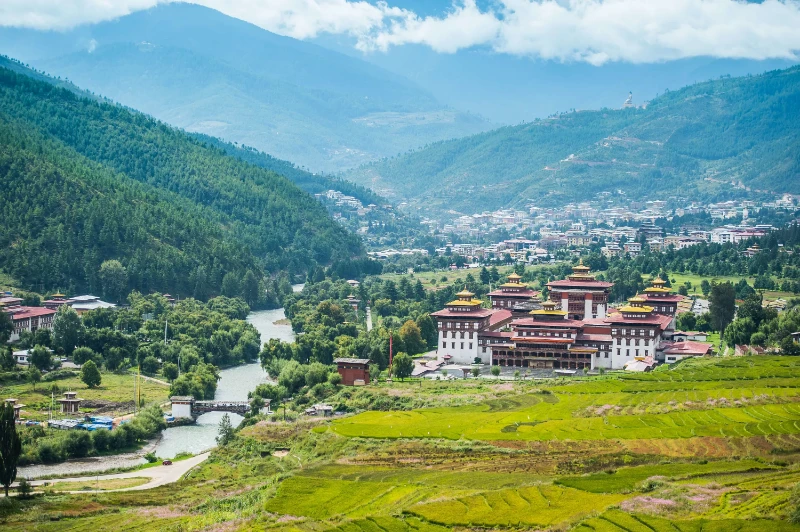
Yes. Bhutan is a poor, agrarian country, all located in the mountains and therefore not particularly interesting to anyone.
But the fact is that Bhutan has prospects. And very big ones. Not only is it located between two regional hegemons (China and India) and can maneuver between them, receiving preferences, but tourism is also on the rise there.
It is worth noting that before 1970, entry there was practically impossible at all. However, after the annexation of Tibet by China, Bhutan became one of the destinations of "Buddhist tourism", since there are a lot of attractions there, despite the modest size of the country.
But Bhutan is not exactly an ideal country. The road system is still poorly developed there, and although reforms are underway, they are extremely slow. From that, only the 6th place.
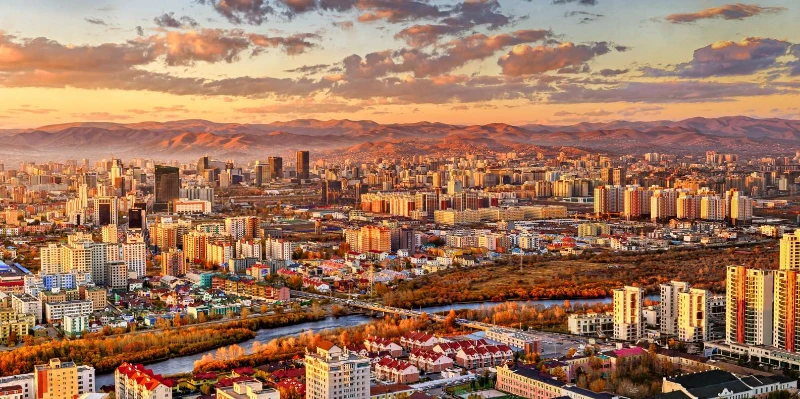
In general, Mongolia should be divided into two parts. Ulaanbaatar (the capital) and a couple of large cities where up to half of the population lives, as well as the rest of Mongolia. The rest ... It is there. Of course, it is important for the country's economy, but it is fundamentally no different from the provinces of similar countries. Maybe even worse.
But the main part of Mongolia (primarily its capital) is an extremely interesting place. Perceived by everyone as an absolutely empty and wild steppe, it is a fairly developed city with a powerful financial sector for countries of this level.
Well, the situation is a bit similar to Bhutan, since the country is located between two large states - Russia and China. Moreover, in the border regions, peoples related to the Mongols live there (in Buryatia or Inner Mongolia, for example).
And yet, as an interesting fact, the bulk of those who fled the Russian regime after February (and especially September) 2022 in the Far East fled to Mongolia, which promised and does not extradite those who came to it.
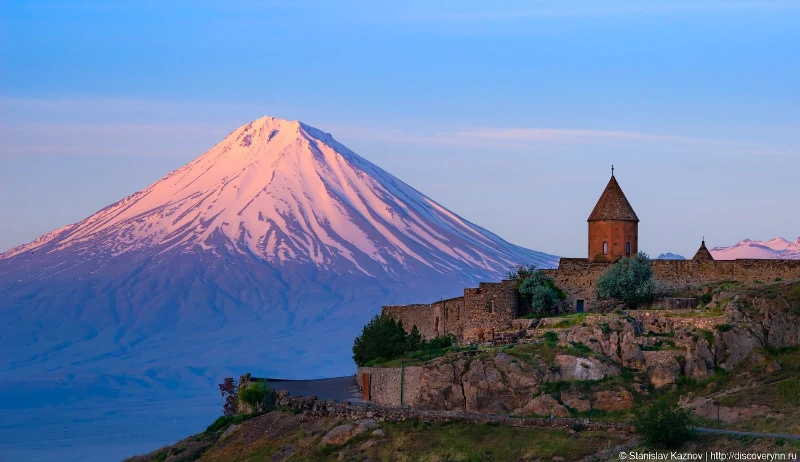
Armenia, in my humble opinion, is undeservedly less popular than its neighbor Georgia. Although Armenia has a number of advantages.
It is slightly cheaper, more favorable to tourists and migrants from Russia, and there is much more of the Russian language we are familiar with there than in other countries of the Caucasus.
But even removing such personally subjective reasons, you can highlight a lot more. Armenia is an incredibly beautiful, quite democratic country (for its region). And considering that the conflict with Azerbaijan is close, if not to an end, then at least to a lull, the country becomes even more attractive.
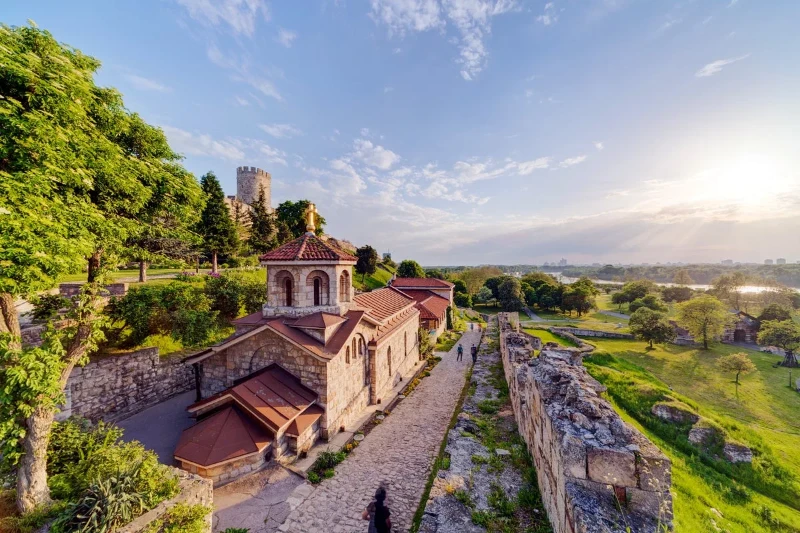
The reasons are partly similar to those of Armenia. However...
Serbia is still Europe. It is close to joining the EU (which, by the way, is not a plus) and strong European integration, but at the same time it keeps the balance and is quite comfortable for people coming from Russia or other countries with Eastern and southern Slavs among the population.
But I must admit that I am extremely subjective (Kosovo, Serbia, ksta), therefore, it would be nice to find the disadvantages. The main one is the conflict with Kosovo and NATO, as well as some political upheavals that occasionally occur.
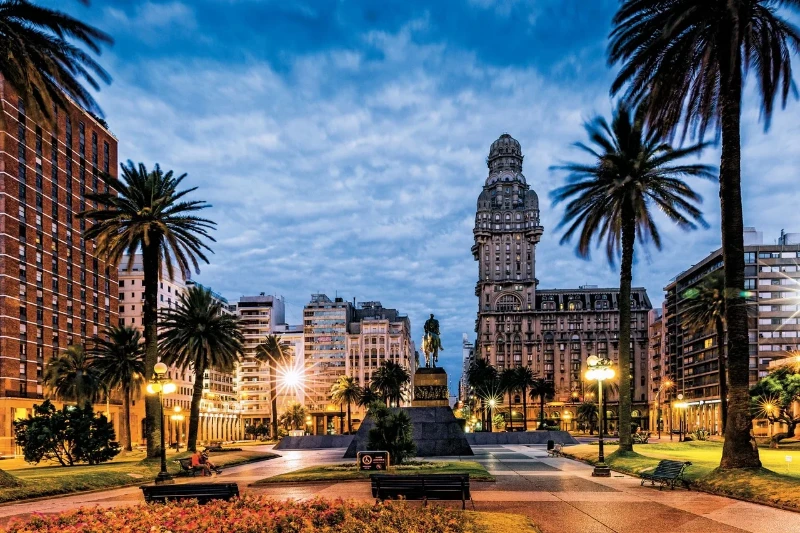
A very large part of the population does not know about such a country at all. Even more people occasionally confuse it with Paraguay. And, by the way, in vain.
Uruguay is one of the two prosperous countries in South America. In addition to relative political stability and rare political conflicts, Uruguay is also quite developed from an economic point of view.
That is, so that you understand, GDP (PPP) per capita (the main indicator showing the well-being of the country and the population in it) Uruguay has 3 times higher than Russia, and is also noticeably higher than in, for example, Georgia or Montenegro. However, one South American country still beat Uruguay in many areas. But what is it?
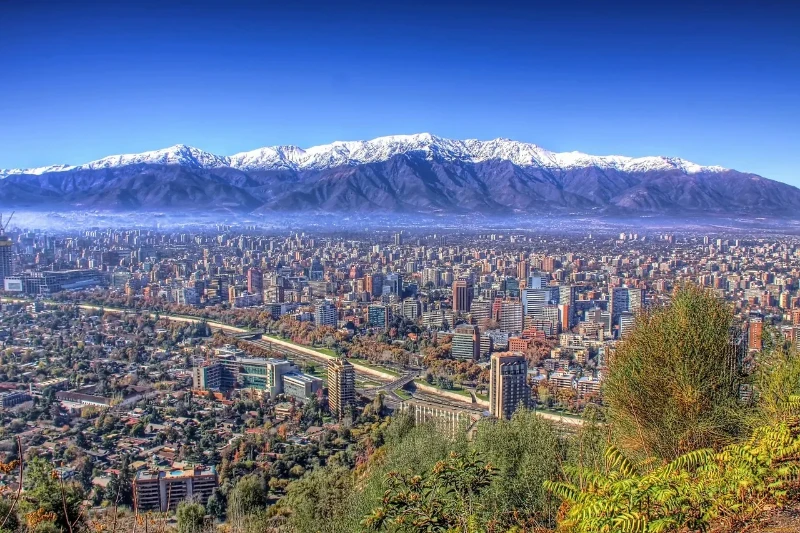
Yes, those who are a little involved in economics, politics and history know about the Chilean economic miracle, and that it is the most successful country in South America. However, most people know at best that this is some kind of very elongated country.
In short, Chile, to some extent, can be compared with Europe in a number of social and economic indicators. Plus, Chile, unlike neighboring Argentina, did not prolong its historical chance, which makes the country more stable in such a maximally unstable region.
One of the disadvantages is a state with fairly high prices. By the standards of the region, for sure.
Well, that's all for now. It turned out to be somewhat less, since praising is not scolding. But I still hope it was interesting.
Which of the listed countries is the most underrated?3
The post that I announced in my telegram at the end of August, but which I have only reached now.
Who was the first to visit America? Many people, remembering the school curriculum, will say that it was Christopher Columbus who did this at the end of the XV century. A little less people will remember the Vikings who visited America 500 years before the Italian-Spanish navigator.
However, there are much more theories about who came to America first (not counting the indigenous people who came from Asia). And today I will try to consider all the significant ones in chronological order.
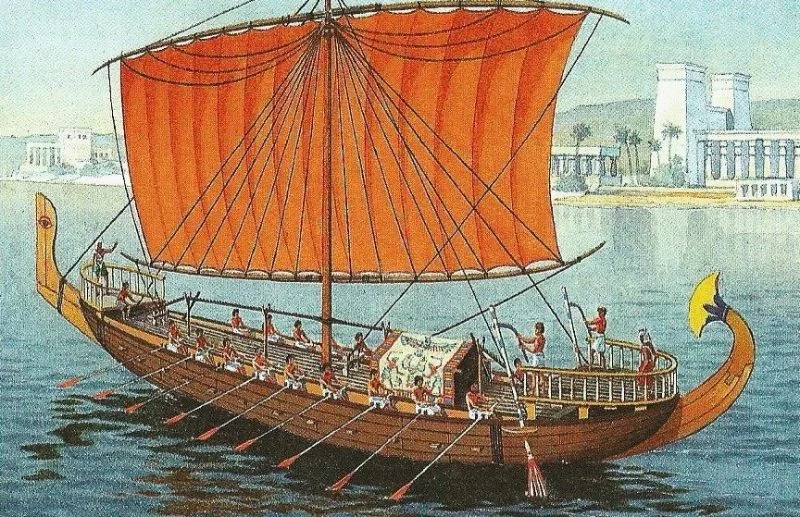
The third most popular version, after the two confirmed ones, says that hypothetically the Ancient Egyptian civilization could have had the first contact with America.
So, an archaeologist, traveler and an active supporter of this hypothesis, Thor Heyerdahl even attempted to sail from Africa to the Caribbean Islands. And if the first attempt, although it was close to the goal, failed, then the second one ended in success.
However, apart from the theoretical possibility of such a voyage, there is no other evidence of such. Thus, the comparison of Mesoamerican and Egyptian pyramids, conducted by many, is incorrect, since they were built for different purposes and at different times.
One day, a German toxicologist found traces of coca leaves and tobacco in the remains of mummies, however, the analyses of other scientists also did not confirm this.
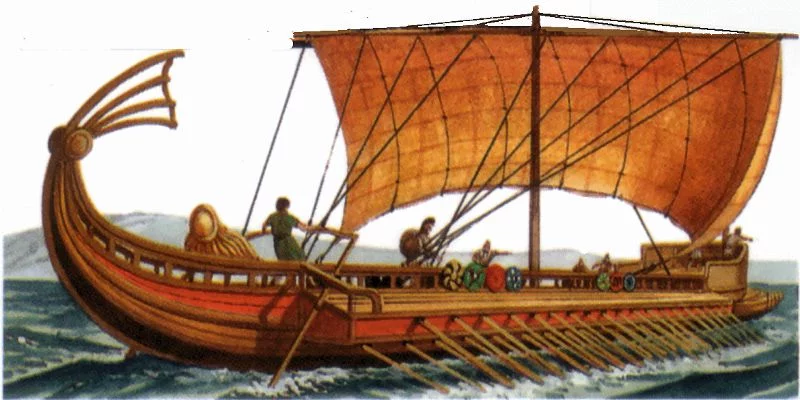
A slightly more likely theory is about a possible Phoenician expedition to America. However, in addition to the regular absence of any serious evidence, another point is noteworthy.
The Phoenicians, although they had a better chance of potentially visiting America due to their trade and colonial policies, would hardly have sailed so far. After all, if you look closely, almost all their colonies are located on the shores of the Mediterranean Sea. Beyond the "Pillars of Hercules" (the shores of the Strait of Gibraltar) there were only a few large cities, and that was quite close.
And it's logical. The main purpose of the colony's location is to develop a trade route and establish ties with neighbors. Then why would they sail so far?
From the same opera, one can note the theory of Hebrew travels to America (which, by the way, is partially adhered to by Mormons, funny guys in general). However, everything here is limited to just a couple of artifacts, which are 99.9% fake.
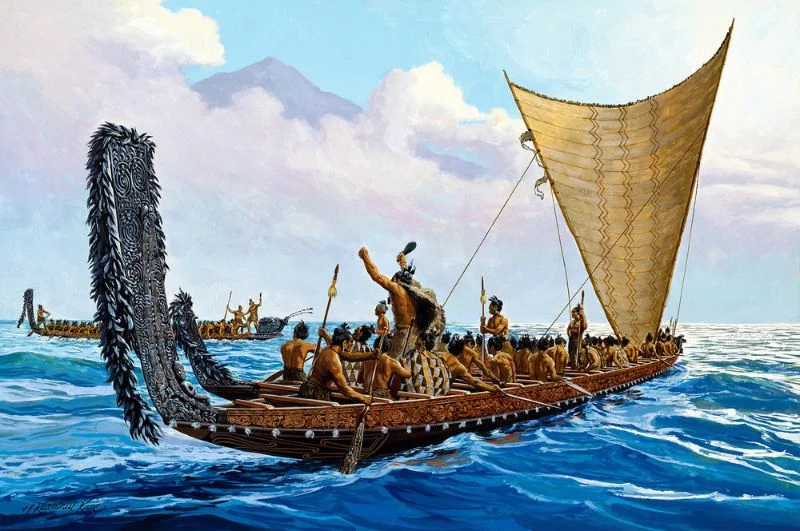
Let's move a little away from the Mediterranean and take a look at Polynesia.
The theory of Polynesian voyages to America is supported by the spread of sweet potatoes on the Pacific Islands. And the fact is that the sweet potato was originally an American endemic.
However, this argument is partly broken by geneticists, who estimate the age of sweet potatoes at several hundred thousand years and say that this culture could quite easily have been transferred to the territory of Polynesia with the help of sea waves or birds carrying seeds.
And despite the Polynesians' ability to navigate the open sea perfectly with the help of the night sky, the part of the ocean that is closer to America has almost no islands.
A notable exception is Easter Island, which was inhabited only by 300-400 (according to another version, by the 900s) and was relatively isolated even by Polynesian standards.
There is even a legend associated with it. They say that at the end of the XV century, the Inca fleet was approaching this island. Here the story is interesting, as it has a number of indirect, but proofs. So, there is one monument on the island that strongly resembles the Inca culture, there are traces of plants that were previously characteristic of the Inca Empire and came to the island long before the arrival of Europeans. And the most important thing is that the genome of the island's inhabitants contains traces of Native Americans dating back to the XIII-XV centuries.
This, as well as the legends of the Incas, according to which their emperor discovered some islands in the Pacific Ocean, give reason to believe that there really was contact.
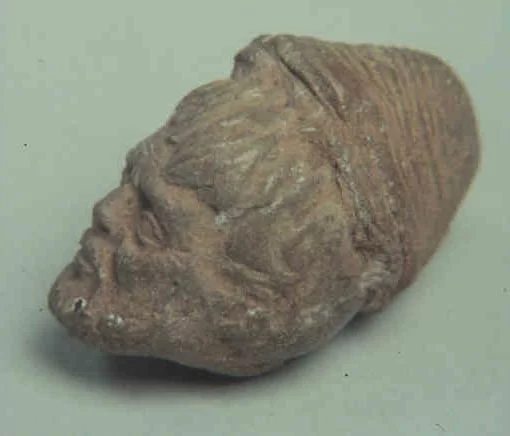
Let's go back from quite probable theories to more fantastic ones.
There is a hypothesis according to which the ancient Romans could have had contact with America.
The main confirmation is the so-called "Head from Kalitztlauk" (photo above).
According to some statements, this artifact could have a pronounced Roman origin. This is not known for certain, however, even if it is so, there are two more versions that do not imply contact, but confirm the fact of Roman origin.
According to the first of them, the head could have got to Mexico (and it was there that it was found) along with the first expeditions of the conquistadors. This was rare, but sometimes they did take certain artifacts with them to the New World.
According to the second, this statue could have been washed ashore along with the wreckage of the ship. It is well known that the Romans visited the Canary Islands. And, in theory, one of the crashed ships could have washed up on the shores of America. Extremely unlikely, but possible.
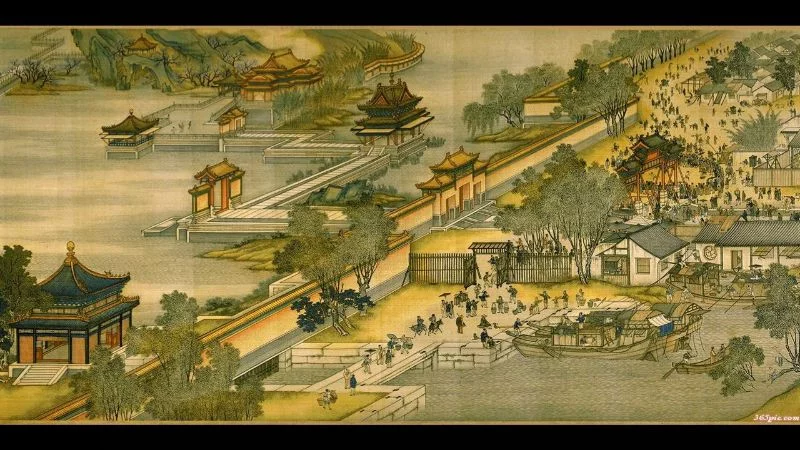
Let's go back to Asia again.
Another version says the following. Around the 5th century AD, the Chinese monk Shen He traveled to a certain country of Fusan.
Initially, Fusan means three things - a mythical tree, a hibicus, as well as this most legendary country.
And this is where historians begin to argue about who to associate this Fusan with. There are two main versions - something on the west coast of America, as well as Japan.
According to the author, the location of the country speaks in favor of the first one - "20,000 li east of the Dahan country." Considering that Dahan was located approximately on the territory of present-day Transbaikalia, Japan is closer than the specified distance.
However, in favor of the fact that this is Japan, there is a mention of breeding horses, which at that time simply did not exist in America. Also, in Chinese poetry, Japan was often referred to as Fusan in the future.
As a result, the theory of a Chinese visit to America around the fifth century can be considered rather erroneous.
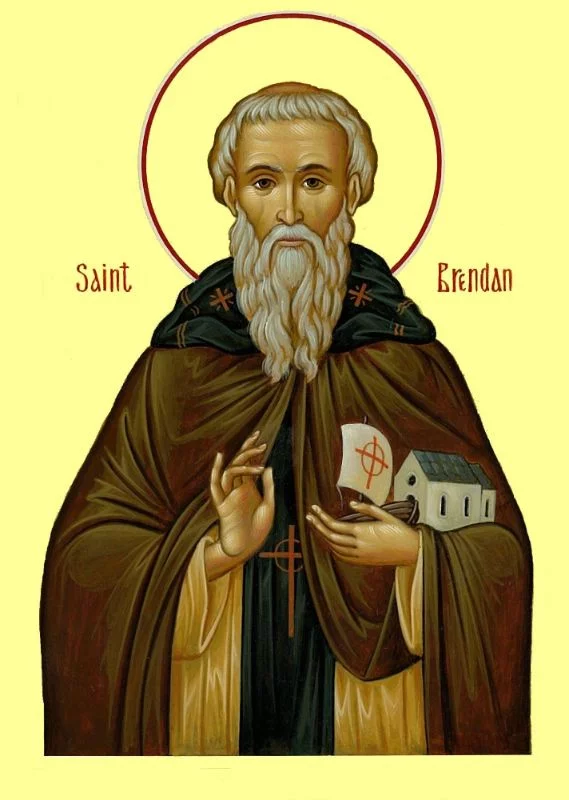
We are returning to Europe again.
Sometimes, I consider Saint Brendan of Clonfert to be the first European to reach America.
He was one of the first Irish monks who lived in the 5th-6th centuries.
So, it is very likely that he visited the Farrers and Iceland even before the Vikings came there (that is, 300-350 years before), since Scandinavian sources mention periodic voyages of Irish and British monks to the north.
The main emphasis is on a kind of saint's voyage in search of Eden. It is very likely that this was only an allegory or a description of the monk's past voyages. However, some hypothesize that he arrived in America during this trip. So, on the maps up to the XVII century there was a certain "Land of St. Brendan".
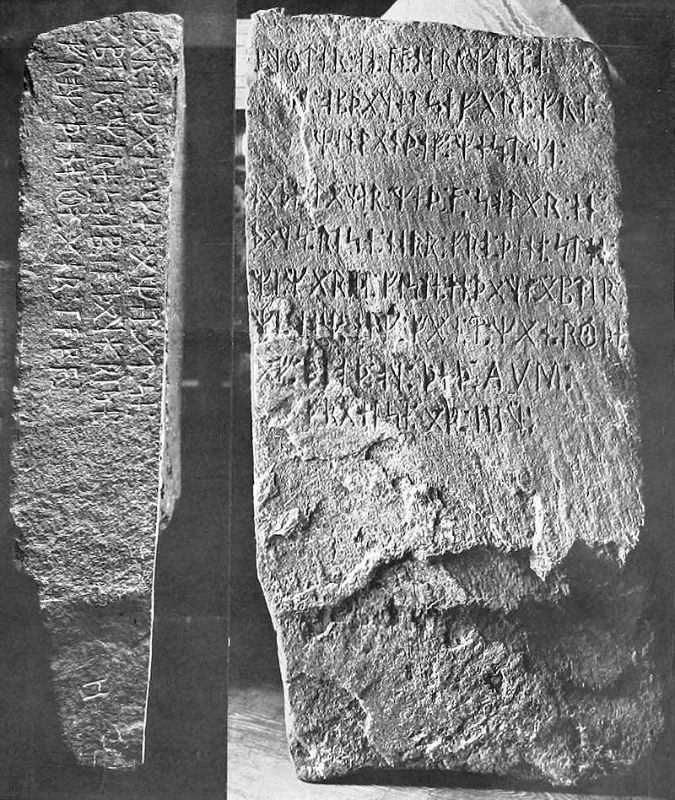
The fact that Vikings have been to America is already a well-known fact. However, there is still one possible hoax associated with them, namely the "Kensington Runestone" (photo above).
Researchers use this stone to prove that the Vikings went deep into America, as it was found in Minnesota. However, most likely, the stone is a fake.
Plus, even if its authenticity can be proved, then the inscriptions that say about a certain "transition" are not the fact that they point to this place. It is very possible that the stone was moved by someone.
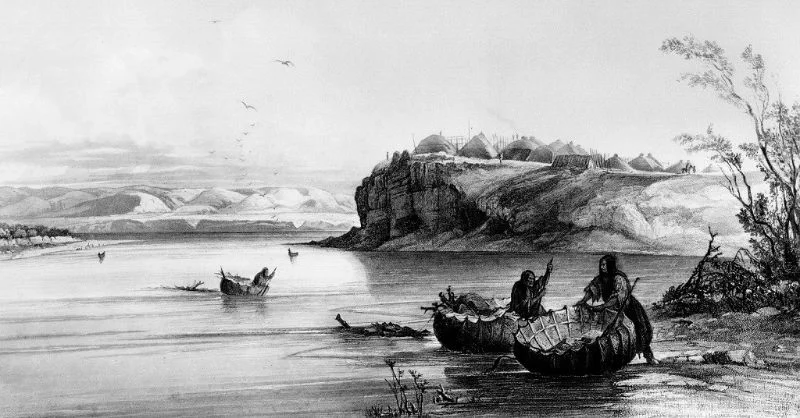
I turn to an equally legendary, but, as it seems to me, the most interesting theory.
In the XII century, the kingdom of Gwynedd (in the territory of modern Wales) was ruled by a king Owain ap Gruffydd. He had 13 children from several wives, as well as several illegitimate ones. One of the latter was a certain Madoc ap Owain Gwynedd, as well as his brother Ririd.
After a failed struggle for the throne, the two of them, along with a small team, set off on a journey to the west. After a while, they found fertile land where Madog left the first colony of 100 people, and then sailed back to Wales in search of additional crew members. After the second sailing to the west with a new team, he was allegedly never seen again.
However, the legends continue to tell about him. Supposedly, Madog reached modern-day Alabama or Florida, and then even settled in the Great Valleys.
The rest is no less interesting. In the 1600s, there was a testimony from a monk, according to which one tribe of Indians understood the Welsh language and even worshipped the Gospel about it. There were also reports of forts built by "white Indians."
I think even in a short retelling it sounds quite interesting. However, there is one inconsistency. Unlike his father, who is 100% a real person and is considered the greatest ruler in the history of Wales, Madog is not mentioned in any source other than this very legend. That is, many historians doubt not only the journey, but even the fact of its very existence.
Well, the reports about the "Welsh Indians" are also very much smacked of legends and just rumors. Although the story is really interesting.
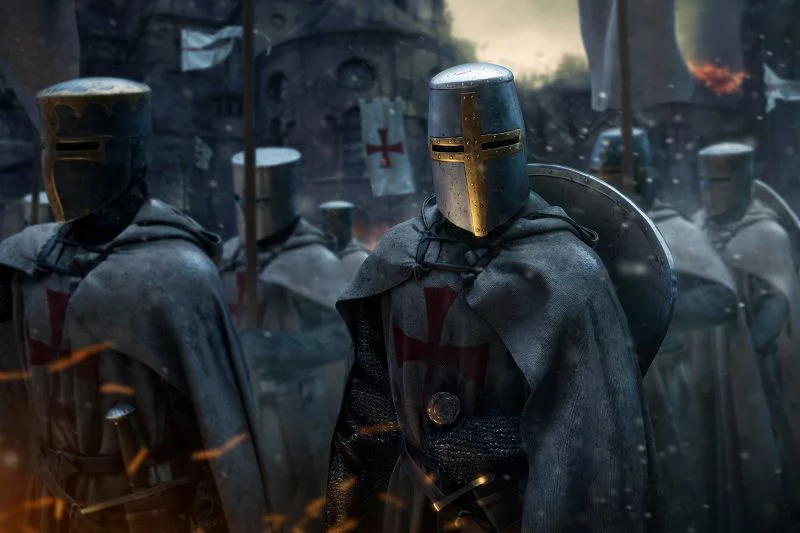
Another legend bordering on fiction says that America, namely its Southern part, along with the silver mountains and the Inca mines, were known to the Templar Order.
They say that it was from there that the knightly order took money. And as proof, we cite the words of a certain monk about the depiction of Indians on the frescoes of one of the Templar temples of the XII century.
The only problem here is that by that time the order simply did not have a fleet and even with all their desire they did not sail to America. Plus, they would hardly have sailed to the silver springs known to the Incas, since in that case they would have had to circumnavigate South America in the very south, which is extremely unlikely for that time.
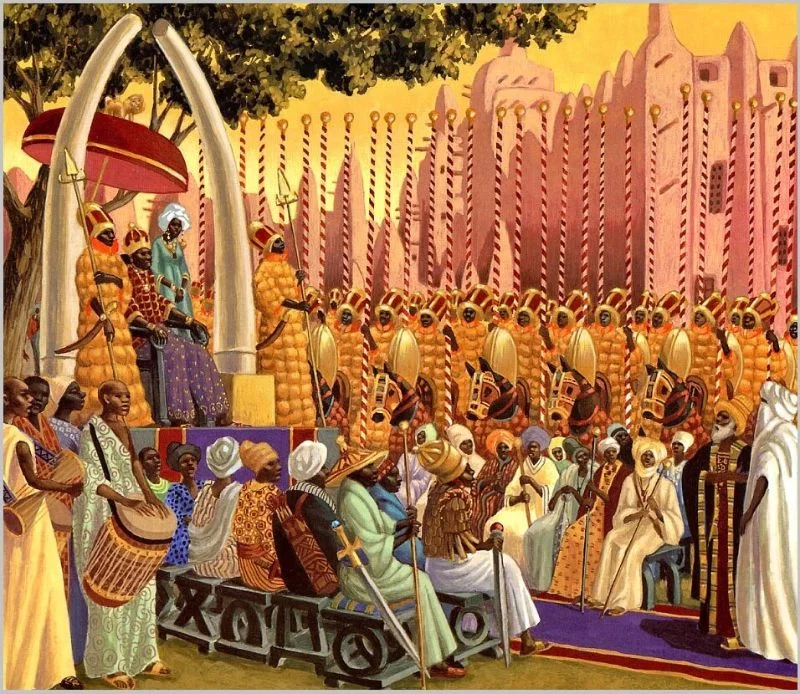
We are gradually approaching the time of Columbus. A rather short and extremely unlikely hypothesis, but supported by some, tells about the ruler of the Mali Empire, Abubakar II.
The story is somewhat similar to the already mentioned Welsh Prince Madoc. However, unlike the latter, Abubakr II most likely existed in reality, although there is very little information about him.
According to legend, he abdicated his throne for the sake of a naval expedition to the west. However, after that there was no news about him and it is assumed that he died in the Atlantic Ocean, if this expedition really happened.
However, some believe that he could have reached the New World. As evidence, they cite the methods of processing precious stones from some Indians, which, according to a couple of travelers, are very similar to those made in Mali.
Yes, yes, again according to rumors from the words of someone unknown.

Territories next to England again. But this time, Scotland. We are talking about the Lord Admiral of Scotland, Henry Sinclair, who allegedly could have visited America once or several times. However, there is not even any evidence here.
The most that is known is about his ties with Norway. And if you pull an owl on a globe and assume that he could learn from them about the way to America, then perhaps this theory holds true for life. But you must admit, it is very unlikely.
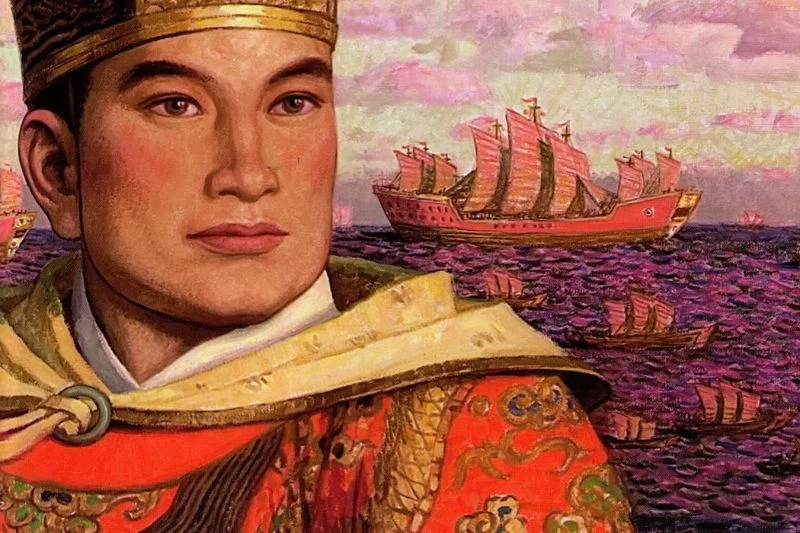
We return to China for the second time.
In the XIV-XV centuries, an extremely famous admiral, Zheng He, conducted his activities in China. He is primarily known for organizing seven huge voyages of the Chinese fleet to Southeast Asia, Indonesia, India, Arabia and Africa.
Therefore, there were legends that part of his fleet reached Australia and America. And if about the first one, then this may be true in theory, since Zheng He most likely sailed to Timor (the island of Indonesia closest to Australia) and part of it could have gone further south, then about America all statements have no evidence and are most likely speculation.
In general, his voyages deserve a separate post, it's a very interesting topic.

Sorry for the quality of the picture - this is the only reliable image.
Well, the last, but no less interesting candidate is the Portuguese navigator Joao Vash Cortirial. According to legend, a few decades before Columbus sailed, he discovered a certain "new land of cod", which was located west of the Azores Islands.
It is not known for certain where she was, but the fact of the trip is reliable, since he received an estate from the King of Portugal as a reward for it.
It is suggested that he discovered something near Newfoundland. Firstly, those places are known for the abundance of cod, which the navigator himself wrote about. Secondly, according to one version, there were some German sailors in his team who had previously served with the Norwegians. And it was they who discovered these lands several centuries ago, calling them Vinland.
Also, in the subject of this, you can talk about the theory that some pirates sailed further than the Azores in order to arrange "caches". However, this is also unlikely.
There are still versions of who first discovered America. However, I have told you about the most basic ones. Which one to believe is up to you.
Thanks for reading! See you!
Buenas tardes, Damas y Caballeros.
As many people know, almost the entire Iberian Peninsula once belonged to the Arab conquerors.
On the one hand, yes, it's bad. On the other hand, the Muslims also gave a lot of positive things to the peninsula and had a strong influence on Spain.
In this post, I will try to look at exactly how the Arabs influenced Spain in various fields. I hope it will be interesting!
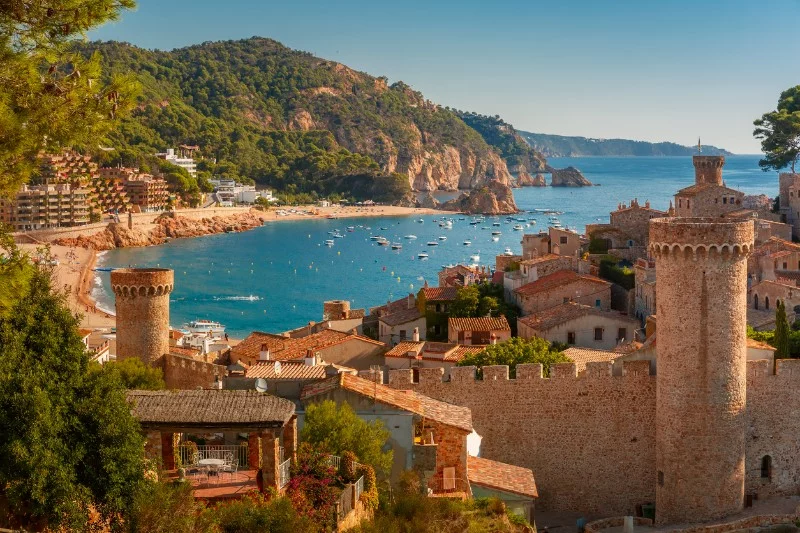
Spain is a wonderful European country.
First, let's start with a small excursion into the even more distant past. How did Spain and Portugal end up under the Arabs in the first place?
For a long time, the territory of Spain was dotted with Phoenician, Greek, and then Carthaginian colonies. Thus, by the 5th century BC, Carthage owned almost all the Pyrenees.
However, after the Second Punic War, the Carthaginians lost Spain and the era of Roman rule in these lands began. It must be said that the peninsula did not obey immediately, however, by the beginning of our era, all the local tribes surrendered and the Roman government finally strengthened.
As part of the Roman Empire, Spain was one of the most prosperous provinces. It was one of the centers of culture and gave the Empire such people as Trajan, Marcus Aurelius, Hadrian, Seneca, etc.
Trade flourished, industry and agriculture were at a high level of development, and the population was very numerous.
Everything changed with the collapse of the Roman Empire. The entire territory of the peninsula was occupied by Germanic tribes, who founded several "barbarian kingdoms".
And just at this time, Islam was emerging and entering its golden age.
At the beginning of the 8th century, detachments of Arabs and Berbers landed in Iberia and defeated the local states in an extremely short time, leaving only a handful of Christians in the north. Muslims will be beaten back only at the end of the XV century.
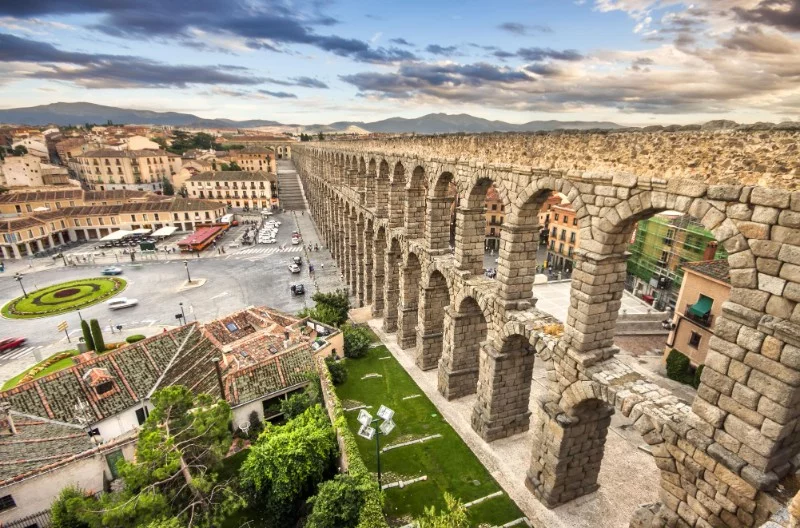
Spain was one of the most important parts of the Roman Empire.
Well, we can say that the story is really sad. However, Muslims have also brought a lot of good things to Spain. Let's start with architecture.
The further you move to the south of the Pyrenees, the more interesting the architectural tradition becomes. So, in Andalusia (the province in the south is the center of Islamic culture in Spain) it is so unusual that it has given rise to several directions at once.
The Moorish style developed on Spanish soil under the influence of Berber architecture throughout the Muslim rule. The most important monuments of Moorish architecture include the Alhambra Palace in Granada.
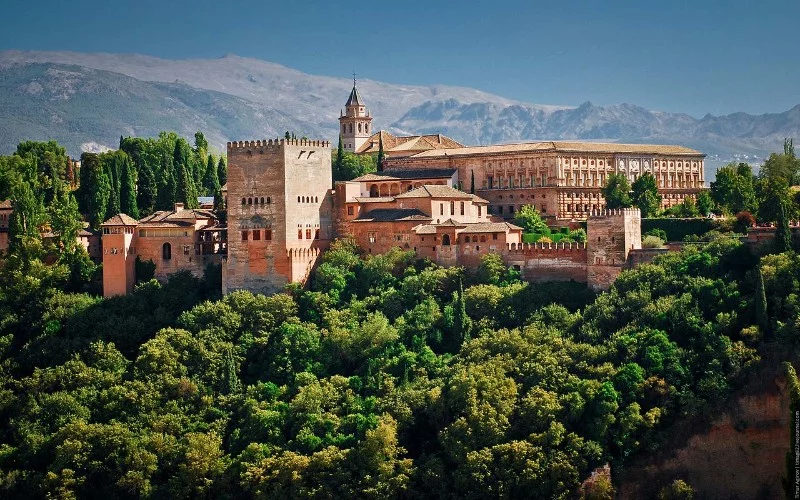
The Alhambra is an extremely majestic structure.
Over time, a mixture of Arabic and Spanish cultures has developed. This is how the Mudekhar style appears.
Mudekhar is characterized by a horseshoe—shaped arch, pointed wooden ceilings, bright tiles and flour arches resembling honeycombs.
Even after the expulsion of the Arabs, this style still caught on among the Spanish spiritual and secular nobility, as it perfectly combined luxury and comfort.
In addition to these styles, classical Moorish architecture also spread, which also soon mixed with Spanish culture.
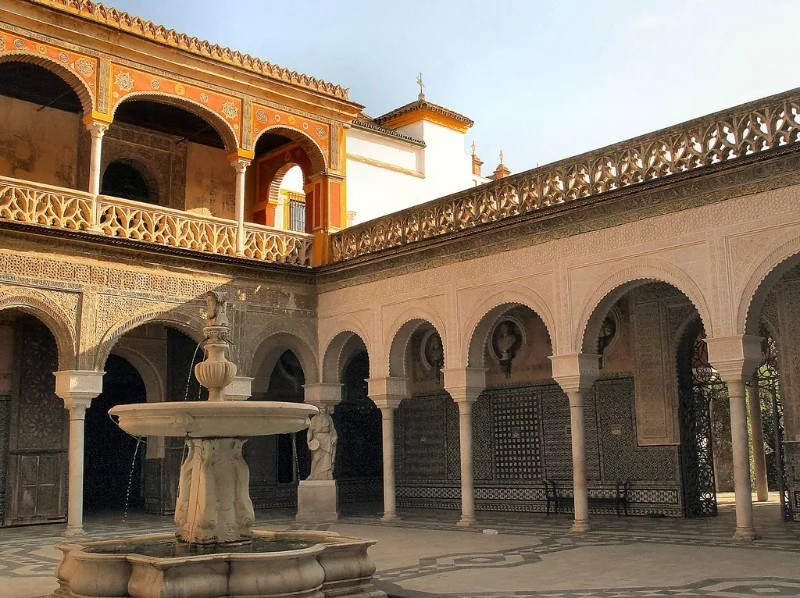
Mudekhar style.
Spanish cuisine is one of the most vibrant in Europe. Although important dishes vary from region to region, they have all been influenced by Muslim culture, primarily Berber.
It was thanks to the Muslims and their discoveries in the field of crop cultivation that oranges, chickpeas, coffee and sugar appeared in the Pyrenees.
Muslims also introduced names such as saffron, almonds, and, oddly enough, alcohol into Spanish cuisine. At first, drinks after strong distillation were used to make aromatic oils and essences. From them, the secret of stills passed to the Spanish alchemists, and then to the future creators of cognac.
Muslims have made sweet-sour and sweet-salty combinations of flavors traditional, established the order of the meal from appetizers, main course and dessert, and forever consolidated the importance of spices and sauces.

Paella is one of the main dishes of Spanish cuisine, has some Arabic origin.
The Spanish language in its modern form was formed on the basis of the Castilian dialect, which was spoken in central Spain in the XIII century. He absorbed the Germanic and Visigothic heritage and continued to actively replenish Arabic words.
According to experts, about 8% of Spanish vocabulary goes back to Arabic. These are mainly nouns, proper names and geographical names.
New words appeared to denote urban phenomena, inventions, scientific and military terms, and products.
At the same time, although there are quite a lot of borrowings from the Arabic language, he could not completely change Spanish.
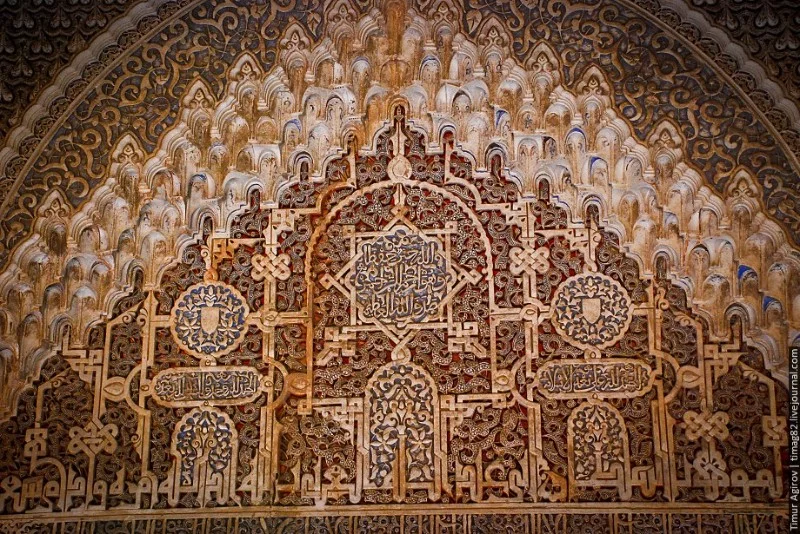
Part of the painting in the Alhambra Palace in Granada.
It was by the end of the Reconquista, by the beginning of the XVI century, that the formation of the Spanish nation proper ended. Given that the Arabs had lived and contacted the local Arabs in these lands for the previous eight centuries, the Muslim "genes" could not go unnoticed.

Spanish girls.
* * *
Muslims have been able to do many more things. So, they include the first flamenco motifs, the beginnings of ceramics and lustration, etc.
Even chess first got to Spain, and only then spread throughout Europe.
It can be concluded that although the period of Muslim rule in Spain can be called controversial, it was these conditions that largely created the Spain that we now know.
Thanks for your attention!

