Hello, today i'm gonna talk about how soccer is actually good but we won't see it in 4 years btw. I eat already 10 burgers today before the post. And i shot somebody with a gun. Oh how i love america. Russia is bad country. Soccer is only once in 4 years so i'm happy that we hosted it. Now i know legend haaland. Yes messi is cheating. I saw 0 minutes of him playing but he's cheating. Soccer is really interesting. And they are handsome. Like Bellingham. Belgium is too good for beating us USA. They just not playing my GOAT pulisic. Goodbye.
The post that I announced in my telegram at the end of August, but which I have only reached now.
Who was the first to visit America? Many people, remembering the school curriculum, will say that it was Christopher Columbus who did this at the end of the XV century. A little less people will remember the Vikings who visited America 500 years before the Italian-Spanish navigator.
However, there are much more theories about who came to America first (not counting the indigenous people who came from Asia). And today I will try to consider all the significant ones in chronological order.
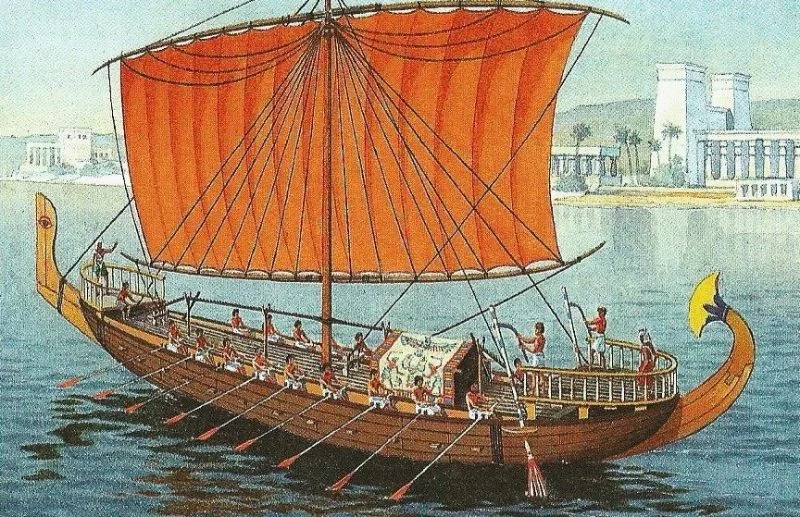
The third most popular version, after the two confirmed ones, says that hypothetically the Ancient Egyptian civilization could have had the first contact with America.
So, an archaeologist, traveler and an active supporter of this hypothesis, Thor Heyerdahl even attempted to sail from Africa to the Caribbean Islands. And if the first attempt, although it was close to the goal, failed, then the second one ended in success.
However, apart from the theoretical possibility of such a voyage, there is no other evidence of such. Thus, the comparison of Mesoamerican and Egyptian pyramids, conducted by many, is incorrect, since they were built for different purposes and at different times.
One day, a German toxicologist found traces of coca leaves and tobacco in the remains of mummies, however, the analyses of other scientists also did not confirm this.
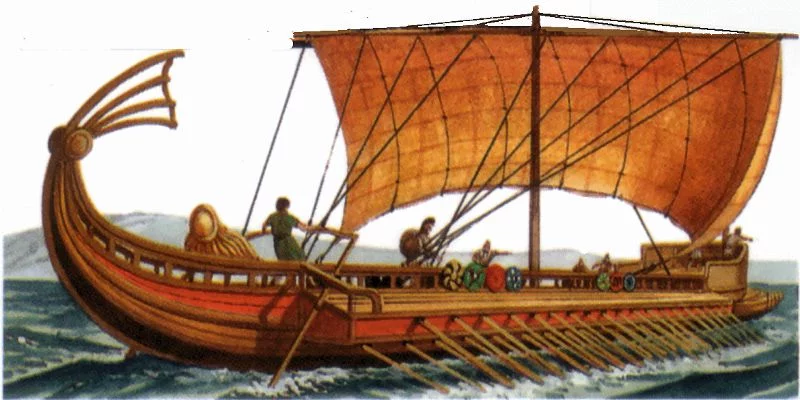
A slightly more likely theory is about a possible Phoenician expedition to America. However, in addition to the regular absence of any serious evidence, another point is noteworthy.
The Phoenicians, although they had a better chance of potentially visiting America due to their trade and colonial policies, would hardly have sailed so far. After all, if you look closely, almost all their colonies are located on the shores of the Mediterranean Sea. Beyond the "Pillars of Hercules" (the shores of the Strait of Gibraltar) there were only a few large cities, and that was quite close.
And it's logical. The main purpose of the colony's location is to develop a trade route and establish ties with neighbors. Then why would they sail so far?
From the same opera, one can note the theory of Hebrew travels to America (which, by the way, is partially adhered to by Mormons, funny guys in general). However, everything here is limited to just a couple of artifacts, which are 99.9% fake.
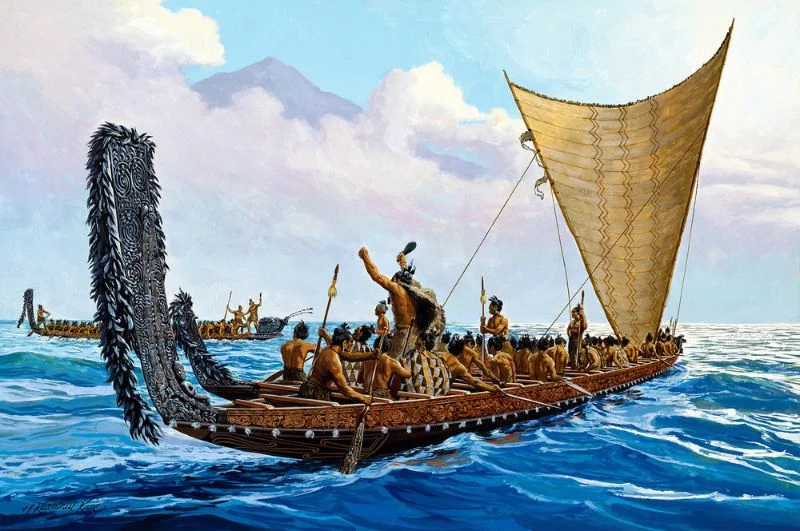
Let's move a little away from the Mediterranean and take a look at Polynesia.
The theory of Polynesian voyages to America is supported by the spread of sweet potatoes on the Pacific Islands. And the fact is that the sweet potato was originally an American endemic.
However, this argument is partly broken by geneticists, who estimate the age of sweet potatoes at several hundred thousand years and say that this culture could quite easily have been transferred to the territory of Polynesia with the help of sea waves or birds carrying seeds.
And despite the Polynesians' ability to navigate the open sea perfectly with the help of the night sky, the part of the ocean that is closer to America has almost no islands.
A notable exception is Easter Island, which was inhabited only by 300-400 (according to another version, by the 900s) and was relatively isolated even by Polynesian standards.
There is even a legend associated with it. They say that at the end of the XV century, the Inca fleet was approaching this island. Here the story is interesting, as it has a number of indirect, but proofs. So, there is one monument on the island that strongly resembles the Inca culture, there are traces of plants that were previously characteristic of the Inca Empire and came to the island long before the arrival of Europeans. And the most important thing is that the genome of the island's inhabitants contains traces of Native Americans dating back to the XIII-XV centuries.
This, as well as the legends of the Incas, according to which their emperor discovered some islands in the Pacific Ocean, give reason to believe that there really was contact.
Let's go back from quite probable theories to more fantastic ones.
There is a hypothesis according to which the ancient Romans could have had contact with America.
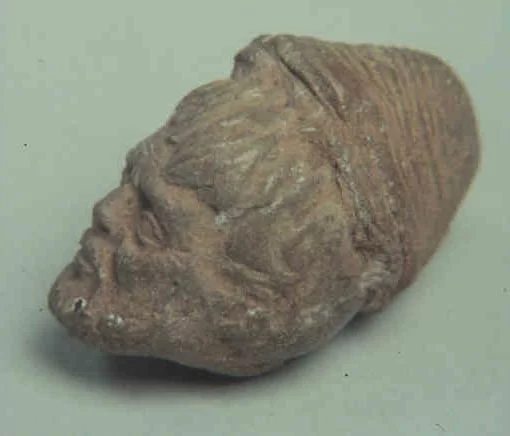
The main confirmation is the so-called "Head from Kalitztlauk" (photo above).
According to some statements, this artifact could have a pronounced Roman origin. This is not known for certain, however, even if it is so, there are two more versions that do not imply contact, but confirm the fact of Roman origin.
According to the first of them, the head could have got to Mexico (and it was there that it was found) along with the first expeditions of the conquistadors. This was rare, but sometimes they did take certain artifacts with them to the New World.
According to the second, this statue could have been washed ashore along with the wreckage of the ship. It is well known that the Romans visited the Canary Islands. And, in theory, one of the crashed ships could have washed up on the shores of America. Extremely unlikely, but possible.

Let's go back to Asia again.
Another version says the following. Around the 5th century AD, the Chinese monk Shen He traveled to a certain country of Fusan.
Initially, Fusan means three things - a mythical tree, a hibicus, as well as this most legendary country.
And this is where historians begin to argue about who to associate this Fusan with. There are two main versions - something on the west coast of America, as well as Japan.
According to the author, the location of the country speaks in favor of the first one - "20,000 li east of the Dahan country." Considering that Dahan was located approximately on the territory of present-day Transbaikalia, Japan is closer than the specified distance.
However, in favor of the fact that this is Japan, there is a mention of breeding horses, which at that time simply did not exist in America. Also, in Chinese poetry, Japan was often referred to as Fusan in the future.
As a result, the theory of a Chinese visit to America around the fifth century can be considered rather erroneous.

We are returning to Europe again.
Sometimes, I consider Saint Brendan of Clonfert to be the first European to reach America.
He was one of the first Irish monks who lived in the 5th-6th centuries.
So, it is very likely that he visited the Farrers and Iceland even before the Vikings came there (that is, 300-350 years before), since Scandinavian sources mention periodic voyages of Irish and British monks to the north.
The main emphasis is on a kind of saint's voyage in search of Eden. It is very likely that this was only an allegory or a description of the monk's past voyages. However, some hypothesize that he arrived in America during this trip. So, on the maps up to the XVII century there was a certain "Land of St. Brendan".
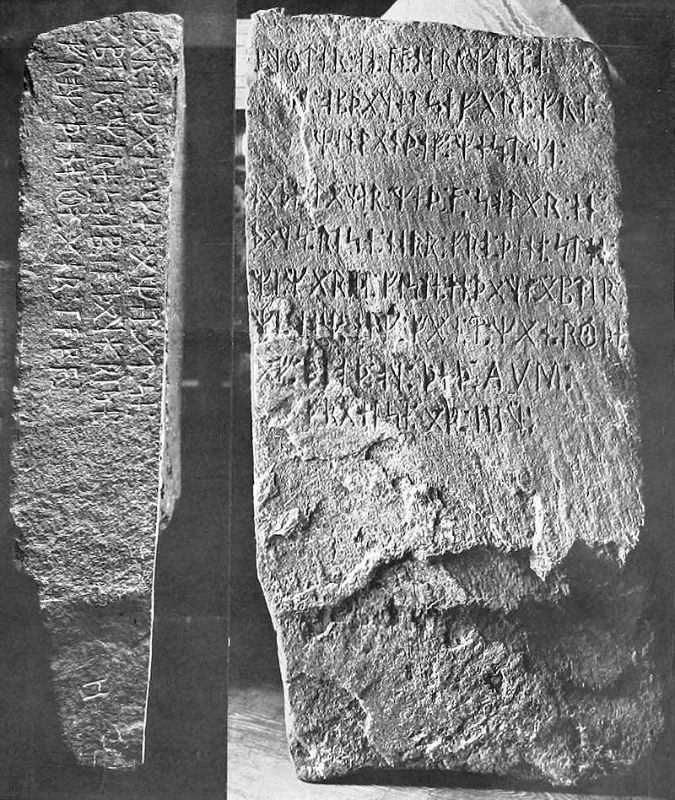
The fact that Vikings have been to America is already a well-known fact. However, there is still one possible hoax associated with them, namely the "Kensington Runestone" (photo above).
Researchers use this stone to prove that the Vikings went deep into America, as it was found in Minnesota. However, most likely, the stone is a fake.
Plus, even if its authenticity can be proved, then the inscriptions that say about a certain "transition" are not the fact that they point to this place. It is very possible that the stone was moved by someone.
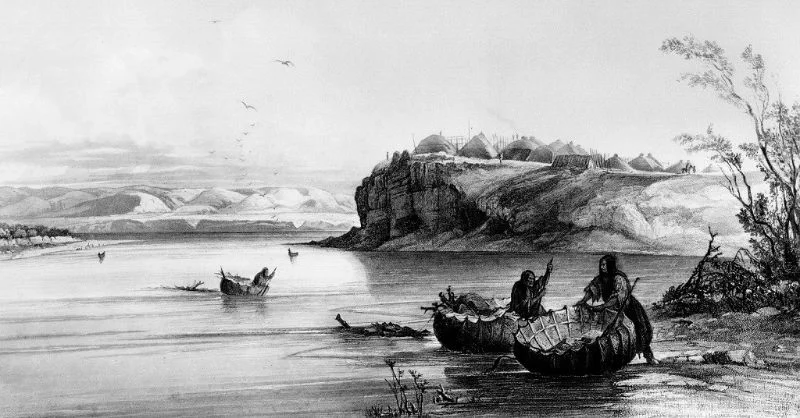
I turn to an equally legendary, but, as it seems to me, the most interesting theory.
In the XII century, the kingdom of Gwynedd (in the territory of modern Wales) was ruled by a king Owain ap Gruffydd. He had 13 children from several wives, as well as several illegitimate ones. One of the latter was a certain Madoc ap Owain Gwynedd, as well as his brother Ririd.
After a failed struggle for the throne, the two of them, along with a small team, set off on a journey to the west. After a while, they found fertile land where Madog left the first colony of 100 people, and then sailed back to Wales in search of additional crew members. After the second sailing to the west with a new team, he was allegedly never seen again.
However, the legends continue to tell about him. Supposedly, Madog reached modern-day Alabama or Florida, and then even settled in the Great Valleys.
The rest is no less interesting. In the 1600s, there was a testimony from a monk, according to which one tribe of Indians understood the Welsh language and even worshipped the Gospel about it. There were also reports of forts built by "white Indians."
I think even in a short retelling it sounds quite interesting. However, there is one inconsistency. Unlike his father, who is 100% a real person and is considered the greatest ruler in the history of Wales, Madog is not mentioned in any source other than this very legend. That is, many historians doubt not only the journey, but even the fact of its very existence.
Well, the reports about the "Welsh Indians" are also very much smacked of legends and just rumors. Although the story is really interesting.

Another legend bordering on fiction says that America, namely its Southern part, along with the silver mountains and the Inca mines, were known to the Templar Order.
They say that it was from there that the knightly order took money. And as proof, we cite the words of a certain monk about the depiction of Indians on the frescoes of one of the Templar temples of the XII century.
The only problem here is that by that time the order simply did not have a fleet and even with all their desire they did not sail to America. Plus, they would hardly have sailed to the silver springs known to the Incas, since in that case they would have had to circumnavigate South America in the very south, which is extremely unlikely for that time.
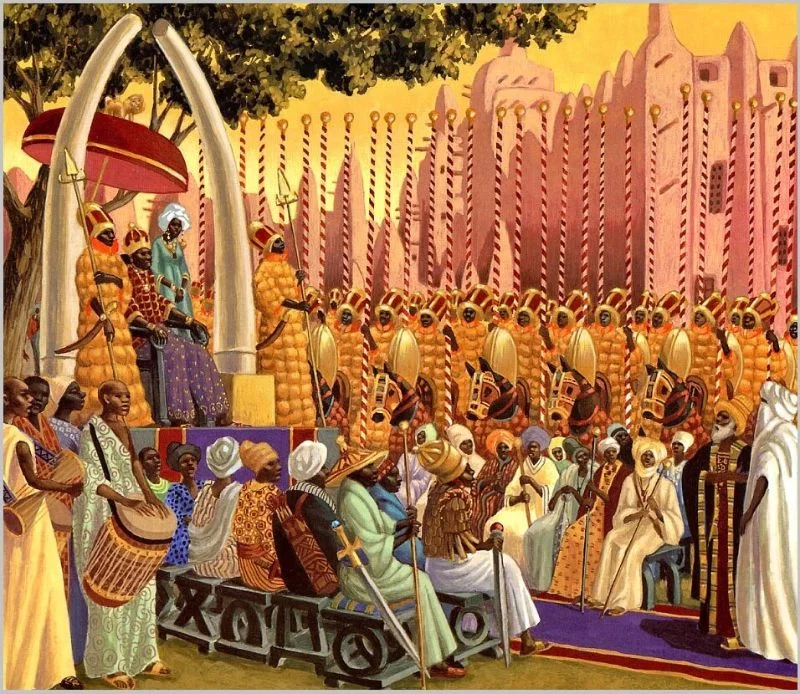
We are gradually approaching the time of Columbus. A rather short and extremely unlikely hypothesis, but supported by some, tells about the ruler of the Mali Empire, Abubakar II.
The story is somewhat similar to the already mentioned Welsh Prince Madoc. However, unlike the latter, Abubakr II most likely existed in reality, although there is very little information about him.
According to legend, he abdicated his throne for the sake of a naval expedition to the west. However, after that there was no news about him and it is assumed that he died in the Atlantic Ocean, if this expedition really happened.
However, some believe that he could have reached the New World. As evidence, they cite the methods of processing precious stones from some Indians, which, according to a couple of travelers, are very similar to those made in Mali.
Yes, yes, again according to rumors from the words of someone unknown.

Territories next to England again. But this time, Scotland. We are talking about the Lord Admiral of Scotland, Henry Sinclair, who allegedly could have visited America once or several times. However, there is not even any evidence here.
The most that is known is about his ties with Norway. And if you pull an owl on a globe and assume that he could learn from them about the way to America, then perhaps this theory holds true for life. But you must admit, it is very unlikely.
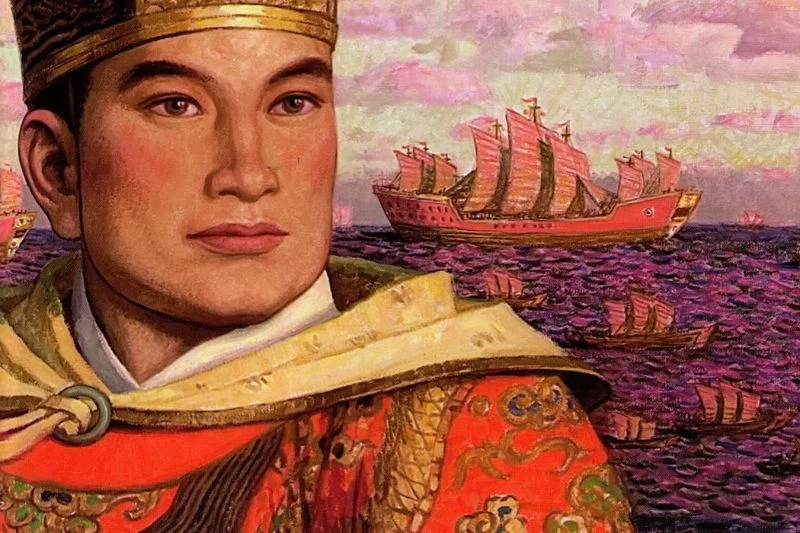
We return to China for the second time.
In the XIV-XV centuries, an extremely famous admiral, Zheng He, conducted his activities in China. He is primarily known for organizing seven huge voyages of the Chinese fleet to Southeast Asia, Indonesia, India, Arabia and Africa.
Therefore, there were legends that part of his fleet reached Australia and America. And if about the first one, then this may be true in theory, since Zheng He most likely sailed to Timor (the island of Indonesia closest to Australia) and part of it could have gone further south, then about America all statements have no evidence and are most likely speculation.
In general, his voyages deserve a separate post, it's a very interesting topic.

Sorry for the quality of the picture - this is the only reliable image.
Well, the last, but no less interesting candidate is the Portuguese navigator Joao Vash Cortirial. According to legend, a few decades before Columbus sailed, he discovered a certain "new land of cod", which was located west of the Azores Islands.
It is not known for certain where she was, but the fact of the trip is reliable, since he received an estate from the King of Portugal as a reward for it.
It is suggested that he discovered something near Newfoundland. Firstly, those places are known for the abundance of cod, which the navigator himself wrote about. Secondly, according to one version, there were some German sailors in his team who had previously served with the Norwegians. And it was they who discovered these lands several centuries ago, calling them Vinland.
Also, in the subject of this, you can talk about the theory that some pirates sailed further than the Azores in order to arrange "caches". However, this is also unlikely.
There are still versions of who first discovered America. However, I have told you about the most basic ones. Which one to believe is up to you.
Thanks for reading! See you!

