Last time we discussed how to build a sentence with the verb ná (nanyë elda — I am an elf; i nauco (ná) halla — the dwarf is tall). Now let's talk about more serious matters. How do you say "you have my sword" in Quenya? And my bow, too.
The time has come. Let's move on.
Updated dictionary
(New words are in italics)
Nouns
elda — elf
tan — man
nauco — dwarf
orco — orc
elen — star
menel — sky
macil — sword
hesto — captain
aran — king
atar — father
amil — mother
aiwë — bird
ambo — hill
anga — iron
cöa — house
lúmë — hour, period of time
mindon — tower
omentië — meeting
osto — city
rotto — cave
taurë — forest
Pronouns
nyë — I
(i)nya — my
lvë — We (you and I)
(e)lva— our
lme — we (us but not you)
(e)lma — our
tyë — you
(e)tya — your
lyë — you (respectfully)
(e)lya — your
ldë — you (plural)
(e)lda — your (plural)
se — he, she, it
(r)ya — his, her
ntë — they
(i)nta — their
i — the, a, an
mo — someone
ma — something
Verbs
ná — to be
cir — cut
lor — sleep
mat — eat
men — go
nor — run
sam — have
sil — shine
tir — watch
tuv — find
Adjectives and Adverbs
luinë — blue
turca — strong
halla — high
qualin — dead
mai — well
mára — good
palan — far
oialë — forever
palan — far, far away
melda — dear, beloved
linta — fast
linquë — wet
alcarin — glorious
Ná palan...
If you have forgotten how to pronounce words or how to use the verb "ná", read the first lesson:
Now let's look at a few constructions:
Possessive Pronouns
(i)nya — my
(e)lva— ours
(e)lma — our
(e)tya — your
(e)lya — your
(e)lda — your (plural)
(r)ya — his, her
(i)nta — their
____________________
Most possessive pronouns have the same basic form as the long subject suffixes, except the -ë is changed to -a: -nyë “I” → -nya “my” and -lyë “you” → -lya “your”. The main exception is the possessive pronoun for “his, her” which is -rya. In all cases, the unmodified possessive pronoun form is added to nouns ending in vowels. For nouns ending in consonants, a “joining vowel” is generally needed to avoid awkward combinations. This joining vowel varies, and is either i or e, as indicated by a parenthetic vowel before the suffix in vocabulary entries: -(i)nya “my” or -(e)lya “your”.
For example:
eleninya — my star (elen + "i" (joining vowel) + nya; in English = starmy)
cöanya — my home (cöa + nya; cöa ends in a vowel, so a joining vowel is not needed)
aranelya — your king (aran + e (joining vowel) + lya)
taurelya — your forest (taurë + lya)
mindoninta — their tower (mindon + i + nta)
rottonta — their forest (rotto + nta)
atarelma — our father (atar + e + lma)
ostolma — our city (osto + lma)
____________________
Again, “his, her” is an exception: the suffix becomes -ya after a consonant, as indicated by the vocabulary entry -(r)ya. If the noun ends in a vowel, an -r must be added; if the word ends in a consonant, it is simply written together.
For example:
aiwerya — his/her bird (aiwë + r + ya)
macilya — his/her sword (macil + ya)
Nanyë elda!
Noun plurals
Noun plurals can be formed by adding an -i for words ending in a consonant, an -r for words ending in a vowel or changing the final -ë to -i for nouns ending in an -ë.
For example:
atan — man → atani — men
elda — elf → eldar — elves
aiwë — bird → aiwi — birds
Ná linquë...
How to connect a verb (except ná) with a noun in Present Simple
cir — cut
lor — sleep
mat — eat
men — go
nor — run
sam — have
sil — shine
tir — watch
tuv — find
____________________
The Quenya aorist is the “timeless” tense. It is used for actions with no specific time or where time is not the main focus, and thus it can also refer to the present, especially in narratives. As such, it is roughly equivalent to the English simple present: “runs”. Without other inflections, the aorist tense of basic verbs is formed by adding an -ë to the stem: nor- “to run” → norë “runs”. That’s enough information to form some simple sentences.
For example:
elda lorë — an elf sleeps (lor + "ë")
i hesto samë macil — the captain has a sword (sam + "ë")
i nauco tirë i orco — the dwarf watches the orc(tir + + "ë")
orco matë aiwi — an orc eats birds (mat + "ë")
____________________
With "you" -i is added to the word to indicate the present tense and "tyë" (you) or "lyë" (You), depending on what you want to say.
For example:
menityë — you go (men + I + tyë)
samityë macilinya — you have my sword (sam + i + tyë, macil + i +nya)
samilyë macilinya — you have my sword (sam + i + lyë, macil + i + nya)
____________________
With "I" the word order is also reversed (predicate, then subjects). -i is added to the word to indicate the present tense and -n as the correct ending for "I".
For example:
lorin — I'm sleeping (lor + i + n)
samin macil — I Have a Sword (sam + i + n)
____________________
For the plural, "i" is added to the word to indicate the present tense and "r" to indicate the plural. The word order is direct (subjects, then predicate).
For example:
i naucor tirir i orco — the dwarves are watching the orc (tir + i + r)
orcor matir aiwi — orcs eat birds
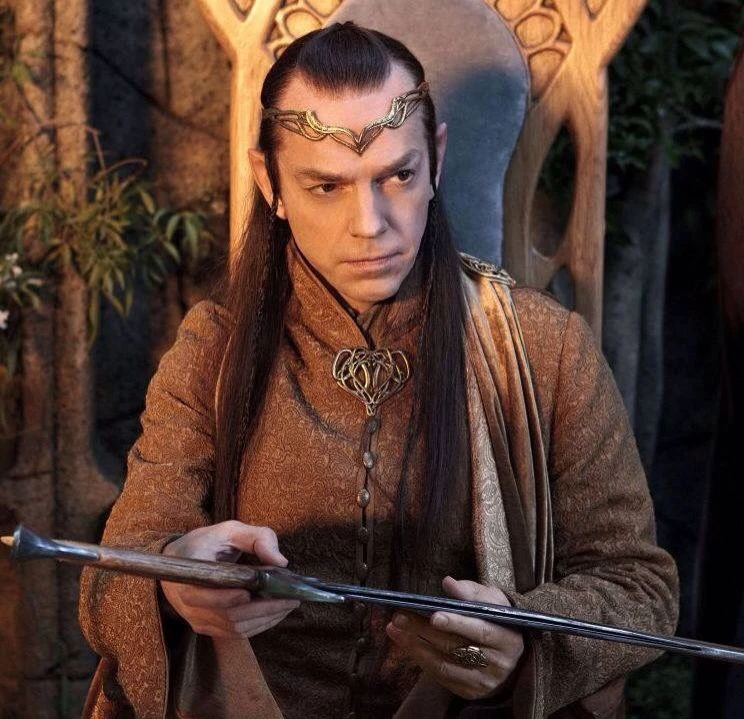
I macil ná alcarin!
The sword is yours, the stars are yours, Quenya... Well, almost... The arsenal has been replenished: plural, possessive pronouns and a couple of new words. Oh, by the way, there's something under the pictures. But it doesn't matter. Don't pay any attention.
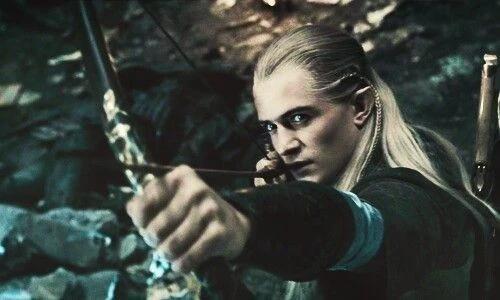
Tirin tyë!
That's all!
How does "Macilinya cirë orcor" translate?3
There are many Elvish languages, each of them is unique. I want to tell you about quenya. Quenya is the language of the elves who came to Middle-earth from Valinor.
Tolkien himself called quenya "Elvish Latin", since by the Third Age it had ceased to be the language of everyday communication and remained as the language of knowledge, rituals and poetry. The living speech of the elves was almost completely replaced by Cindarin, a related but different language.
The letters of the Elvish script are called tengwar (from Quenya tengwa — sign, symbol, letter). The Latin alphabet is often used to write texts in Quenya, which is familiar to the eye and convenient for beginners. We will master the rules of reading — and immediately proceed to live speech: take a few words and expressions written in Latin, and try to pronounce them the way they once sounded in Valinor.
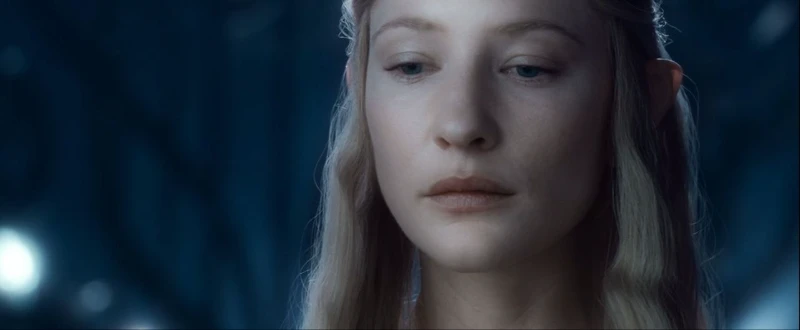
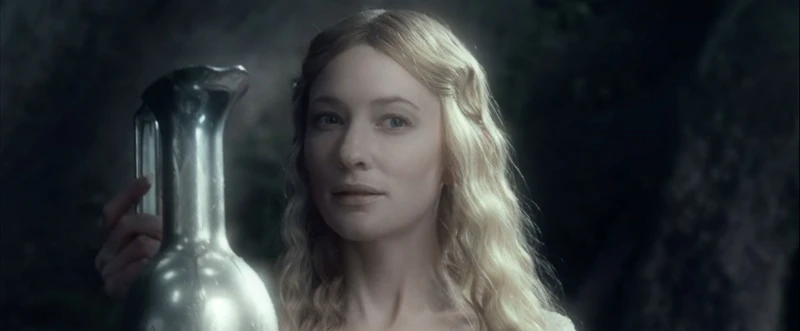
Galadriel spoke Quenya.
It is very easy to read in Quenya, just like in Latin or German: both written and read. You only need to remember a few simple rules.:
1. A Quenya c is always a "hard c" [k].
2. Vowels are pronounced i = "ee", e = "eh", a = "ah", o = "oh", u = "oo".
3. Long vowels are marked with an accent (í, é, á, ó, ú) and are roughly pronounce the same but held longer than short vowels.
4. The double-dot (dieresis) on ë and ö has no effect on pronunciation and may be omitted; it is just a reminder than these vowels are pronounce separately.
5. The Quenya r is a trilled r, as in Spanish or Italian pero. It should not be pronounced as an English r. The tongue should touch the alveolar ridge (the roof of the mouth just behind the front teeth) and vibrate briefly.
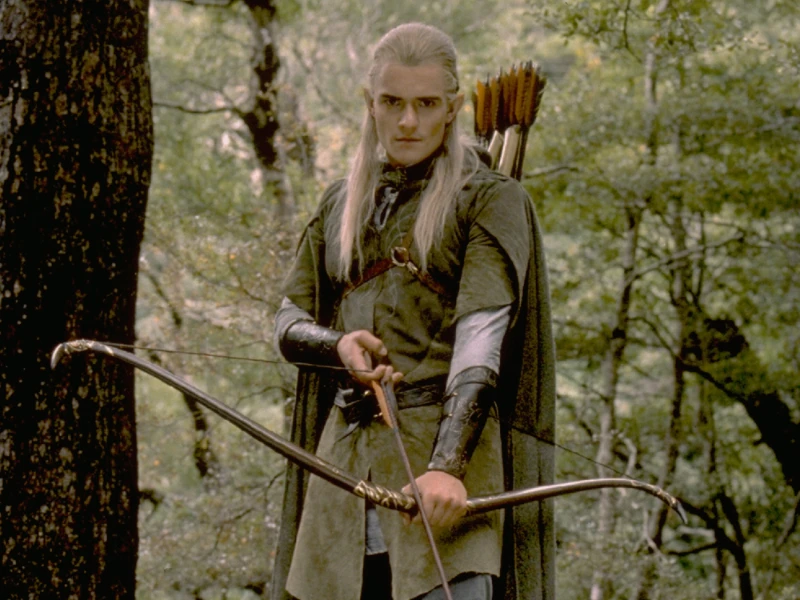
Legolas spoke Cindarin.
There are six diphthongs in Quenya — combinations of two vowels that are pronounced together as one sound. You need to be able to read them.:
1. ai = "eye" as in rye
2. oi = "oy" as in boy
3. ui = "wee" [roughly] as in queen
4. iu = "yoo" as in yule
5. eu = "ehoo" [very roughly]
6. au = "ow" as in how
The last rule remains, be patient...
And a few words about the stress in words:
1. Monosyllables are stressed on their only syllable, through sometimes minor monosyllables are unstressed within a larger phrase.
2. Disyllables are stressed on their first syllable.
3. Longer words are stressed on their second-to-last syllable if it is heavy (diphthong or long vowels), and otherwise their third-to-last syllable.
Now you can finally go to the dictionary!
Nouns
Elda — elf
atan — man [human being]
nauco — dwarf
orco — orc
elen — star
menel — sky, heavens
macil — sword
hesto — captain
Pronouns
nyë — I
lvë — we
tyë — you
lyë — You (respectfully)
ldë — you (plural)
se — he, she, it
ntë — they
i — the, a, this
Verbs
ná — to be
Adjectives and Adverbs
luinë — blue
turca — strong
halla — high
qualin — dead
mai — well
mára — good
palan — far
oialë — forever
Now that we know how words sound, it's time to look into the very heart of language — its grammar. Let's start with the simplest. You need to understand how to connect words with each other. The grammar of Quenya reminded me of Chinese, there is a similar logic.
Let's analyze a few basic constructions.:
1. Noun + verb "ná" (to be) + noun
For example:
i atan(ná) hesto — the man is the captain (the verb "ná" can be omitted in the present)
2. Verb "ná" (to be, to be) + pronoun + noun
For example:
nanyë elda — I am an elf (the verb "ná" is placed before the pronoun, written together with it and stripped of the accent mark)
Natyë nauco — You are a dwarf
3. Noun + verb "ná" (to be) + adjective
For example:
i nauco (ná) halla — The dwarf is tall
i orco (ná) qualin — The orc is dead
4. Verb "ná" (to be) + pronoun + adjective
For example:
nalvë turca — We are strong
5. Verb "ná" (to be, to be) + adverb/adjective
For example:
ná mára — It's good
ná oialë — It's forever
That's it!
We have analyzed the basic vocabulary and grammar of the Quenya language. Now you know enough to build your first sentences in Elvish! I suggest you try to build them in the comments, I'll answer them all)
Do I need a second Elvish lesson?3
Part III — and we're back in the Shire. This time, let's look deeper: not just into the geography of the country, but into specific events that turned everything upside down.
The first event I want to talk about in more detail is Bilbo and Frodo's birthday, September the 22nd. Bilbo was 111 years old, and Frodo was 33 (the age of majority for hobbits). The two of them turned 144 years old, exactly the same age as the invited guests. One, if I may use the expression, Gross (it was not customary to consider people as a Gross). Some of the guests were even offended, realizing that they were invited only for the sake of even counting. "One Gross, ugh, how rude..." but let's move on...
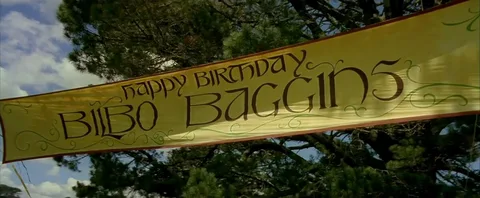
Happy birthday, Bilbo Baggins!
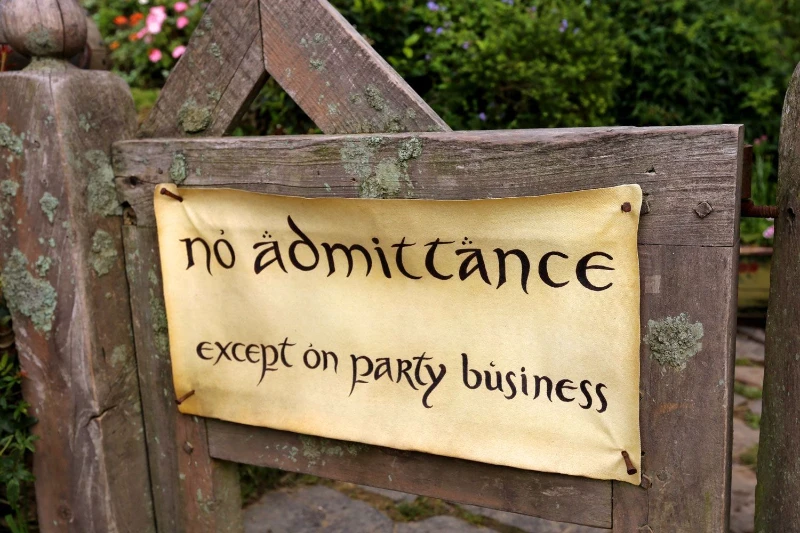
The birthday party venue is located south of the Bilbo's front door. Tents were pitched and pavilions were set up there. A passage was cut through the thicket from the side of the road and a large white gate was built.
Preparations for the celebration began in advance. Bilbo invited foreign craftsmen to prepare the celebration. One of the locals grumbled: "Some strangers are warming their hands, and local craftsmen are sitting around," but soon orders for various dishes, drinks and luxuries began pouring out of the Bag End - for everything that was sold in Hobbiton and in general in Shire.
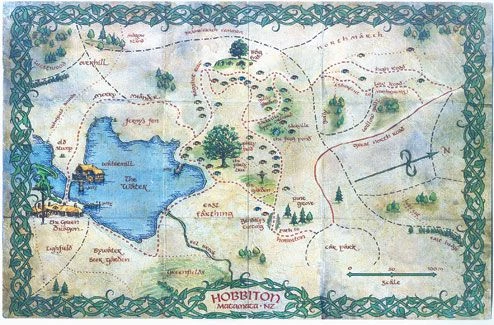
And now, the map. Let's see exactly where the celebration unfolded. Here is a large tree, and tents and pavilions have been set up around it, in the open space south of Bag End.
The place was chosen wisely: it was spacious enough for one and a half hundred guests, there was enough shade for those who were tired of the September sun, there were few trees to set off fireworks and close enough to the house so that Bilbo could disappear at the right moment. The roads and trails are clearly visible on the map, and looking at them, you can guess exactly where the passage was cut.
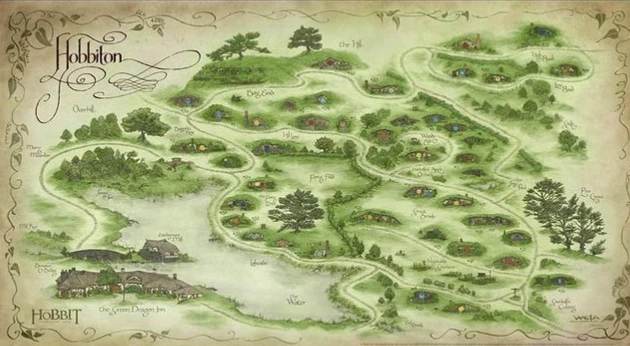
If you still haven't found the venue for the celebration, look for a hint: find the Bag-End, then draw a straight line down until you hit a large tree. The space around it is the territory of the party.
The second event is only in the book. A year before the Party, Merry accidentally saw something he shouldn't have seen.:
"One day, a year before the Party, I happened to be walking along the road, when I saw Bilbo ahead. Suddenly in the distance the Sackville-Bagginses appeared, coming towards us. Bilbo slowed down, and then hey presto! he vanished. I was so startled that I hardly had the wits to hide myself in a more ordinary fashion; but I got through the hedge and walked along the field inside. I was peeping through into the road, after the S.-B.s had passed, and was looking straight at Bilbo when he suddenly reappeared. I caught a glint of gold as he put something back in his trouser-pocket".
It is not known which road it happened on. Merry did not say. Maybe he didn't want to. Maybe he didn't remember. But the fact remains that somewhere here, among the hobbits' roads was Bilbo's first downfall with the Ring in front of a witness.
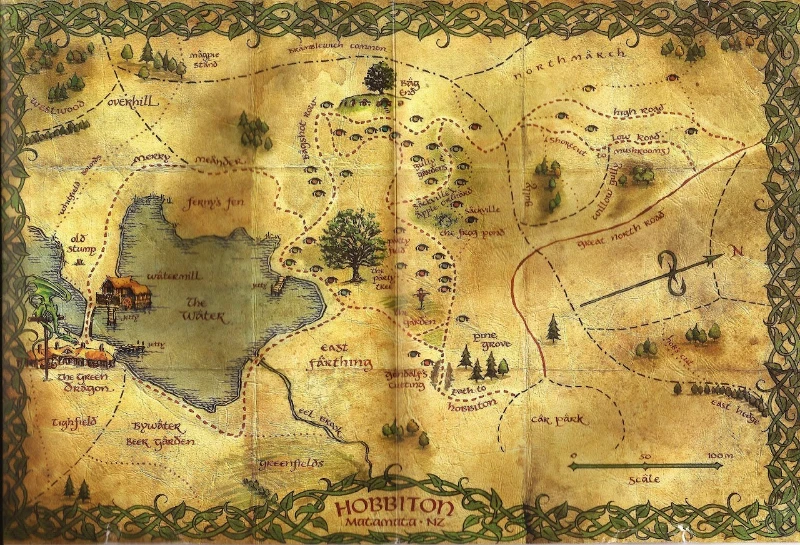
It must have happened somewhere near the Bag End, or not?
The area of Hobbitania is 18,000 mi². A spacious country for small people. For understanding: this is slightly larger than Denmark and Estonia, but smaller than Slovakia and the Dominican Republic. An entire country, on the map of Middle-earth — a modest corner in the northwest.
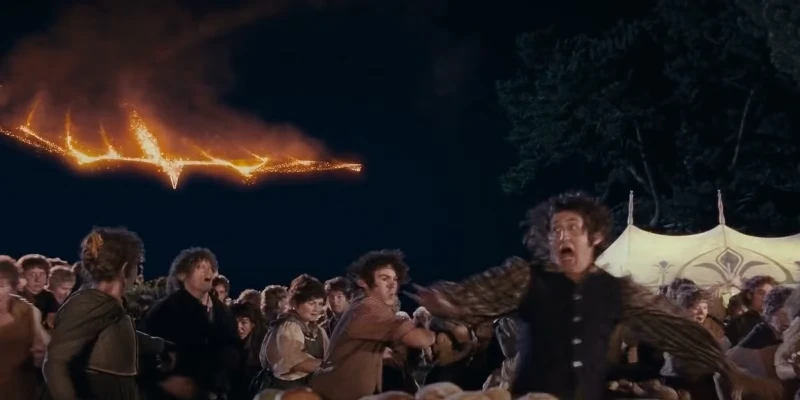
SAVE YOURSELF, WHO CAN!!!
Few people know, but the Shire is a multinational state. There are 3 peoples (3 breeds of hobbits) living on the territory of Shire. You can learn more about these peoples in my test "What kind of Hobbit are you?"
Have you learned anything new about the Shire?2
In the northwest of Middle-earth, far from worries and battles, lies Shire. At one time, its eastern border was the Brandywine River, but later the hobbits expanded their possessions.
Frodo's parents, Drogo and Primula, drowned in this river. Hobbits are still debating exactly how this could have happened. Some say that they went on the water after dinner in the moonlight, and it was Drogo's weight as sunk the boat. Others say that Primula pushed Drogo in, and he pulled her in after him. The truth is simple: boats are quite tricky enough for those that sit still without looking further for the cause of trouble.
Look up and to the left.
The Shire was divided into four quarters, the Farthings already referred to, North, South, East, and West. And these again each into a number of folklands, which still bore the names of some of the old leading families.
Forty leagues Shire stretched from the Far Downs to the Brandywine Bridge, and fifty from the northern moors to the marshes in the south.
This map shows Hobbiton, the Brandywine Bridge, the roads, and a lot of interesting things. Words are superfluous here. It's better to just look at the map:
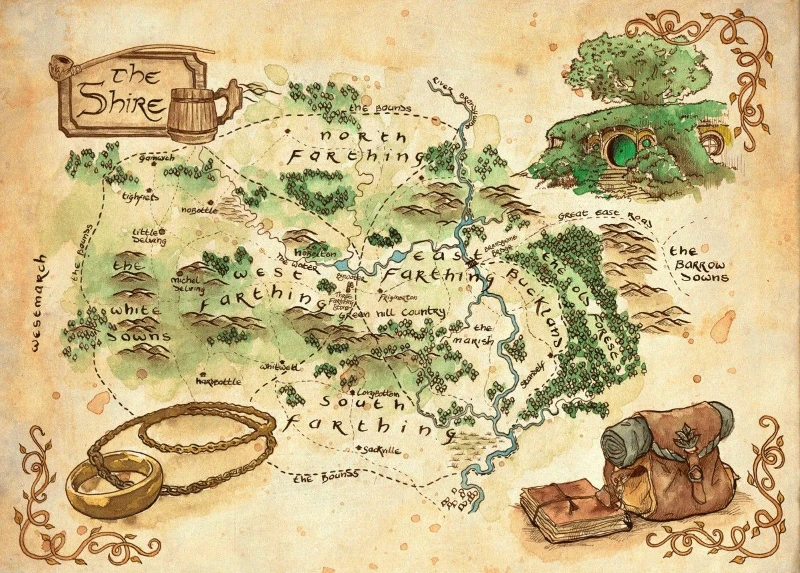
Look at the map!
The origin of some hobbit surnames is connected with geography. For example, Sam's surname Gamgee is derived from the village name Gamwich. It can be concluded that Sam's first ancestors lived in this village.
The name Merry Brandybuck is directly related to the Brandyduim River. And not just the last name. Unlike most Hobbits, Merry was a good swimmer and knew how to handle a boat. Therefore, when Lord Celeborn presented the Fellowship with a boat in Lorien and mentioned everyone except Hobbits as skilled rowers, Merry could not stand it and protested: "We live on the shore of Brandywine, and for us a boat is not a mad horse, as for other Hobbits."
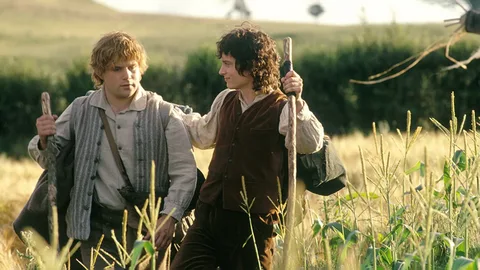
Let's move on
Gandalf's route to Bag End can be represented something like this: The East Road, the crossing of the Brandywine Bridge, the turnoff to Hobbiton — and he is already knocking on Bilbo's round door. You can see all the roads in the map (red color).
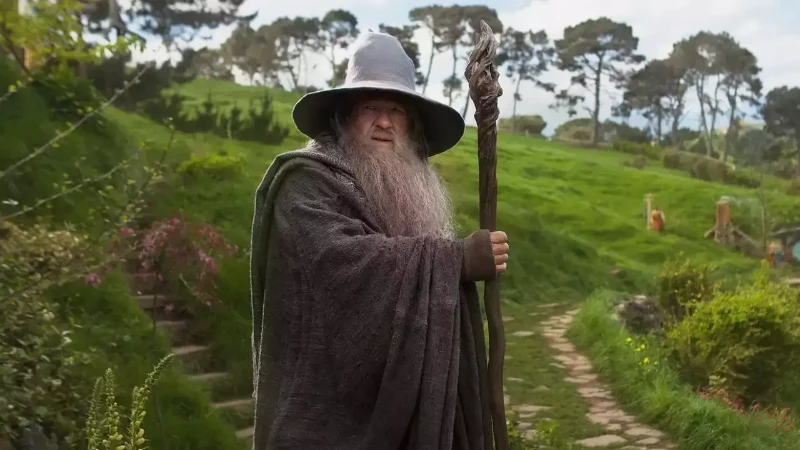
However, this is not only Gandalf's path. If you scroll back the route, you'll get the road that Bilbo took from Bag End, and later Frodo and Sam. And vice versa: if you reverse the direction, it's Gandalf's path again, only this time from Bag End. In short, we have before us the most optimal route from the hobbit's house towards the Bree and vice versa — no matter who is on the way: a wizard or a hobbit with a staff and a pot.
The Shire is the beginning and the end of the journey. Sweet home, always calm and peaceful, it would seem. But no. In the finale of book "The Lord of the Rings", the hobbits return to the Shire and see a terrible picture: their native land has been invaded by Sauron's half-killed henchmen. They have to win it back. So peaceful Shire is also the place of the last battle.
That's all!
The Road goes ever on and on
Down from the door where it bagan.
Now far ahead the Road has gone,
And I must follow, if I can,
Pursuing it with eager feet,
Until it joins some larger way
Where many paths and errands meet.
And wither then? I cannot say.
Good morning!
What should I tell you about in Part III?2
J. R. R. Tolkien wrote: "I wisely started with a map, and made the story fit (generally with meticulous care for distances). The other way about lands one in confusions and impossibilities, and in any case it is weary work to compose a map from a story — as I fear you have found".
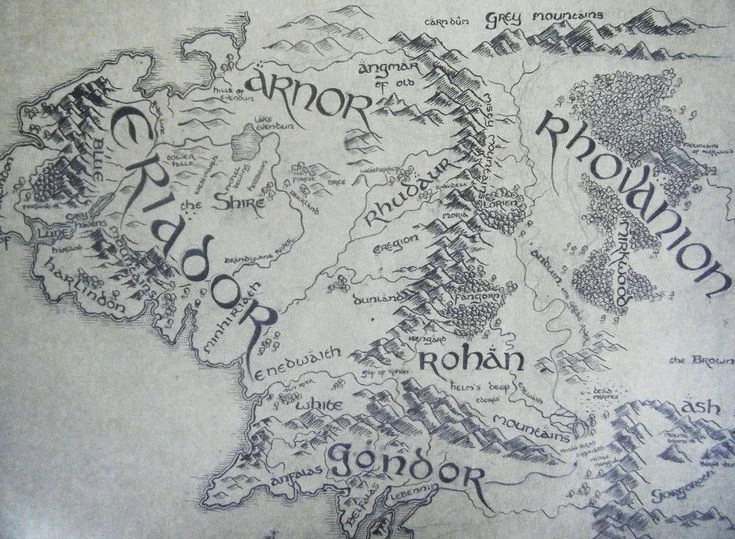
The maps of Middle-earth deserve a special attention, right? I will show you fragments and talk about the main thing: how geographical objects relate to each other.
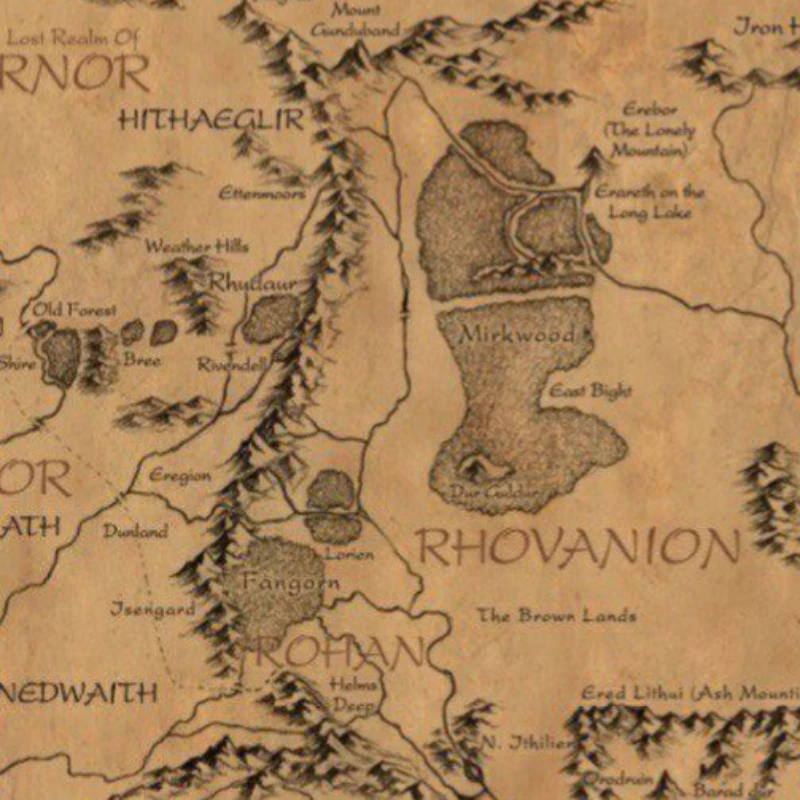
Let's start with forests. They have an important role to play.
Top 3 largest forests in Middle-earth by area:
1. Mirkwood
2. Fangorn
3. Lorien
And now remember how much time the characters spent in each of these forests.
Look at the map. That's why you're here.
The second thing I want to draw your attention to is the Misty mountains. It is a mighty mountain range that cuts Middle-earth in two. But the mountains don't just split the continent. This is where Frodo and Bilbo's paths diverge.
There are 77 years between their journeys. Let's see their itineraries on one map. They reached Rivendell by the same route. Then they tried to cross the mountain range (Bilbo succeeded, but Frodo had to go under the mountains, through Moria). After they crossed the Misty Mountains, Bilbo headed northeast to the Lonely Mountain, Frodo headed southeast to Mordor.
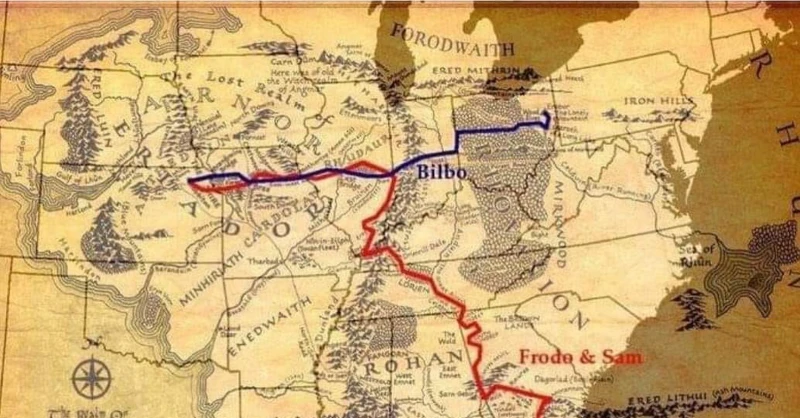
A kind person drew the routes of Bilbo and Frodo on the same map. Thanks.
Now let's look at the location of human lands. Gondor and Rohan are very close neighbors and, fortunately, allies.
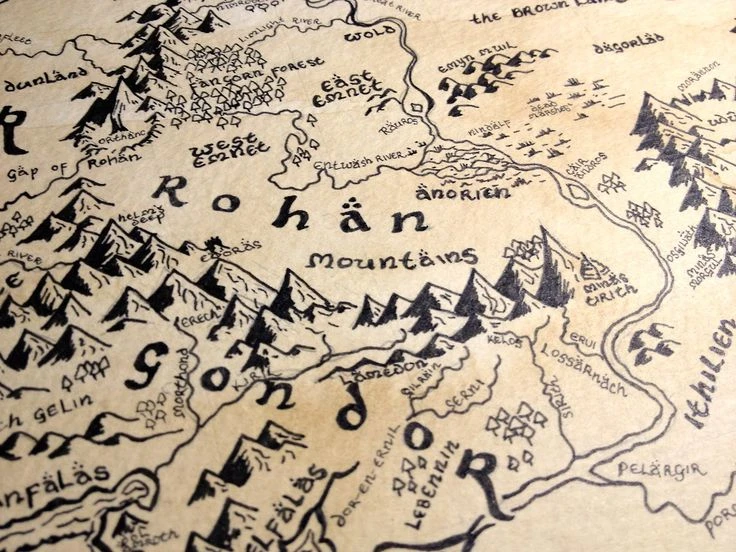
Where was Gondor when the Westfold fell?!
In the year 2510 of the Third Age, the Beacon-hills were created as a means of communication between Gondor and Rohan. The system could be used in both directions.
During the War of the Ring, the beacons on the northern Beacon-hills were lit on March 9 when news came to Minas Tirith from Lebennin that a large fleet Corsairs of Umbar were coming near to the Ethir Anduin. As the Rohirrim rode to Gondor's aid through Anórien they travelled close to all seven northern Beacon-hills on their way to Minas Tirith.
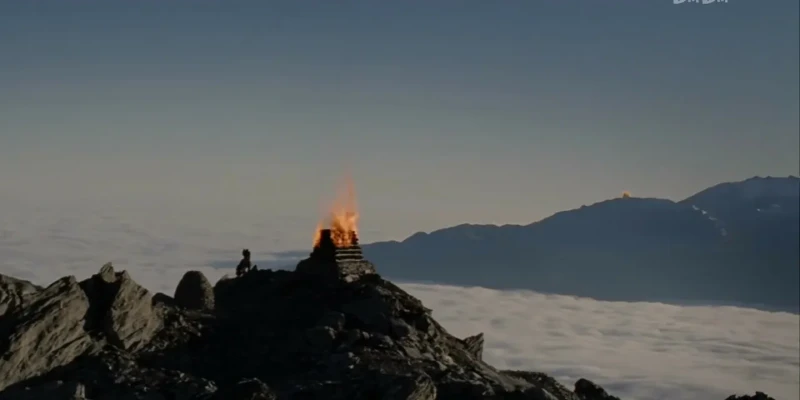
Wonderful!
Keep your allies close and your enemies even closer...
Let's go back to the map. If we zoom it out, we'll find another neighbor, and a pretty dangerous one. Gondor and Rohan have a common border with Mordor.
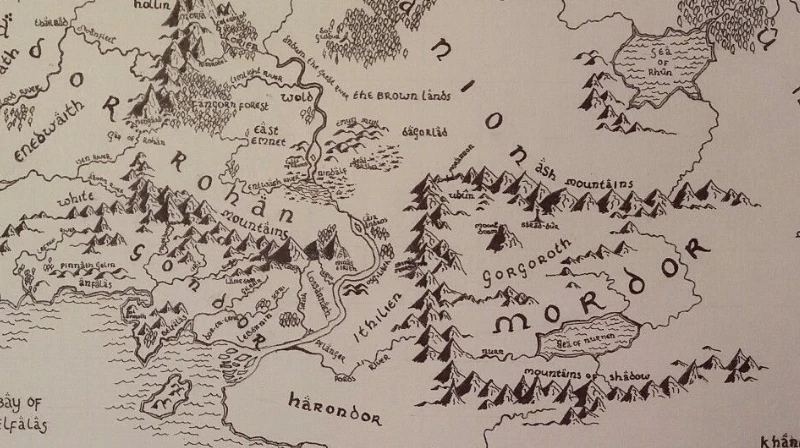
Surprise!
That's all!
This was the cursory acquaintance with the map of Middle-earth. We glanced at the most notable objects without going into details.
Finally, take a look at the entire map of Middle-earth, maybe you'll notice something interesting for yourself!
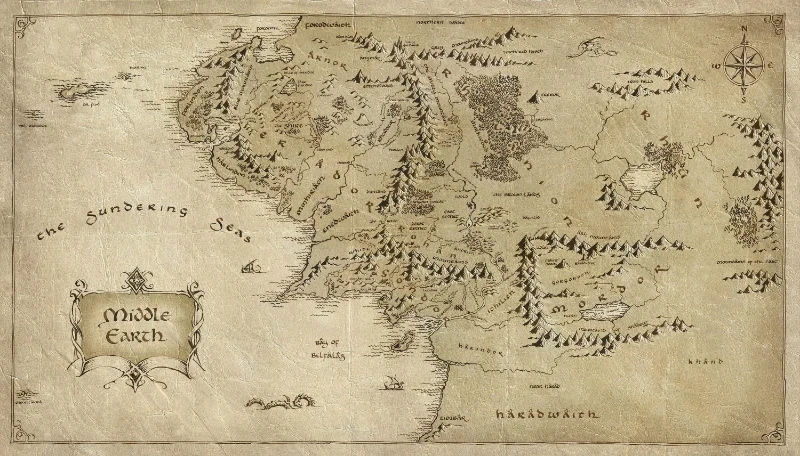
Look at the map, I said!
Shall we continue?2

