Let's be fair to Yandex Translate, because fairness is what separates us from people who smash the dislike button on perfectly good test just because they didn't understand it.
Yandex Translate is a wonderful invention! And it can help. Genuinely. It's a tool, and tools work — when there's a mind holding them. Used with your brain switched on, it will give you the meaning of a word, untangle a phrase, and get you out of a tight spot at 2 a.m. when the word "nevertheless" is staring at you.

Disclosure!!!
Here's the disclosure:

Let's imagine it's a dictionary.
And that's the whole point of this post, wrapped up in one sentence: the translator is not the problem — trusting it blindly is. Use it as a dictionary. Let it hand you the words, and then you build the meaning.
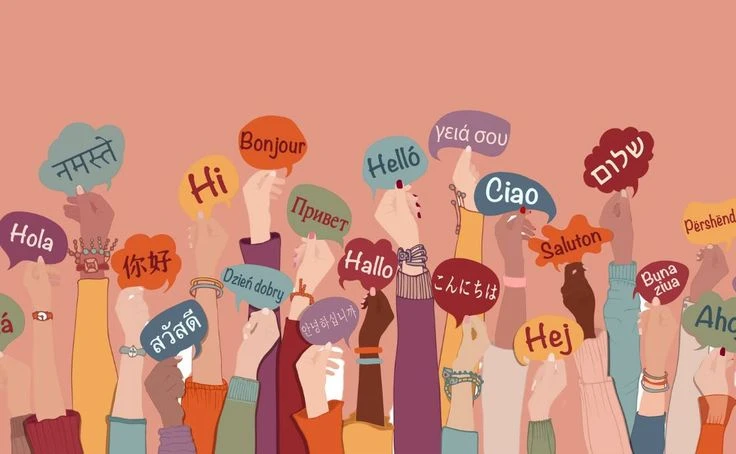
One word.
And I can repeat!
You can use Yandex Translate. Just use it with your mind. Otherwise you're not reading the test — you're reading the robot's opinion of the test, and the robot has no opinion, only a dictionary. It is absolutely ridiculous!
So, let it go!

It is not that complicated!
And one last thing. If you are reading this post right now through a translator, just know that you have understood nothing. Not the jokes, not the irony, not the point. The mirror has been held up to the mirror, and both of them are confused.
Learn English, come back and read it in English. You can do this!
I hope I made it sound easy.

Thank you for understanding.
P.S. If you're a native-speaker who has read this whole thing anyway, I told you it didn't concern you. But thanks for coming. I hope you enjoyed reading this pain.
Do you have emotions?6
Last time we discussed how to build a sentence with the verb ná (nanyë elda — I am an elf; i nauco (ná) halla — the dwarf is tall). Now let's talk about more serious matters. How do you say "you have my sword" in Quenya? And my bow, too.
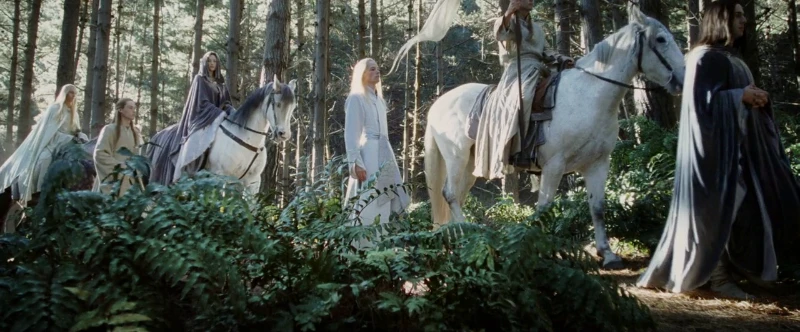
The time has come. Let's move on.
Updated dictionary
(New words are in italics)
Nouns
elda — elf
tan — man
nauco — dwarf
orco — orc
elen — star
menel — sky
macil — sword
hesto — captain
aran — king
atar — father
amil — mother
aiwë — bird
ambo — hill
anga — iron
cöa — house
lúmë — hour, period of time
mindon — tower
omentië — meeting
osto — city
rotto — cave
taurë — forest
Pronouns
nyë — I
(i)nya — my
lvë — We (you and I)
(e)lva— our
lme — we (us but not you)
(e)lma — our
tyë — you
(e)tya — your
lyë — you (respectfully)
(e)lya — your
ldë — you (plural)
(e)lda — your (plural)
se — he, she, it
(r)ya — his, her
ntë — they
(i)nta — their
i — the, a, an
mo — someone
ma — something
Verbs
ná — to be
cir — cut
lor — sleep
mat — eat
men — go
nor — run
sam — have
sil — shine
tir — watch
tuv — find
Adjectives and Adverbs
luinë — blue
turca — strong
halla — high
qualin — dead
mai — well
mára — good
palan — far
oialë — forever
palan — far, far away
melda — dear, beloved
linta — fast
linquë — wet
alcarin — glorious
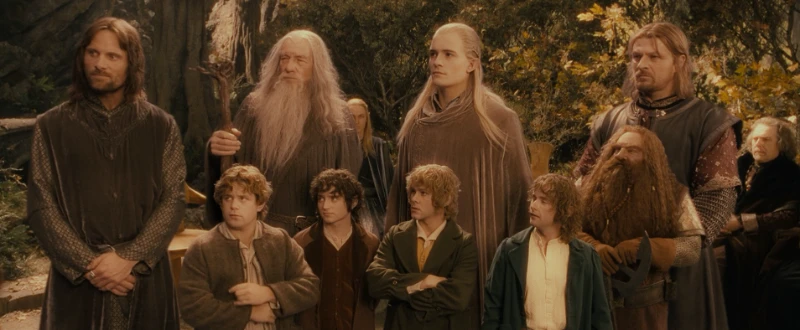
Ná palan...
If you have forgotten how to pronounce words or how to use the verb "ná", read the first lesson:
Now let's look at a few constructions:
Possessive Pronouns
(i)nya — my
(e)lva— ours
(e)lma — our
(e)tya — your
(e)lya — your
(e)lda — your (plural)
(r)ya — his, her
(i)nta — their
____________________
Most possessive pronouns have the same basic form as the long subject suffixes, except the -ë is changed to -a: -nyë “I” → -nya “my” and -lyë “you” → -lya “your”. The main exception is the possessive pronoun for “his, her” which is -rya. In all cases, the unmodified possessive pronoun form is added to nouns ending in vowels. For nouns ending in consonants, a “joining vowel” is generally needed to avoid awkward combinations. This joining vowel varies, and is either i or e, as indicated by a parenthetic vowel before the suffix in vocabulary entries: -(i)nya “my” or -(e)lya “your”.
For example:
eleninya — my star (elen + "i" (joining vowel) + nya; in English = starmy)
cöanya — my home (cöa + nya; cöa ends in a vowel, so a joining vowel is not needed)
aranelya — your king (aran + e (joining vowel) + lya)
taurelya — your forest (taurë + lya)
mindoninta — their tower (mindon + i + nta)
rottonta — their forest (rotto + nta)
atarelma — our father (atar + e + lma)
ostolma — our city (osto + lma)
____________________
Again, “his, her” is an exception: the suffix becomes -ya after a consonant, as indicated by the vocabulary entry -(r)ya. If the noun ends in a vowel, an -r must be added; if the word ends in a consonant, it is simply written together.
For example:
aiwerya — his/her bird (aiwë + r + ya)
macilya — his/her sword (macil + ya)
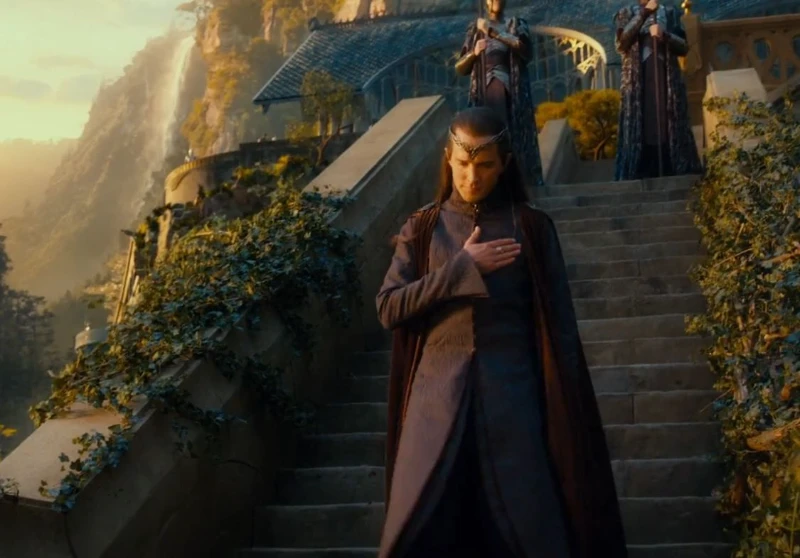
Nanyë elda!
Noun plurals
Noun plurals can be formed by adding an -i for words ending in a consonant, an -r for words ending in a vowel or changing the final -ë to -i for nouns ending in an -ë.
For example:
atan — man → atani — men
elda — elf → eldar — elves
aiwë — bird → aiwi — birds
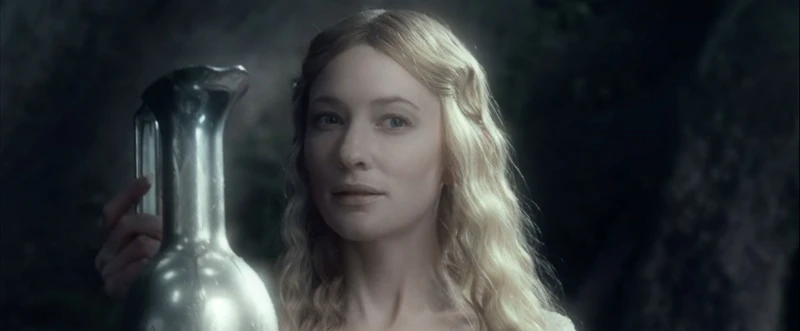
Ná linquë...
How to connect a verb (except ná) with a noun in Present Simple
cir — cut
lor — sleep
mat — eat
men — go
nor — run
sam — have
sil — shine
tir — watch
tuv — find
____________________
The Quenya aorist is the “timeless” tense. It is used for actions with no specific time or where time is not the main focus, and thus it can also refer to the present, especially in narratives. As such, it is roughly equivalent to the English simple present: “runs”. Without other inflections, the aorist tense of basic verbs is formed by adding an -ë to the stem: nor- “to run” → norë “runs”. That’s enough information to form some simple sentences.
For example:
elda lorë — an elf sleeps (lor + "ë")
i hesto samë macil — the captain has a sword (sam + "ë")
i nauco tirë i orco — the dwarf watches the orc(tir + + "ë")
orco matë aiwi — an orc eats birds (mat + "ë")
____________________
With "you" -i is added to the word to indicate the present tense and "tyë" (you) or "lyë" (You), depending on what you want to say.
For example:
menityë — you go (men + I + tyë)
samityë macilinya — you have my sword (sam + i + tyë, macil + i +nya)
samilyë macilinya — you have my sword (sam + i + lyë, macil + i + nya)
____________________
With "I" the word order is also reversed (predicate, then subjects). -i is added to the word to indicate the present tense and -n as the correct ending for "I".
For example:
lorin — I'm sleeping (lor + i + n)
samin macil — I Have a Sword (sam + i + n)
____________________
For the plural, "i" is added to the word to indicate the present tense and "r" to indicate the plural. The word order is direct (subjects, then predicate).
For example:
i naucor tirir i orco — the dwarves are watching the orc (tir + i + r)
orcor matir aiwi — orcs eat birds

I macil ná alcarin!
The sword is yours, the stars are yours, Quenya... Well, almost... The arsenal has been replenished: plural, possessive pronouns and a couple of new words. Oh, by the way, there's something under the pictures. But it doesn't matter. Don't pay any attention.
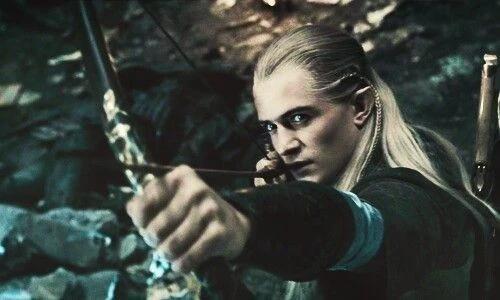
Tirin tyë!
That's all!
How does "Macilinya cirë orcor" translate?3
There are many Elvish languages, each of them is unique. I want to tell you about quenya. Quenya is the language of the elves who came to Middle-earth from Valinor.
Tolkien himself called quenya "Elvish Latin", since by the Third Age it had ceased to be the language of everyday communication and remained as the language of knowledge, rituals and poetry. The living speech of the elves was almost completely replaced by Cindarin, a related but different language.
The letters of the Elvish script are called tengwar (from Quenya tengwa — sign, symbol, letter). The Latin alphabet is often used to write texts in Quenya, which is familiar to the eye and convenient for beginners. We will master the rules of reading — and immediately proceed to live speech: take a few words and expressions written in Latin, and try to pronounce them the way they once sounded in Valinor.
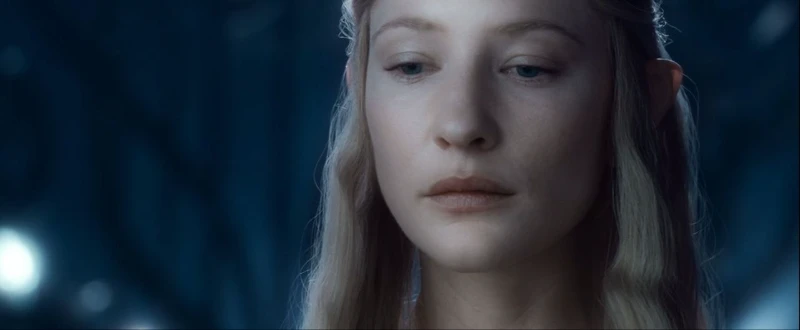
Galadriel spoke Quenya.
It is very easy to read in Quenya, just like in Latin or German: both written and read. You only need to remember a few simple rules.:
1. A Quenya c is always a "hard c" [k].
2. Vowels are pronounced i = "ee", e = "eh", a = "ah", o = "oh", u = "oo".
3. Long vowels are marked with an accent (í, é, á, ó, ú) and are roughly pronounce the same but held longer than short vowels.
4. The double-dot (dieresis) on ë and ö has no effect on pronunciation and may be omitted; it is just a reminder than these vowels are pronounce separately.
5. The Quenya r is a trilled r, as in Spanish or Italian pero. It should not be pronounced as an English r. The tongue should touch the alveolar ridge (the roof of the mouth just behind the front teeth) and vibrate briefly.
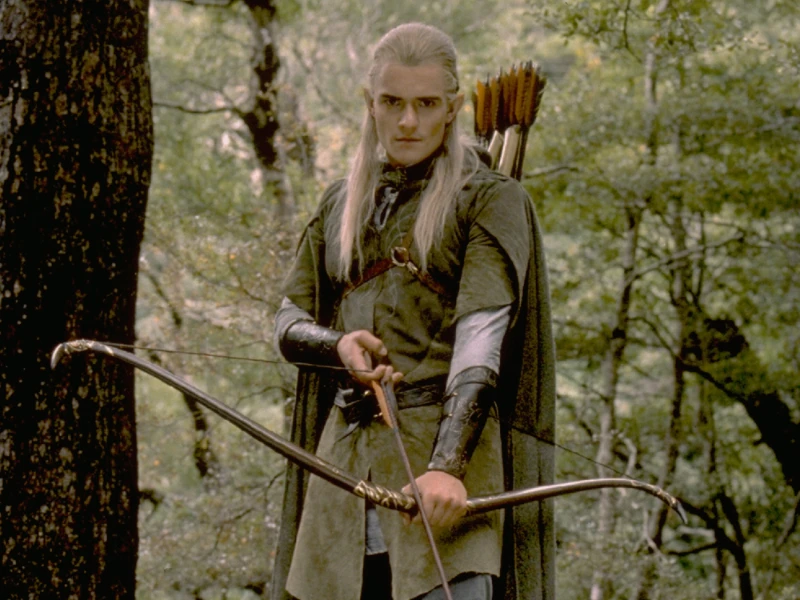
Legolas spoke Cindarin.
There are six diphthongs in Quenya — combinations of two vowels that are pronounced together as one sound. You need to be able to read them.:
1. ai = "eye" as in rye
2. oi = "oy" as in boy
3. ui = "wee" [roughly] as in queen
4. iu = "yoo" as in yule
5. eu = "ehoo" [very roughly]
6. au = "ow" as in how

The last rule remains, be patient...
And a few words about the stress in words:
1. Monosyllables are stressed on their only syllable, through sometimes minor monosyllables are unstressed within a larger phrase.
2. Disyllables are stressed on their first syllable.
3. Longer words are stressed on their second-to-last syllable if it is heavy (diphthong or long vowels), and otherwise their third-to-last syllable.
Now you can finally go to the dictionary!
Nouns
Elda — elf
atan — man [human being]
nauco — dwarf
orco — orc
elen — star
menel — sky, heavens
macil — sword
hesto — captain
Pronouns
nyë — I
lvë — we
tyë — you
lyë — You (respectfully)
ldë — you (plural)
se — he, she, it
ntë — they
i — the, a, this
Verbs
ná — to be
Adjectives and Adverbs
luinë — blue
turca — strong
halla — high
qualin — dead
mai — well
mára — good
palan — far
oialë — forever

Now that we know how words sound, it's time to look into the very heart of language — its grammar. Let's start with the simplest. You need to understand how to connect words with each other. The grammar of Quenya reminded me of Chinese, there is a similar logic.
Let's analyze a few basic constructions.:
1. Noun + verb "ná" (to be) + noun
For example:
i atan(ná) hesto — the man is the captain (the verb "ná" can be omitted in the present)
2. Verb "ná" (to be, to be) + pronoun + noun
For example:
nanyë elda — I am an elf (the verb "ná" is placed before the pronoun, written together with it and stripped of the accent mark)
Natyë nauco — You are a dwarf
3. Noun + verb "ná" (to be) + adjective
For example:
i nauco (ná) halla — The dwarf is tall
i orco (ná) qualin — The orc is dead
4. Verb "ná" (to be) + pronoun + adjective
For example:
nalvë turca — We are strong
5. Verb "ná" (to be, to be) + adverb/adjective
For example:
ná mára — It's good
ná oialë — It's forever

That's it!
We have analyzed the basic vocabulary and grammar of the Quenya language. Now you know enough to build your first sentences in Elvish! I suggest you try to build them in the comments, I'll answer them all)
Do I need a second Elvish lesson?3
Hello, everyone! I'm with you again! Today I want to tell you about my first week of school as a freshman. Have fun reading!
Preface: unfortunately, it was not possible to enroll on a budget, so now I am studying for a headscarf in Linguistics. Technology of intercultural communication"
So. On Monday, I was looking forward to it, even though I was very worried about the large number of people.
With grief in half, Sonya and I reached the IIA of the Moscow State Pedagogical University. There I found my sophomore mentor. Oh, I forgot to tell you! No one knows anything about my faculty until now, because this is a new program, and we are guinea pigs. Continue... I talked with the curator for a while, then my classmates came over, I really liked the look of some of them so much that I wanted to be friends with them. Spoiler alert: I won't succeed.
Then we played "Match" and "Brownian Motion" to relax and get to know each other. And even later, I would like to clarify, all the first-year students of the IIA of Moscow State Pedagogical University (+-250 people) were taken to a huge "assembly" hall, where they talked for a long time about the institute, about teachers, etc. I was a little unlucky because I missed a couple of seconds, so I sat on the edge, while the other girls had already managed to get to know each other and even become friends. That's it, I'm really upset that I won't find any friends, but.... After a tour of our building, it turned out that I met some cool girls: Arina, Vika, Milena and Lisa. Of course, I didn't remember their names at first, because I've been imagining someone all day, and my brain is already confused.
And when we needed to write some documents so that we could get a student ID, we also met Polina. She's a great girl too. As a result, our group began to communicate well and closely. Let's test your intuition. How many girls are there in the company, including me? I'll give you time to think.

Tuesday came. Our disciplines for that day were as follows: Italian, English, French, German. Don't be surprised or scared, it's just that these are all the languages we could have chosen as the first one. The first language is brought up to the C1 level on average, so I was sure after that day, as well as before admission, that I would finish learning English, which has a B2 level for me...
Nothing super interesting happened that day, the professors told us about their language. Why should it be selected? How complex is it? What are we going to do in pairs? And so on
We really liked the Italians, because it was clear that they live by their language and really love to study, teach, and speak it. Of course, as far as I know, there will be no Italian first language group, because this is not entirely rational.
By the way, now I know basic phrases in all of the above languages like "how are you", "how old are you", "what's your name", etc. And of course, we were also taught how to answer them.

Wednesday,. It was on this day that the compulsory disciplines for all courses began. Namely, the history of Russia and some kind of interactive lecture, which even the curators did not know about at that time.
The historian is cool, so that you can see this, I'll write down a couple of his quotes at the end of the post. He tells an interesting story, I don't want to say anything, but spoiler alert: yesterday we all discussed him together with all 100+ people!A little bit! not in a very good way. Find out why
What kind of interactive lecture is this? We came to a huge auditorium, where there were columns, round tables, in short, + vibe. The professor said that she would broadcast to us the entire lecture on intercultural communication in German literature. It was very interesting, I even recorded something, but it was such an atmosphere, the echo, the warmth, and her soft, even and soothing voice that made everyone want to sleep, and someone even did so.
Thursday was also a chill day for me personally, even though there were 4 pairs again, but they were linguistic. On Thursday, we were introduced to the "second" languages, which are brought up to the B2 level of 100%, but it is possible to go higher
We were introduced to Italian, English, German, and French again, but Portuguese, Spanish, and Arabic were added to them (Turkish can also be taught, but there was no teacher). I liked all the languages, all the teachers, I didn't know what to choose. And then the professor of the German language misled us all...
Bottom line: I chose German first and Spanish second. But I'm very afraid for English... It's clear that I won't lose my B2 level, besides, I watch movies in English and listen to songs. But somehow I will have to prove to the employer that I know this language. Either I will take the IELTS (International English Language Testing System) later so that there is proof, or I will receive additional education in parallel (I have to wait for it to be free), which my university provides as a student, or I will finish my master's degree in English. As if the 3rd option were the best. What would you recommend?

It was on this day that we officially chose the languages that we want to study for 4 years. And also there was the history of Russia again, now I'll tell you what happened that caused all my 100+ classmates to raise a mini-riot in the group at tg: the historian asked us a question... Okay, we're not arguing, it needs to be done. But hey! No one understood him, and the curators tried to calm us down, saying that the first dz is why you are so excited... But seriously, I'm lucky that my next story is already on Friday. There is time, but those who have it on Wednesday... I sympathize with them, because it really takes a very long time to do this. By the way, give me some advice. how do I write an essay? And which ais were used?
We also had a lecture on "How does a modern humanitarian live?" It was interesting, we listened to who the graduates work for, what theses they had, etc. But honestly? I don't even want to think about a diploma at all after this DZ in history, because it's scary.
I'll tell you right away. He's young. That's why they're on the same page with us... If it wasn't for dz. Quotes to the studio!
— My principle is this: away from the authorities, closer to the canteen.
— This "Excuse me, can I come in?" we remove right away. Just come in and sit down. I rarely say anything clever, so I can be scared off. Now you've scared me off.
— LMS sounds like a diagnosis.
— Tell me your first and last name one at a time. If you tell me your first and middle name, I understand that dominance is an important moment for some people.
— Let's make an agreement right away: I don't know you outside of the institute, you don't know me. If we suddenly meet somewhere, you don't have to run to me with open arms and shout: "Hello, Dmitry Andreevich!" Especially in a bar and especially in front of my friends.
— You're all waiting as if the stand-up is about to begin.
— I come home, and I start the "house-life" mode. While I make the stuffing, while I wash the dishes... Gold, not a man!
*Students*: — Be healthy!
"You'll be with me."..
— You lose your memory at the sight of me, I understand... Morning affirmation.
— Well, Mom's not here yet, everything is in the process... Or in the long run?
— Come on, my little chemists, strain yourself.
— You and I are not ordinary mortals, we are getting higher education.
— I see the girl took out a fan and started fanning herself... Well, historians are stuffy, I don't argue.
— I'm not stuffy, but erudite☝️
* * *
That's it! Bye-bye, everyone!
How was your week?1

