There are many Elvish languages, each of them is unique. I want to tell you about quenya. Quenya is the language of the elves who came to Middle-earth from Valinor.
Tolkien himself called quenya "Elvish Latin", since by the Third Age it had ceased to be the language of everyday communication and remained as the language of knowledge, rituals and poetry. The living speech of the elves was almost completely replaced by Cindarin, a related but different language.
The letters of the Elvish script are called tengwar (from Quenya tengwa — sign, symbol, letter). The Latin alphabet is often used to write texts in Quenya, which is familiar to the eye and convenient for beginners. We will master the rules of reading — and immediately proceed to live speech: take a few words and expressions written in Latin, and try to pronounce them the way they once sounded in Valinor.
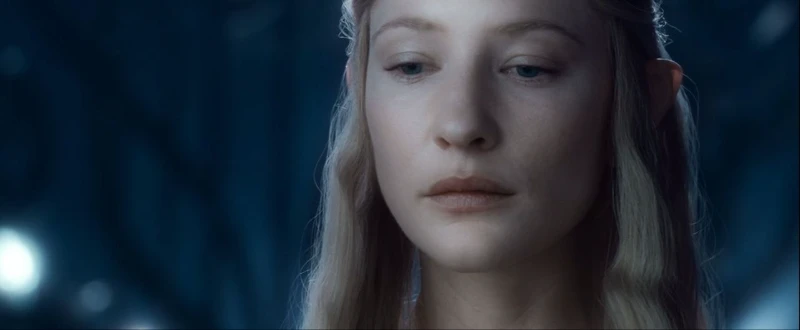
Galadriel spoke Quenya.
It is very easy to read in Quenya, just like in Latin or German: both written and read. You only need to remember a few simple rules.:
1. A Quenya c is always a "hard c" [k].
2. Vowels are pronounced i = "ee", e = "eh", a = "ah", o = "oh", u = "oo".
3. Long vowels are marked with an accent (í, é, á, ó, ú) and are roughly pronounce the same but held longer than short vowels.
4. The double-dot (dieresis) on ë and ö has no effect on pronunciation and may be omitted; it is just a reminder than these vowels are pronounce separately.
5. The Quenya r is a trilled r, as in Spanish or Italian pero. It should not be pronounced as an English r. The tongue should touch the alveolar ridge (the roof of the mouth just behind the front teeth) and vibrate briefly.
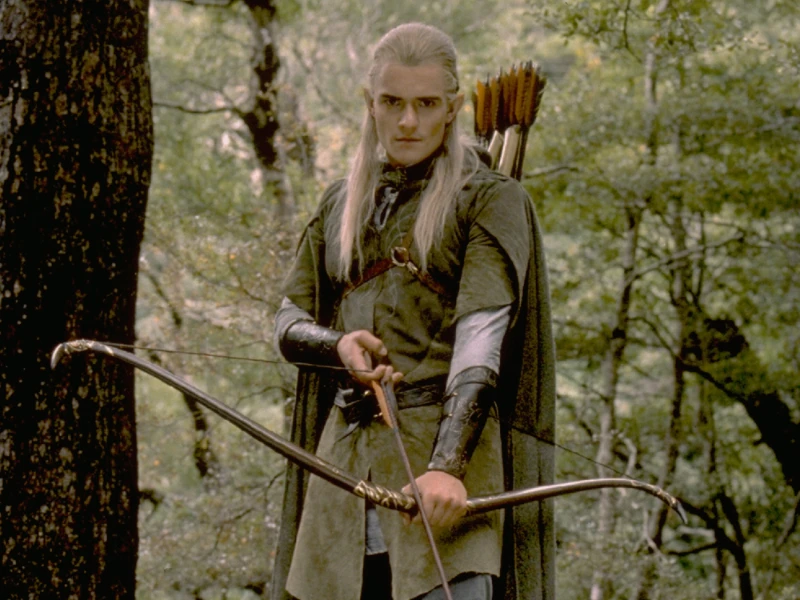
Legolas spoke Cindarin.
There are six diphthongs in Quenya — combinations of two vowels that are pronounced together as one sound. You need to be able to read them.:
1. ai = "eye" as in rye
2. oi = "oy" as in boy
3. ui = "wee" [roughly] as in queen
4. iu = "yoo" as in yule
5. eu = "ehoo" [very roughly]
6. au = "ow" as in how

The last rule remains, be patient...
And a few words about the stress in words:
1. Monosyllables are stressed on their only syllable, through sometimes minor monosyllables are unstressed within a larger phrase.
2. Disyllables are stressed on their first syllable.
3. Longer words are stressed on their second-to-last syllable if it is heavy (diphthong or long vowels), and otherwise their third-to-last syllable.
Now you can finally go to the dictionary!
Nouns
Elda — elf
atan — man [human being]
nauco — dwarf
orco — orc
elen — star
menel — sky, heavens
macil — sword
hesto — captain
Pronouns
nyë — I
lvë — we
tyë — you
lyë — You (respectfully)
ldë — you (plural)
se — he, she, it
ntë — they
i — the, a, this
Verbs
ná — to be
Adjectives and Adverbs
luinë — blue
turca — strong
halla — high
qualin — dead
mai — well
mára — good
palan — far
oialë — forever
Now that we know how words sound, it's time to look into the very heart of language — its grammar. Let's start with the simplest. You need to understand how to connect words with each other. The grammar of Quenya reminded me of Chinese, there is a similar logic.
Let's analyze a few basic constructions.:
1. Noun + verb "ná" (to be) + noun
For example:
i atan(ná) hesto — the man is the captain (the verb "ná" can be omitted in the present)
2. Verb "ná" (to be, to be) + pronoun + noun
For example:
nanyë elda — I am an elf (the verb "ná" is placed before the pronoun, written together with it and stripped of the accent mark)
Natyë nauco — You are a dwarf
3. Noun + verb "ná" (to be) + adjective
For example:
i nauco (ná) halla — The dwarf is tall
i orco (ná) qualin — The orc is dead
4. Verb "ná" (to be) + pronoun + adjective
For example:
nalvë turca — We are strong
5. Verb "ná" (to be, to be) + adverb/adjective
For example:
ná mára — It's good
ná oialë — It's forever
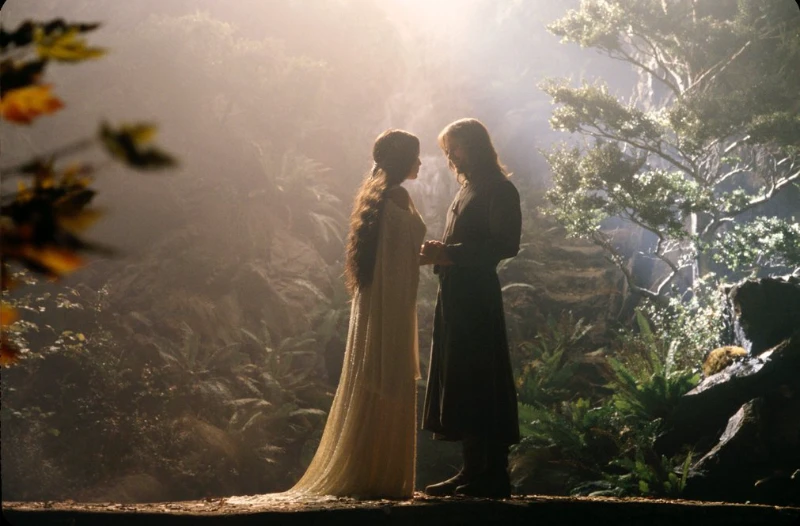
That's it!
We have analyzed the basic vocabulary and grammar of the Quenya language. Now you know enough to build your first sentences in Elvish! I suggest you try to build them in the comments, I'll answer them all)
Do I need a second Elvish lesson?3


Share:
Bestcomments (6)
Ricardio
Interesting post
zhara188
Reply to Interesting post... (Ricardio)
Thanks
burmatio
It's a very interesting and beautiful language!
zhara188
Reply to It's a very interest... (burmatio)
Yes, indeed :)
Highjacker
Cool!
zhara188
Reply to Cool!... (Highjacker)
Thank you!