A blog about how to find adventures on your own, but get home in time for dinner. Endless talk about books, worlds, and tests.
I recently realized that I've been crocheted for eight years. It's a dubious anniversary, but I decided to write this post in honor of it. Let's start with the simplest crocheted character, and finish with the most difficult one. Let's go!
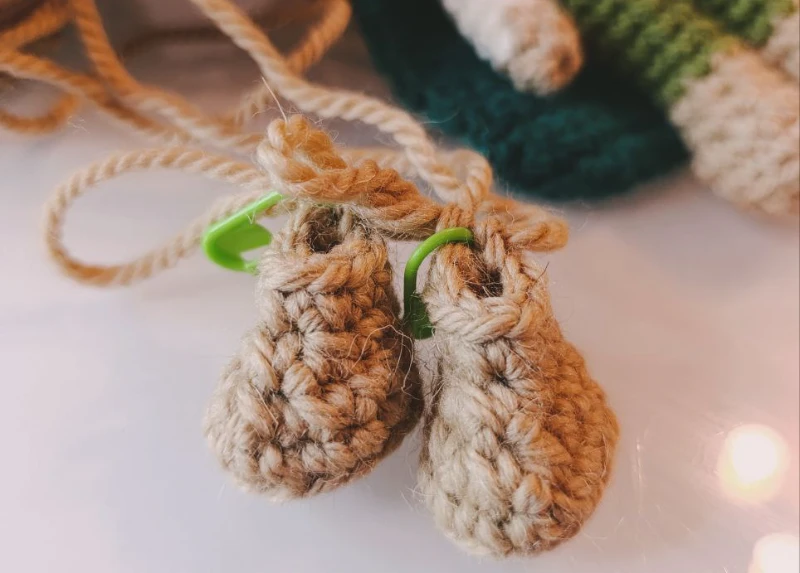
In the beginning was the foot...
10. Samwise Gamgee
The selection is opened by the one who carried not the ring, but everything else.
Sam is wearing a white shirt, green pants with suspenders. On top is an elven cloak with a Lorien leaf, and over his shoulder is a bag (for potatoes).
The most difficult part is suspenders. It isn't hard to tie them up, but fix them... Don't even ask me how I did it.
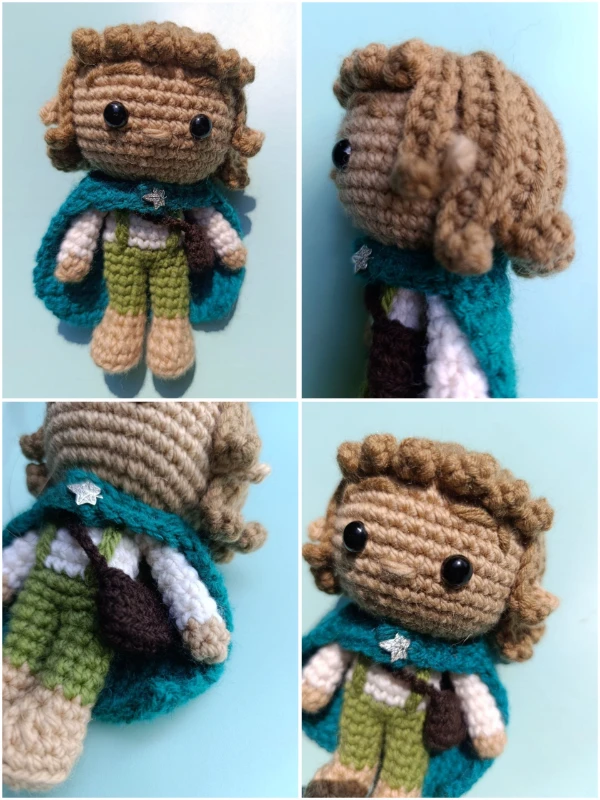
Cutie
9. Peregrin Took
Someone who always gets into trouble, but somehow gets out of it.
Pin is wearing a white shirt, brown pants, gray scarf, blue coat and an elven cloak with a leaf from Lorien. It's just like the "adult hobbit", but it feels like this one will definitely drop something into the well...
The most difficult detail is the scarf. Unlike everything else, I knitting a scarf. But the whole difficulty is that for his little scarf, I took knitting needles only two millimeters thick, that is, I knitted practically with toothpicks. Why this masochism? Because I don't like crocheted scarves. That's life…
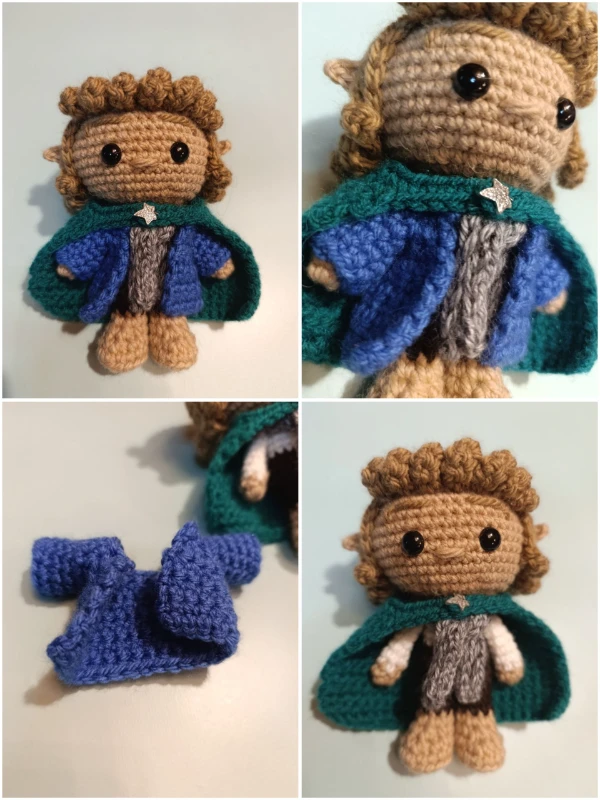
Stylish
8. Frodo Baggins
Next, actually, the main character. The one who managed to bring the Ring to Mordor.
He is also wearing a white shirt, brown trousers, red vest, brown coat and, like everyone in the Fellowship of the Ring, a Lorien cape with a leaf.
The most difficult detail is the chain for the Ring. I crocheted it with the finest silver thread with a 2 mm crochet, well, you understand. I dropped the Ring three times while trying it on, and each time my heart skipped a beat. Frodo would have understood. He dropped it himself more than once.
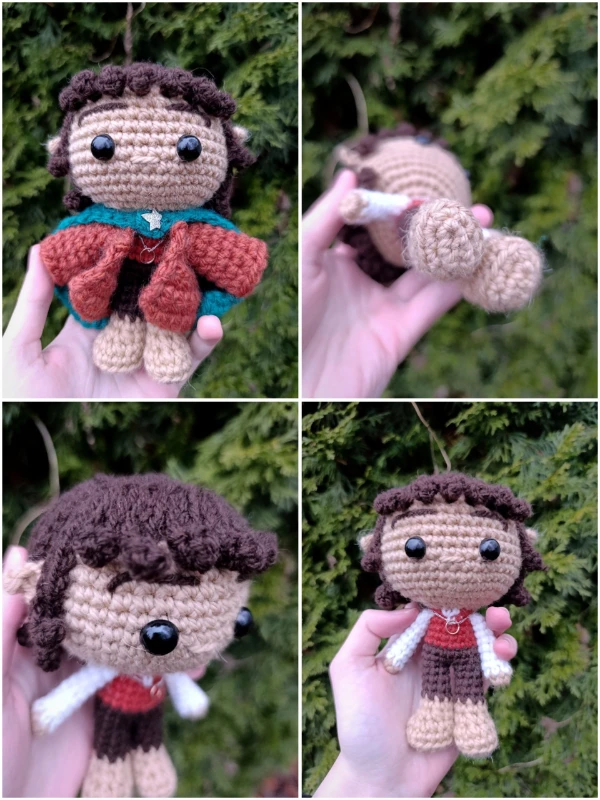
Pretty
7. Galadriel
The one who is able to look into your soul... interrupts the series of hobbits.
Galadriel is wearing a floor-length white dress with wide sleeves and a belt. And elf ears!
Among all the details, I've been working on her hair for the longest time. The tiara is tied in two strands. To the thick gray I added a thin silver one, the one I made the Ring chain. And tiara shone with that soft light befitting the lady of Lorien. And it will shine in the darkness when all other light is extinguished.
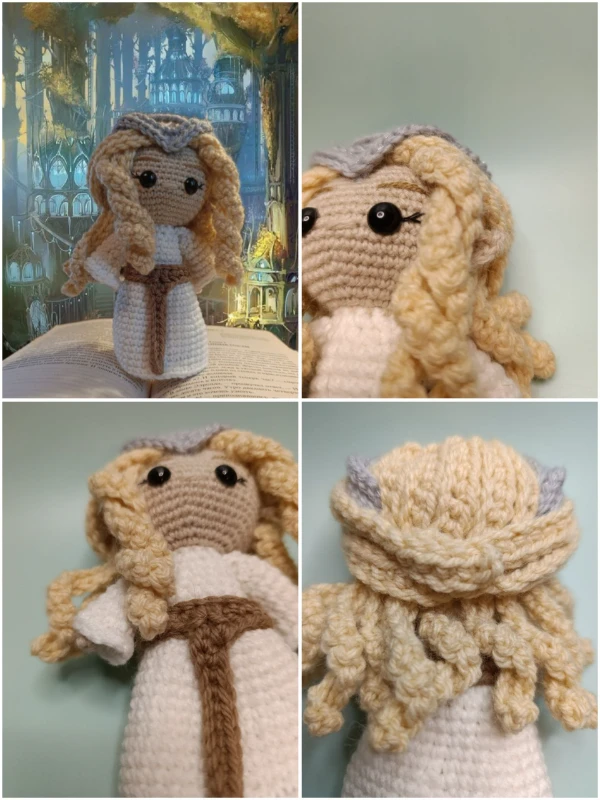
Beautiful
6. Eowyn
The first person in the collection. The one that could kill Witch King of Angmar.
She's wearing a snow-white robe that reaches all the way to the floor. Long sleeves with elegant slits are connected in the same pattern as the skirt. A brown vest (corset) is worn over the dress with lacing on the back.
The most difficult detail is the vest. I did embroidery on it, it wasn't easy. But The back was sewn so that it looked like a real lacing corsets — because my toys do not tolerate falseness, even in small things. I 'm not complaining. That was my battle.
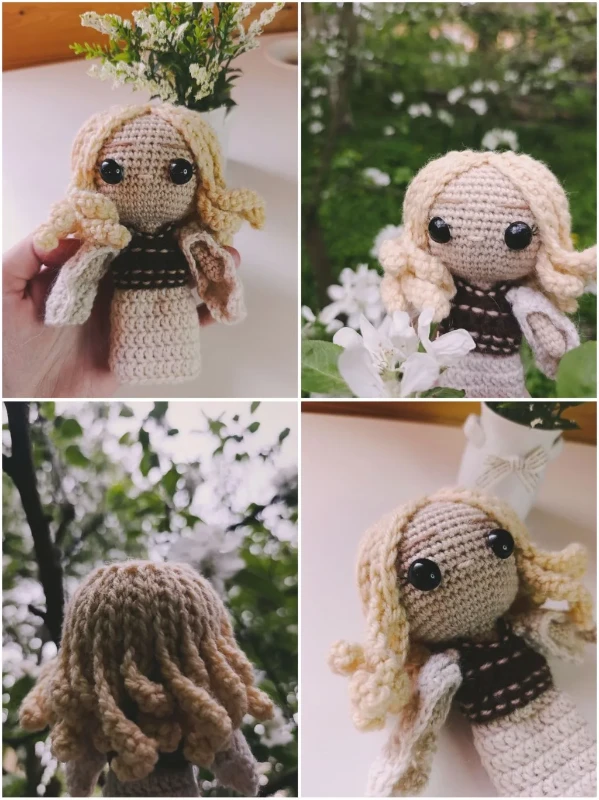
Brave
5. Rosie Cotton
The one who married Sam.
She is wearing a white shirt with flounce sleeves and a terracotta maxi skirt. There is a green corset on top, and a green apron on the belt. By the way, I used the same shade of green as Sam's to make them look harmonious together.
The most difficult thing is the corset. Interesting fact: I tied up Rosie on February 14th. On that day Rosie and Sam saw each other in the first time.
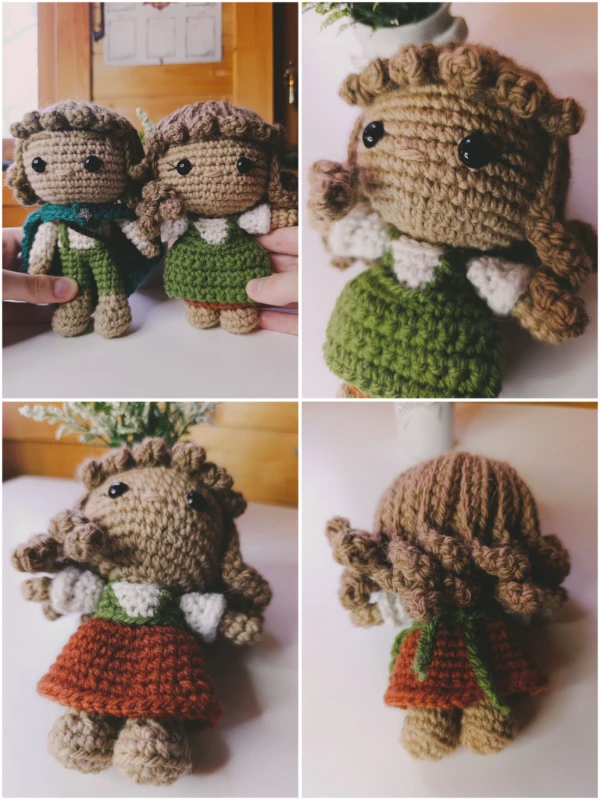
Cutie
4. Gandalf the Grey
The only one who has retained the remnants of reason here.
Gandalf is wearing a long grey robe with wide sleeves. On his head is a pointed wide brimmed hat. A bag is slung over his shoulder. Gray robes are visible under the mantle. He wears a fringed silver scarf around his neck.
The most difficult thing is the beard. I crocheted it several times. Not because I did mistakes, but because I was looking for the right one. The solution turned out to be obvious, though... after all, any solved riddle seems amazingly easy afterwards.
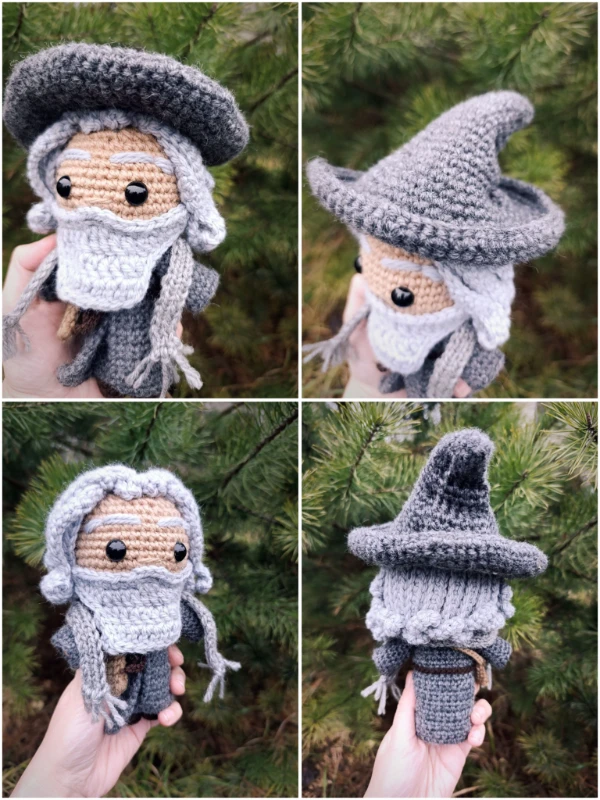
Punctual
3. Aragorn
This is Aragorn, son of Arathorn, heir to Isildur and the true king of the throne of Gondor!
He is wearing a blue shirt with lacing at the collar. A dark blue vest is worn on top. On his belt hangs a scabbard containing the legendary Andril sword, its blade is decorated with rune-shaped engraving. There are three slits on the hem of the dark grey raincoat. It is slightly open, allowing you to see weapons and clothing details. The image is completed by a green elf cloak with a brooch in the form of a Lorien leaf.
The most difficult things are boots, a cloak and a beard. The boot top was turned up and wrapped with rope, so I had to tinker. I spent a long time choosing the color for the raincoat based on the film, and eventually decided to knit it in gray. It was difficult to make incisions on the hem, but it was interesting. And then I found out that the costumers were planning a cape in a beautiful shade of green. Perhaps the day will come when I will crochet him again... But not today!
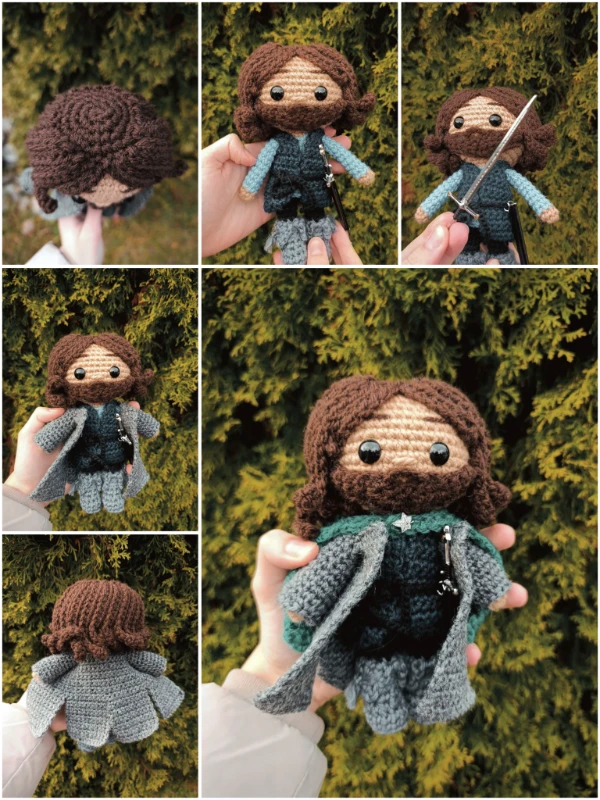
Cool
2. Boromir
A valiant warrior who will not bow to anyone.
A dark blue vest with silver embroidery is worn over a burgundy shirt embroidered with gold threads. On his left shoulder hangs the horn of Gondor, a family heirloom of the Governors of Gondor. If the horn is heard within the borders of Gondor, its owner will be rescued. A cloak with a Lorien leaf is draped over his shoulders. A chain mail shirt is hidden under the shirt. The image is completed by bracers made in dark brown color. These bracers not only protect his hands, but also add dynamism and power to his appearance. By the way, after Boromir's tragic death, his bracers pass to Aragorn, who uses them in further battles.
You can't just crochet Boromir... It is almost entirely made up of complex parts. The embroidery on his shirt and vest, and his beard are all nothing compared to his hands. They consist of three layers: shirt sleeves on top, chain mail in the middle, and gloves on the bottom.
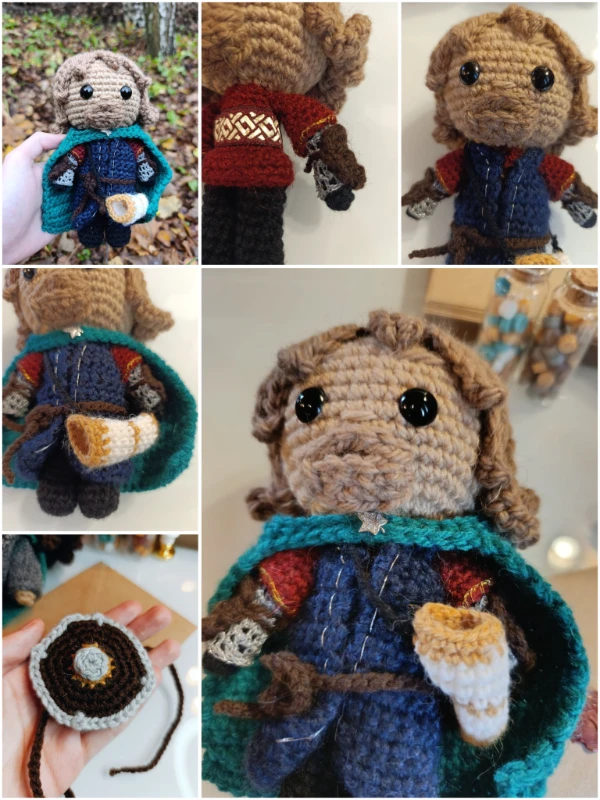
Intricate
1. Legolas
Thranduil's son. He is as tall as a sapling, flexible, and extraordinarily strong... He can quickly draw a huge war bow and shoot a Nazgul.
The main colors of his outerwear are green and brown, with three cuts at the hem. Underneath he is wearing a high-necked shirt, shimmering in shades of blue and silver and decorated with intricate clasps. Legolas wears high boots. A Lorien cape with a leaf-shaped brooch is draped over his shoulders.
The hardest part is... everything. Every detail here requires attention. Hair pulled back in a pigtail. A shirt with clasps and a belt. Boots (several times more difficult than Aragorn's boots). A raincoat with a sewing detail. Legolas isn't first because he's an elf. It's because he took more of my time, energy, and nerves than all the others combined. Alas, for the madness of our days.
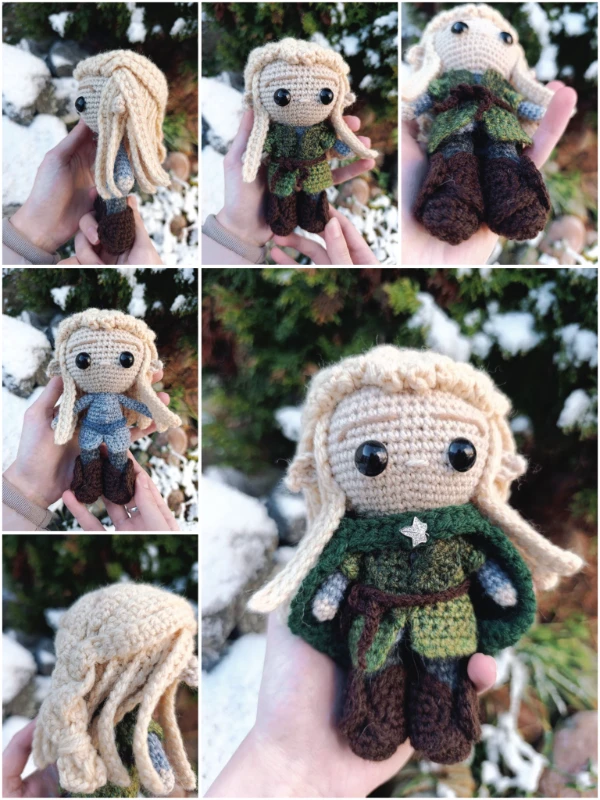
Ideal
These were the characters that I connected this year. But you don't think that's all, do you?
However, as they say, you can't put a ring on two hands at once, and you can't put all my toys in one post. Whether there will be a sequel... I don't know. Even the wisest cannot foresee everything. There is hope. Ghostly, crazy, but there is.
Which character did you like the most?2
I have received a letter from Kevin. Yes, that Kevin. The one who single-handedly took down the Wet Bandits with a tarantula and a prayer.
He's apparently grown up, goes to book festivals, watches Spanish films, and asks very thoughtful questions about my reading habits.
If you don't know who Kevin is (first of all, how?!) but fine, check the test below. I'll wait.
Anyway, I've received the letter. Here's a fragment — just a fragment, because I'm not a monster who posts private correspondence online. It would be very rude to read someone else's letters in full and that stuff... Even if that someone is Kevin McCallister.
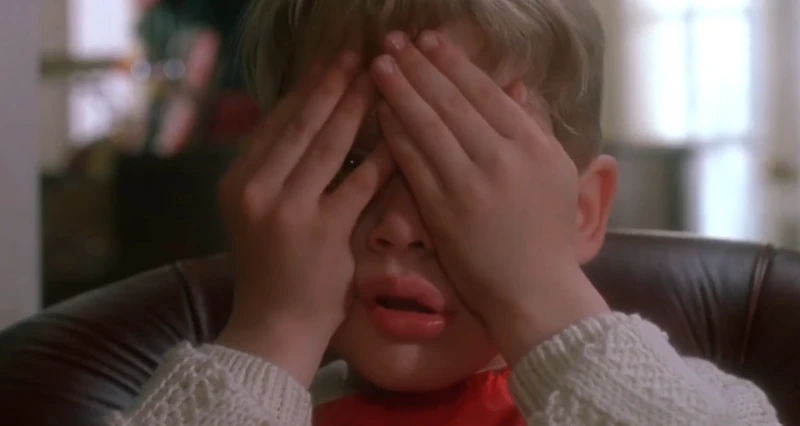
One... two... TEN!!!
So, here is the part of it:
"…Last week I went to a book festival. It was fantastic! We spent two hours looking through new books and talking to authors. What is the last book you’ve read? What books do you have to read for your literature classes? How often do you spend time reading a book for pleasure?
I saw an interesting film in Spanish last week…"
I have a guess what film you've watched
Kevin has clearly grown up since I last saw him (it never ceases to amaze me). No mention of tarantulas. No paint cans. No talks about burglars. Just culture, books, and cinema. Respect.
He had never written to me before, but I had to answer, because obviously, ignoring a childhood icon is not an option.
My answer looked something like this:
Not this
"Hi Kevin,
Thanks for your letter! I’m glad you're having fun there. I recently went to a book festival too. It was located on Red Square (because why not).
The last book I’ve read was “The Red Necklace” by Sally Gardner. It’s an English novel about the fall of the Bastille. You have to read it, because I want to discuss this book with someone wise. For my literature classes I have to read lots of books. For example, “Oblomov” by Goncharov. It’s... umm... an interesting book, one of my favorites... I read two hours a day, I guess. I want to spend more time reading books for pleasure, but I can’t because of studying.
What is the title of the film? Who is the film director? Why did you watch it in Spanish? Say hi to Fuller for me. Keep in touch. Don't get robbed!
Bye for now,
I"
Full of Pepsi
And that's it. That's the whole tragedy in three acts.
If only you knew how exhausting exam preparation is — maybe you'd understand why I almost replied with just "KEVIN!"
But I stayed civil. I asked about his film. I sent regards to Fuller. I am a hero.
Kevin doesn't need to know that I wrote this at 2AM, running on caffeine and regret, while Oblomov judged me from my bookshelf.
Let him think I'm a well-adjusted person who casually discusses revolutions between study sessions (it may be true).
Run like a wind!
And now seriously. Who writes letters anymore? Kevin, it's 2026. Send a voice message like a normal person!
That's all!
Have you ever read "The Red Necklace"?3
Last time we discussed how to build a sentence with the verb ná (nanyë elda — I am an elf; i nauco (ná) halla — the dwarf is tall). Now let's talk about more serious matters. How do you say "you have my sword" in Quenya? And my bow, too.
The time has come. Let's move on.
Updated dictionary
(New words are in italics)
Nouns
elda — elf
tan — man
nauco — dwarf
orco — orc
elen — star
menel — sky
macil — sword
hesto — captain
aran — king
atar — father
amil — mother
aiwë — bird
ambo — hill
anga — iron
cöa — house
lúmë — hour, period of time
mindon — tower
omentië — meeting
osto — city
rotto — cave
taurë — forest
Pronouns
nyë — I
(i)nya — my
lvë — We (you and I)
(e)lva— our
lme — we (us but not you)
(e)lma — our
tyë — you
(e)tya — your
lyë — you (respectfully)
(e)lya — your
ldë — you (plural)
(e)lda — your (plural)
se — he, she, it
(r)ya — his, her
ntë — they
(i)nta — their
i — the, a, an
mo — someone
ma — something
Verbs
ná — to be
cir — cut
lor — sleep
mat — eat
men — go
nor — run
sam — have
sil — shine
tir — watch
tuv — find
Adjectives and Adverbs
luinë — blue
turca — strong
halla — high
qualin — dead
mai — well
mára — good
palan — far
oialë — forever
palan — far, far away
melda — dear, beloved
linta — fast
linquë — wet
alcarin — glorious
Ná palan...
If you have forgotten how to pronounce words or how to use the verb "ná", read the first lesson:
Now let's look at a few constructions:
Possessive Pronouns
(i)nya — my
(e)lva— ours
(e)lma — our
(e)tya — your
(e)lya — your
(e)lda — your (plural)
(r)ya — his, her
(i)nta — their
____________________
Most possessive pronouns have the same basic form as the long subject suffixes, except the -ë is changed to -a: -nyë “I” → -nya “my” and -lyë “you” → -lya “your”. The main exception is the possessive pronoun for “his, her” which is -rya. In all cases, the unmodified possessive pronoun form is added to nouns ending in vowels. For nouns ending in consonants, a “joining vowel” is generally needed to avoid awkward combinations. This joining vowel varies, and is either i or e, as indicated by a parenthetic vowel before the suffix in vocabulary entries: -(i)nya “my” or -(e)lya “your”.
For example:
eleninya — my star (elen + "i" (joining vowel) + nya; in English = starmy)
cöanya — my home (cöa + nya; cöa ends in a vowel, so a joining vowel is not needed)
aranelya — your king (aran + e (joining vowel) + lya)
taurelya — your forest (taurë + lya)
mindoninta — their tower (mindon + i + nta)
rottonta — their forest (rotto + nta)
atarelma — our father (atar + e + lma)
ostolma — our city (osto + lma)
____________________
Again, “his, her” is an exception: the suffix becomes -ya after a consonant, as indicated by the vocabulary entry -(r)ya. If the noun ends in a vowel, an -r must be added; if the word ends in a consonant, it is simply written together.
For example:
aiwerya — his/her bird (aiwë + r + ya)
macilya — his/her sword (macil + ya)
Nanyë elda!
Noun plurals
Noun plurals can be formed by adding an -i for words ending in a consonant, an -r for words ending in a vowel or changing the final -ë to -i for nouns ending in an -ë.
For example:
atan — man → atani — men
elda — elf → eldar — elves
aiwë — bird → aiwi — birds
Ná linquë...
How to connect a verb (except ná) with a noun in Present Simple
cir — cut
lor — sleep
mat — eat
men — go
nor — run
sam — have
sil — shine
tir — watch
tuv — find
____________________
The Quenya aorist is the “timeless” tense. It is used for actions with no specific time or where time is not the main focus, and thus it can also refer to the present, especially in narratives. As such, it is roughly equivalent to the English simple present: “runs”. Without other inflections, the aorist tense of basic verbs is formed by adding an -ë to the stem: nor- “to run” → norë “runs”. That’s enough information to form some simple sentences.
For example:
elda lorë — an elf sleeps (lor + "ë")
i hesto samë macil — the captain has a sword (sam + "ë")
i nauco tirë i orco — the dwarf watches the orc(tir + + "ë")
orco matë aiwi — an orc eats birds (mat + "ë")
____________________
With "you" -i is added to the word to indicate the present tense and "tyë" (you) or "lyë" (You), depending on what you want to say.
For example:
menityë — you go (men + I + tyë)
samityë macilinya — you have my sword (sam + i + tyë, macil + i +nya)
samilyë macilinya — you have my sword (sam + i + lyë, macil + i + nya)
____________________
With "I" the word order is also reversed (predicate, then subjects). -i is added to the word to indicate the present tense and -n as the correct ending for "I".
For example:
lorin — I'm sleeping (lor + i + n)
samin macil — I Have a Sword (sam + i + n)
____________________
For the plural, "i" is added to the word to indicate the present tense and "r" to indicate the plural. The word order is direct (subjects, then predicate).
For example:
i naucor tirir i orco — the dwarves are watching the orc (tir + i + r)
orcor matir aiwi — orcs eat birds
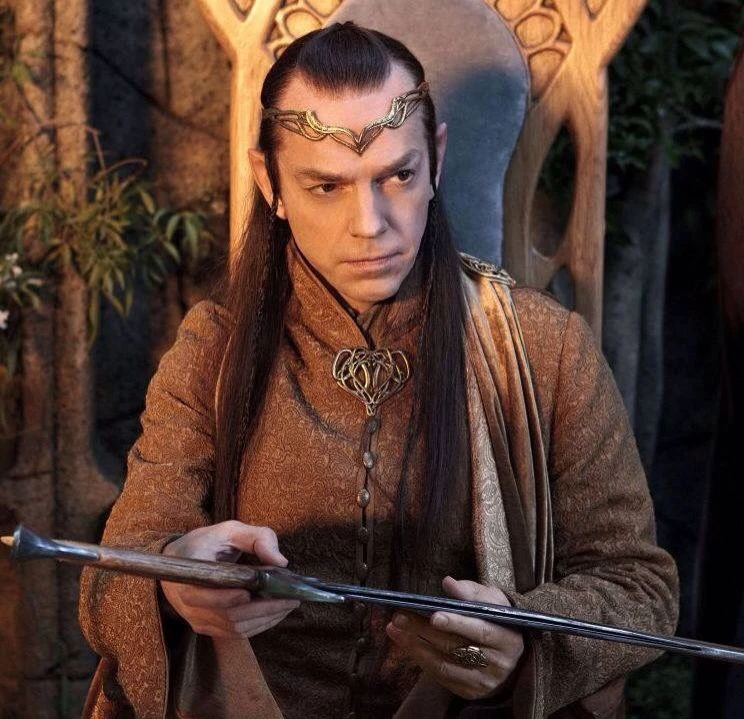
I macil ná alcarin!
The sword is yours, the stars are yours, Quenya... Well, almost... The arsenal has been replenished: plural, possessive pronouns and a couple of new words. Oh, by the way, there's something under the pictures. But it doesn't matter. Don't pay any attention.
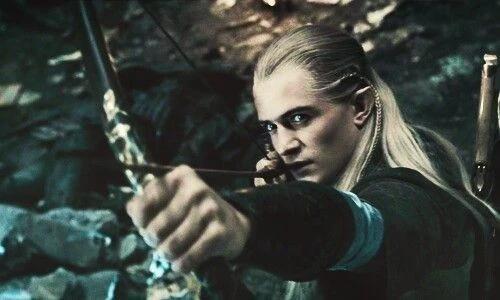
Tirin tyë!
That's all!
How does "Macilinya cirë orcor" translate?3
There are many Elvish languages, each of them is unique. I want to tell you about quenya. Quenya is the language of the elves who came to Middle-earth from Valinor.
Tolkien himself called quenya "Elvish Latin", since by the Third Age it had ceased to be the language of everyday communication and remained as the language of knowledge, rituals and poetry. The living speech of the elves was almost completely replaced by Cindarin, a related but different language.
The letters of the Elvish script are called tengwar (from Quenya tengwa — sign, symbol, letter). The Latin alphabet is often used to write texts in Quenya, which is familiar to the eye and convenient for beginners. We will master the rules of reading — and immediately proceed to live speech: take a few words and expressions written in Latin, and try to pronounce them the way they once sounded in Valinor.
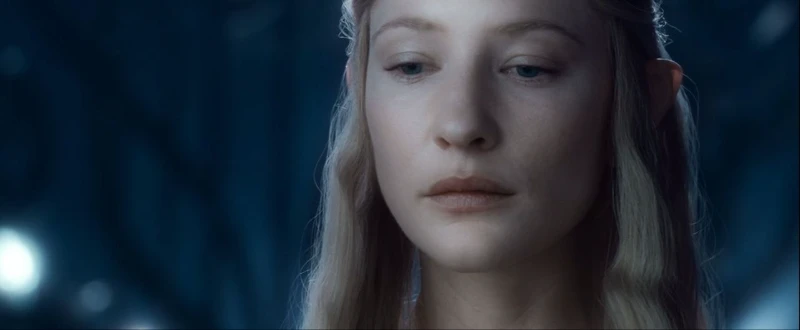
Galadriel spoke Quenya.
It is very easy to read in Quenya, just like in Latin or German: both written and read. You only need to remember a few simple rules.:
1. A Quenya c is always a "hard c" [k].
2. Vowels are pronounced i = "ee", e = "eh", a = "ah", o = "oh", u = "oo".
3. Long vowels are marked with an accent (í, é, á, ó, ú) and are roughly pronounce the same but held longer than short vowels.
4. The double-dot (dieresis) on ë and ö has no effect on pronunciation and may be omitted; it is just a reminder than these vowels are pronounce separately.
5. The Quenya r is a trilled r, as in Spanish or Italian pero. It should not be pronounced as an English r. The tongue should touch the alveolar ridge (the roof of the mouth just behind the front teeth) and vibrate briefly.
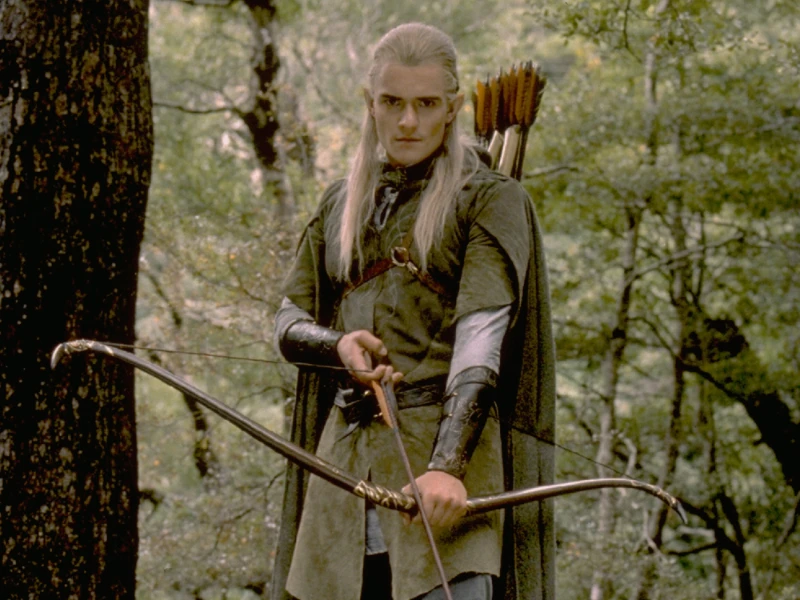
Legolas spoke Cindarin.
There are six diphthongs in Quenya — combinations of two vowels that are pronounced together as one sound. You need to be able to read them.:
1. ai = "eye" as in rye
2. oi = "oy" as in boy
3. ui = "wee" [roughly] as in queen
4. iu = "yoo" as in yule
5. eu = "ehoo" [very roughly]
6. au = "ow" as in how
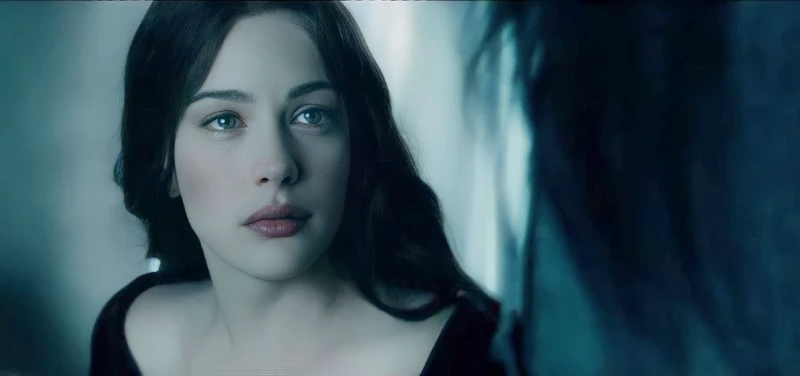
The last rule remains, be patient...
And a few words about the stress in words:
1. Monosyllables are stressed on their only syllable, through sometimes minor monosyllables are unstressed within a larger phrase.
2. Disyllables are stressed on their first syllable.
3. Longer words are stressed on their second-to-last syllable if it is heavy (diphthong or long vowels), and otherwise their third-to-last syllable.
Now you can finally go to the dictionary!
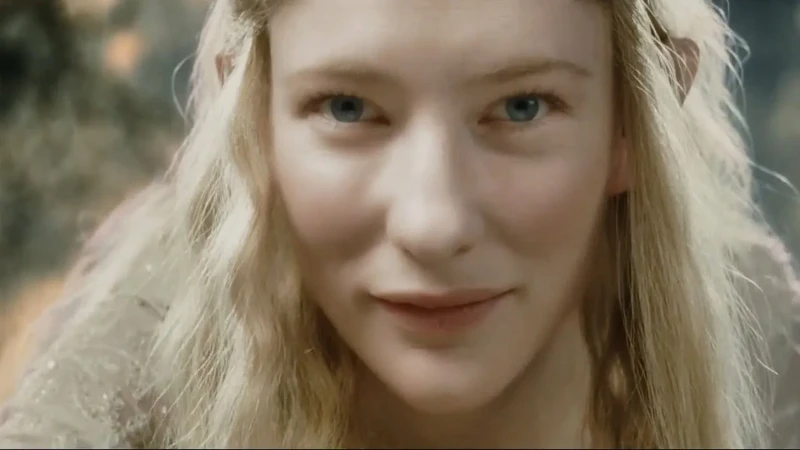
Nouns
Elda — elf
atan — man [human being]
nauco — dwarf
orco — orc
elen — star
menel — sky, heavens
macil — sword
hesto — captain
Pronouns
nyë — I
lvë — we
tyë — you
lyë — You (respectfully)
ldë — you (plural)
se — he, she, it
ntë — they
i — the, a, this
Verbs
ná — to be
Adjectives and Adverbs
luinë — blue
turca — strong
halla — high
qualin — dead
mai — well
mára — good
palan — far
oialë — forever
Now that we know how words sound, it's time to look into the very heart of language — its grammar. Let's start with the simplest. You need to understand how to connect words with each other. The grammar of Quenya reminded me of Chinese, there is a similar logic.
Let's analyze a few basic constructions.:
1. Noun + verb "ná" (to be) + noun
For example:
i atan(ná) hesto — the man is the captain (the verb "ná" can be omitted in the present)
2. Verb "ná" (to be, to be) + pronoun + noun
For example:
nanyë elda — I am an elf (the verb "ná" is placed before the pronoun, written together with it and stripped of the accent mark)
Natyë nauco — You are a dwarf
3. Noun + verb "ná" (to be) + adjective
For example:
i nauco (ná) halla — The dwarf is tall
i orco (ná) qualin — The orc is dead
4. Verb "ná" (to be) + pronoun + adjective
For example:
nalvë turca — We are strong
5. Verb "ná" (to be, to be) + adverb/adjective
For example:
ná mára — It's good
ná oialë — It's forever
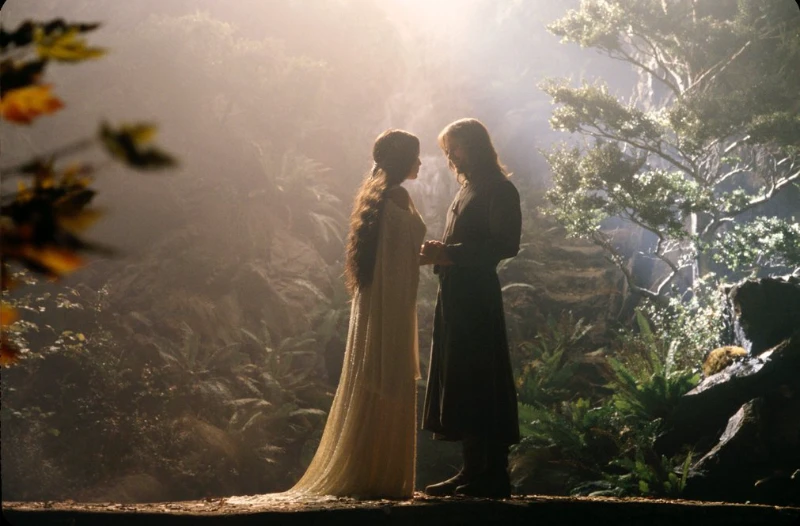
That's it!
We have analyzed the basic vocabulary and grammar of the Quenya language. Now you know enough to build your first sentences in Elvish! I suggest you try to build them in the comments, I'll answer them all)
Do I need a second Elvish lesson?3
Part III — and we're back in the Shire. This time, let's look deeper: not just into the geography of the country, but into specific events that turned everything upside down.
The first event I want to talk about in more detail is Bilbo and Frodo's birthday, September the 22nd. Bilbo was 111 years old, and Frodo was 33 (the age of majority for hobbits). The two of them turned 144 years old, exactly the same age as the invited guests. One, if I may use the expression, Gross (it was not customary to consider people as a Gross). Some of the guests were even offended, realizing that they were invited only for the sake of even counting. "One Gross, ugh, how rude..." but let's move on...
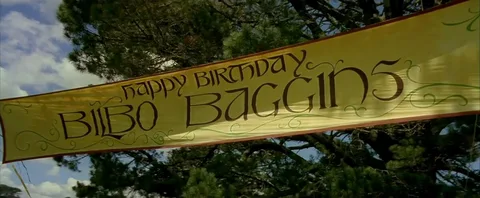
Happy birthday, Bilbo Baggins!
The birthday party venue is located south of the Bilbo's front door. Tents were pitched and pavilions were set up there. A passage was cut through the thicket from the side of the road and a large white gate was built.
Preparations for the celebration began in advance. Bilbo invited foreign craftsmen to prepare the celebration. One of the locals grumbled: "Some strangers are warming their hands, and local craftsmen are sitting around," but soon orders for various dishes, drinks and luxuries began pouring out of the Bag End - for everything that was sold in Hobbiton and in general in Shire.
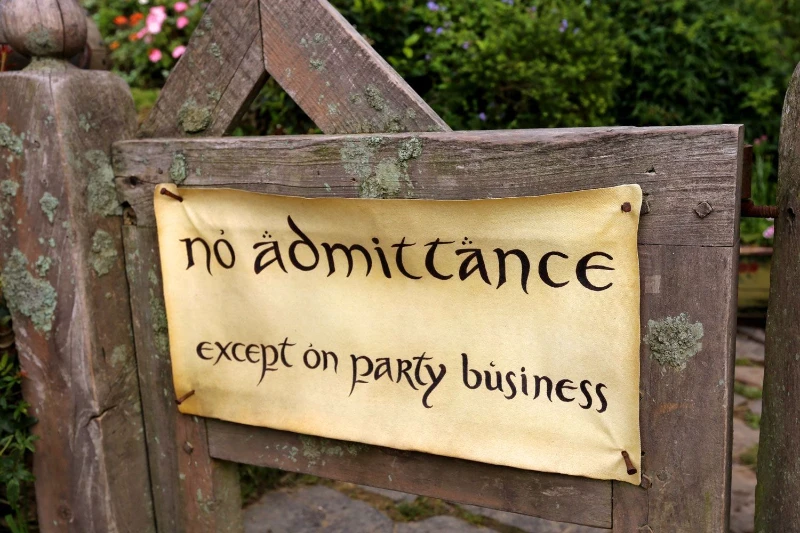
And now, the map. Let's see exactly where the celebration unfolded. Here is a large tree, and tents and pavilions have been set up around it, in the open space south of Bag End.
The place was chosen wisely: it was spacious enough for one and a half hundred guests, there was enough shade for those who were tired of the September sun, there were few trees to set off fireworks and close enough to the house so that Bilbo could disappear at the right moment. The roads and trails are clearly visible on the map, and looking at them, you can guess exactly where the passage was cut.
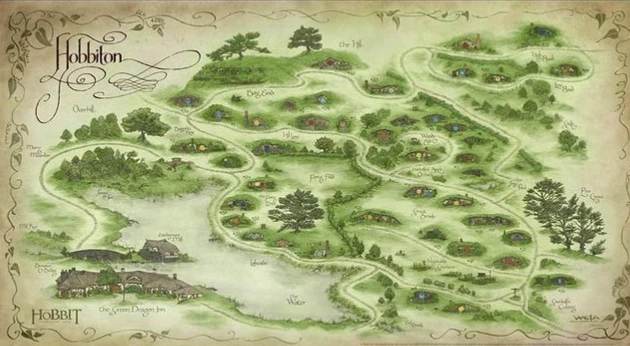
If you still haven't found the venue for the celebration, look for a hint: find the Bag-End, then draw a straight line down until you hit a large tree. The space around it is the territory of the party.
The second event is only in the book. A year before the Party, Merry accidentally saw something he shouldn't have seen.:
"One day, a year before the Party, I happened to be walking along the road, when I saw Bilbo ahead. Suddenly in the distance the Sackville-Bagginses appeared, coming towards us. Bilbo slowed down, and then hey presto! he vanished. I was so startled that I hardly had the wits to hide myself in a more ordinary fashion; but I got through the hedge and walked along the field inside. I was peeping through into the road, after the S.-B.s had passed, and was looking straight at Bilbo when he suddenly reappeared. I caught a glint of gold as he put something back in his trouser-pocket".
It is not known which road it happened on. Merry did not say. Maybe he didn't want to. Maybe he didn't remember. But the fact remains that somewhere here, among the hobbits' roads was Bilbo's first downfall with the Ring in front of a witness.
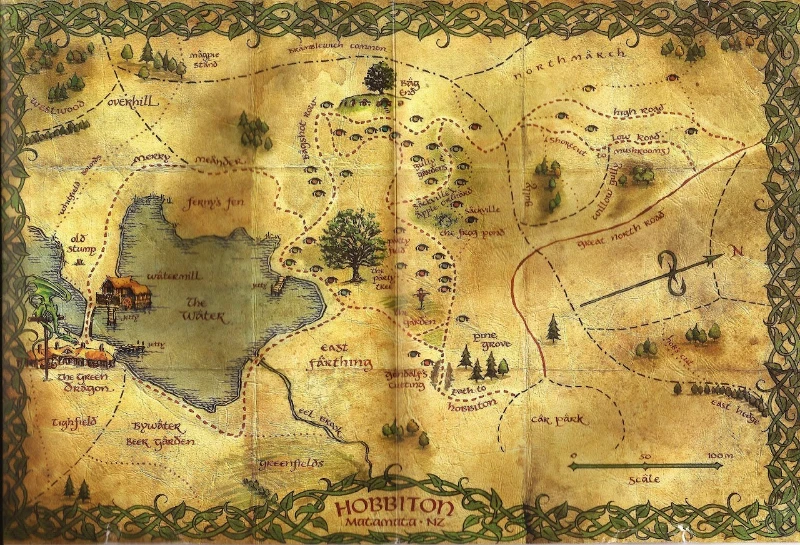
It must have happened somewhere near the Bag End, or not?
The area of Hobbitania is 18,000 mi². A spacious country for small people. For understanding: this is slightly larger than Denmark and Estonia, but smaller than Slovakia and the Dominican Republic. An entire country, on the map of Middle-earth — a modest corner in the northwest.
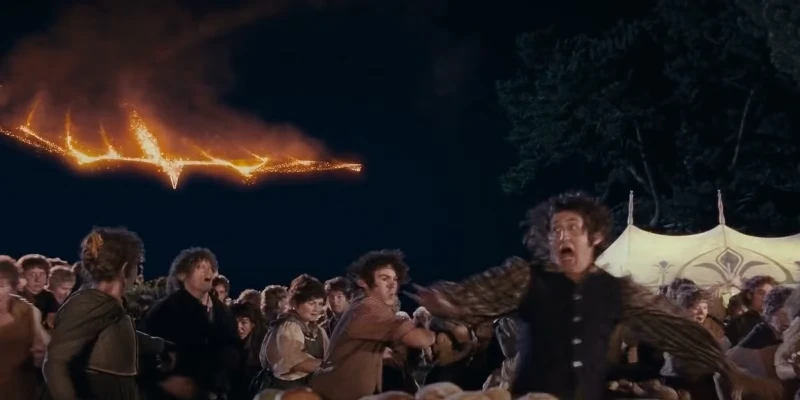
SAVE YOURSELF, WHO CAN!!!
Few people know, but the Shire is a multinational state. There are 3 peoples (3 breeds of hobbits) living on the territory of Shire. You can learn more about these peoples in my test "What kind of Hobbit are you?"
Have you learned anything new about the Shire?2

