Essay. An alternative. The user of the digital chthony.
* * *
Comic book fans (and Marvel in particular) are looking forward to the new Avengers installment, in which Doctor Doom (played by the wonderful Robert Downey Jr.) will play an important role. And even if all this awe for comics remained for me somewhere in school, I still love this villain. And he loved it long before Robert tried on his mask.
But this time, instead of a biography, let's take a look at this guy from the other side. The guy who wanted to take over the world so many times.
And one day.
Became.
By God.
* * *
Machiavellianism: Divide and Conquer
"Of all the animals, let the sovereign be like two: a lion and a fox. A lion is afraid of traps, and a fox is afraid of wolves, therefore, one must be like a fox to be able to circumvent traps, and a lion to scare away wolves."
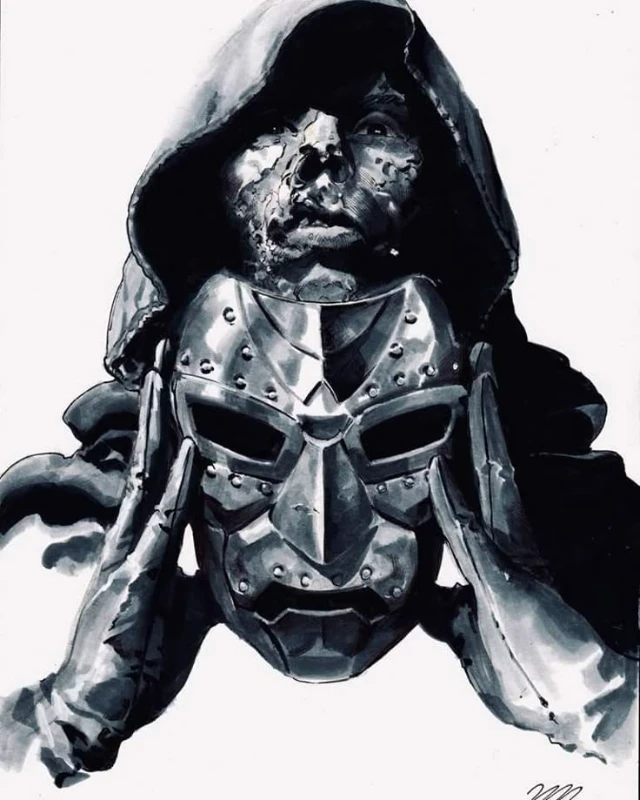
Doctor Doom is the phenomenon of the incarnation of villains. The authors endowed him with incredible power, but there are no such antagonists in comics - Thanos, Darkseid, Mephisto, Lucifer, and so on. So what makes Victor stand out so much? In my opinion, a distinctive feature of the Duma is the demonstrative achievement of goals.
Doom is not a deity, a demon, or an alien. Everything he had at the starting point of his background: knowledge, hatred and nobility. Having been born in the poverty of a gypsy camp and having lost his mother, who gave her soul to the devil, Victor decided one thing: to return what was taken away, putting all his strength into it.
The boy who lost his parents. What should he do? Fight a demon? Fight against the Latverian army? The correct answer is: if you can't win, take the lead.
In a world full of different superhumans and inventors, Doom chose the strategy of the master - to master two polar sides tied to his main strengths (knowledge): to study dark magic and technology. Knowledge is not power. Power is knowledge applied correctly and on time. And when you have the power in your hands, you defeat your enemies with one simple choice: bow down or die. Yes, it's cruel and tyrannical, but it's pragmatic.
"Those who relied less on the mercy of fate stayed in power longer"
Dr. Doom follows Machiavelli's methods: he is practical. If he needs to take something, he takes it, no matter which superhero gets in his way. If he needs help, he will proudly offer an ultimatum. If it is necessary to govern the country, he will do it with a hard hand, but worrying about the people.
But if we see Doom's methods through Niccolo, then Friedrich helps us understand his motivation...
* * *
Nietzscheanism: The God Complex
"I learned to walk: Since then, I've been allowing myself to run. I learned to fly: Since then, I haven't been waiting for a push to move. Now I'm light, now I'm flying, now I see myself beneath me, now God is dancing in me."
Victor von Doom is on the list of the smartest people on the planet for a reason. He repeatedly seized the moment and took away other people's forces.
But why is Doom so eager to gain unlimited power?
Contrary to his archetype of a villain, the Duma is not interested in power as an end in itself for obtaining benefits and pleasures. He is obsessed with his own philosophy of superiority and a vision of a world in which order reigns, albeit controlled (as we see in the 2015 Secret Wars comic strip).
In this way, Victor expresses, to some extent, Zarathustra's point of view: "Man is something that must be surpassed." He is a reflection (albeit distorted "comic-style") Superman: the destruction of the usual foundations and the construction of new laws, independent of moral dogmas.
The will to power is a tool with which the Doom tries to paint over the mistakes of the past.
In addition, Victor von Doom is guided by a dubious, but ancient, rule like the universe: The strongest wins, which echoes the opposition of Nietzsche's "morality of masters and morality of slaves."
* * *
Victor: The Unforgiven past
"That's how it always happens that someone else's armor is either too wide, too tight, or too bulky."
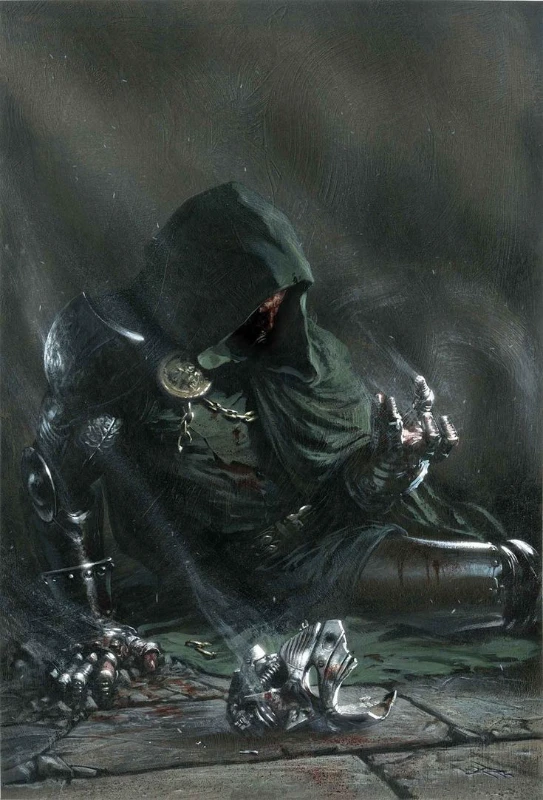
You can talk a lot of nonsense, but alas, Dr. Doom is an unsuccessful pragmatist and a broken superman. You can be the smartest person on Earth, you can master all areas of skills, you can endlessly master mcgafens, but if you don't let go of your past, you'll only dwell on your mistakes, reflecting on them over and over again...
Having failed to forgive Reed Richards for something he is not actually guilty of, and having failed to forgive himself (which Doom will never admit), he is stuck in a vicious cycle of his beliefs and traumas. Injuries that he didn't heal, but kept as a reminder.
"You look up when you strive to rise. And I'm looking down, because I've risen."
Important: The author does not share the character's point of view, but only tries to understand it.
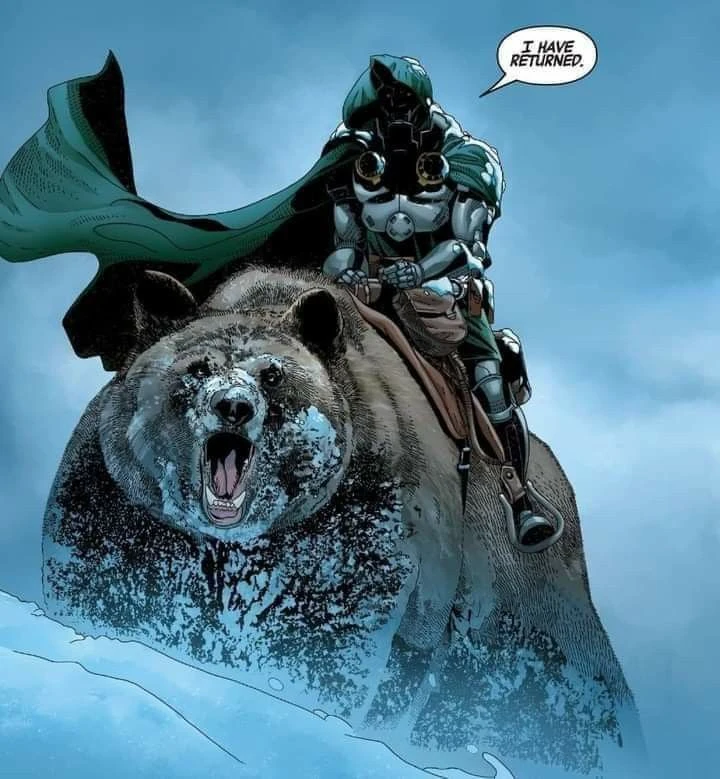
Dear antagonist or overrated poseur?
Doctor Doom is this...0
If you replace each component of the ship, will it remain the same object? And if it is new, at what point will it become so – with the first replaced part, the last one, or in the middle of reconstruction? Or maybe it's not the structure of the object at all, but its contents and purpose?
- the Tessei paradox
The frame, covered with dried mud, has been annoying my eyes for a long time. Every time I leave the entrance, I glance at the bell, covered with rust, and two wheels that have repeatedly plunged into oceans of autumn puddles.
My conscience finally couldn't stand it, and I took this red-and-black old man outside with a bucket of water and a worn rag. I spent two long hours scrubbing away all these stains. And here it stands before my eyes – a clean and shiny Mustang, ready to detour along dusty highways and green fields!
Why don't you go for a ride?
I sat on the leather seat, put my foot on the pedal, and gripped the steering wheel tightly. There was a slight jolt and the wind began to cut into two strips when it collided with my face. I had forgotten what it was like to maneuver like Formula 1 at high speed between passersby, avoiding pits and flying down slides. The race turned out to be so energetic and exciting that my first stop after an hour and a half was the gas station next to the tire shop at the entrance to the city center.
Unaccustomed to it, my calves are quite worn out. And my stomach, to be honest, began to grumble. I strapped my transport to a pole and went into the cool room of the gas station. A hearty hot dog in a compartment with an iced coke gave me a second wind, and I decided to continue my journey. But there was a darkening circumstance waiting for me on the street – the wheels of the bike turned out to be victims of a knife attack. They were not just punctured: I found impressive cuts on the tires, like on another corpse in the Hercule Poirot case, a pair of spokes were brutally chewed through with pliers, and along the red stripe there was an obscene expression desecrated with a black marker.
Looking around, I realized that the criminals had actively left the scene of the attack. Rescue was a few meters away from me, and I was forced to visit a tire repair shop. Fortunately, the men politely (just for the mower) brought me two suitable, albeit second-rate, bicycle wheels and one half-empty can of orange paint. The limb replacement operation was successful, and "design" adjustments were also made – the smooth factory red stripe turned into a crooked orange tail. I mounted my horse and rode forward.
By two o'clock in the afternoon, I left the city. Going down to the riverbank, I put down my bike and sat down on the grass to catch my breath. The harmonious silence was broken by a loud argument of people nearby. Looking at the source of the noise without interest, I saw two guys who were discussing something fiercely. The situation would have remained without my intervention if the conflict had not escalated into a serious fight. I'm sorry, I'm a fair person by nature , so I couldn't just leave the incident like that. Jumping on my bike, I hurried to separate the fighters. Well, the result was obvious – in response to my noble impulse, a good hook flew into my jaw , knocking me right back against my iron companion. The fall turned out to be unpleasant for both of us – I almost broke my arm, and he lost the bell, which broke off hopelessly and flew down the slope. The rivals hurried away.
Twenty minutes of searching turned out to be pointless – the call was not found, and I decided to return. As I approached my neighborhood, I drove onto a bridge that runs across the railroad. My mind was lost in thought about tomorrow.…
* * *
My thoughts scattered like bowling balls. The blow landed in the side. When I hit my head on the asphalt, I couldn't understand what had happened. All I saw was a gray sedan slammed into the truck of some hypermarket, and eight steps away was a bike with a broken frame and a chain that had shattered into individual microelements. For two hours, the staff conducted an assessment of the accident and found out how this horseradish managed to make the decision at a speed of 55 km/h to quickly bypass the Chevrolet in traffic and fly into oncoming traffic. After making sure that the wounds were not fatal, I stomped on, leaving my contact number for communication and subsequent testimony as a witness and partial victim (the driver of the van was much more seriously injured than mine).
By 6 p.m., after a tedious walk with a bike by the hand, I went into a sports store that I met along the way. The frame was replaced with a new blue one, and the chain and seat had to be replaced, the verb of which turned out to have an unreliable dent. In addition, I purchased a bell, since the previous one was missing. That's how I spent a few thousand and went home.
The courtyard parking lot was already fully filled, the sun was slowly setting over the horizon, and I was bringing the stallion to the entrance. "What a day. I was an unlucky passenger, wasn't I?" I thought and looked at him. I looked at it and didn't recognize it.

Interest is the path to results. It was interest that became the motive to go on a long and gloomy journey.
On September 5, 1977, a Wanderer in aluminum armor took off into the skies in order to conquer distant spaces. Cutting through the atmosphere, he plunged into icy darkness, filled with silence and the light of distant lights illuminating myriad possible paths. And that was the beginning of his century-long odyssey.
Native lands filled with high mountains, deep waters, bustling cities, quiet villages and sun-warmed fields have long been left far behind the traveler. Loving families, beautiful landscapes of ancient nature, a variety of cuisines from all over the world, art. All of this had lost sight of our hero for so long that it seemed to have aged and faded. Gebekli Tepe, Babylon, Ancient Rome, the Cenozoic era, flash by on a worn film.
No matter how beautiful and huge Jupiter's granite grandeur was, its stone structure could not resist the crushing blow of his supremacy of Fate. Hundreds of small, brightest stars were hopelessly extinguished in the chronos stream. As the Wanderer moved purposefully forward, Chaos quietly covered his tracks.
In the beginning, the Milk River spread out in an endless channel. The record says that it was previously called the "Milky Way". Now it is a dried-up huge ditch, from which Aquarius can no longer drink a cup, and Sagittarius cannot moisten his faithful arrows. Astrology? Not at all. The constellations here have long lost the power given to them by birth. The sky here is nothing more than a worn carpet.
Astrophobia is the fear of stars and space. But our Knight could not be a hero if he was afraid of these silent dead – the black devouring Phoenix proudly gave way to the Wanderer. The endless space scares with its infinity. The sun blazes with its immense flame. And yet it's so intriguing. But who are they trying to see in the distance between the dusty galaxies, when garbage crunches indifferently under their feet ? Naive minds are anxiously and meticulously examining the most ancient painting by a mysterious artist while a storm is raging outside the window. An unknown meteorite messenger rushes somewhere at a hasty hitchhiking gait across the Galaxy, leaving behind a crooked tail, like a line drawn according to the patterns of great painters.
* * *
Silence...
Skyscrapers and houses in residential areas shine fascinatingly at night. Deer gallop gracefully through the thicket. They're playing a new comedy at the cinema. But all this is no longer important and has long been forgotten by the universe. The Voyager 1 space probe is flying the last kilometers. He is detected by an eye watching from a distance of three highways. The most significant CD in the history of mankind smoothly lands on a surface that has not been touched for centuries. Images, music, audio recordings: an unearthly mechanism deciphers mysterious data. They found him. They finally found him.
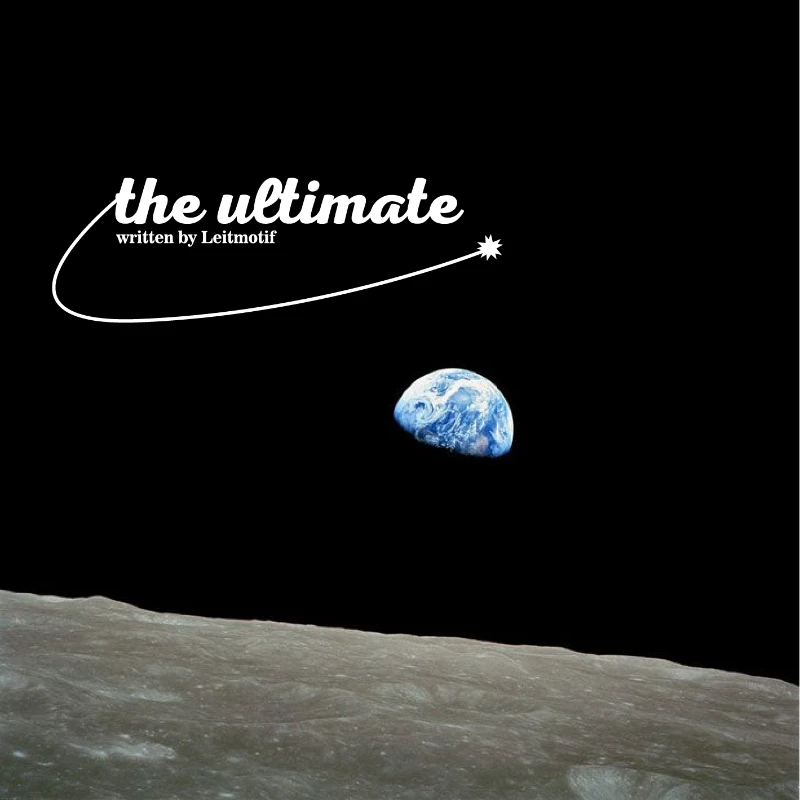
"I observe clouds above the Ground, small cumulus clouds, and shadows from them. Beautiful, beautiful!… Attention. I see the horizon of the Earth. It's such a beautiful halo. First, a rainbow from the very surface of the Earth and down. Such a rainbow is crossing. It's very beautiful!"
"At the age of thirteen, David imagined a paradise for himself, a place where comics have gained recognition and popularity, and at the same time dozens of high-budget films with his favorite unknown characters in costumes are released. Now that he's in his paradise at fifty, it seems pretty depressing. Concepts and ideas designed for children forty years ago: and this is the best that the twenty-first century has to offer?"
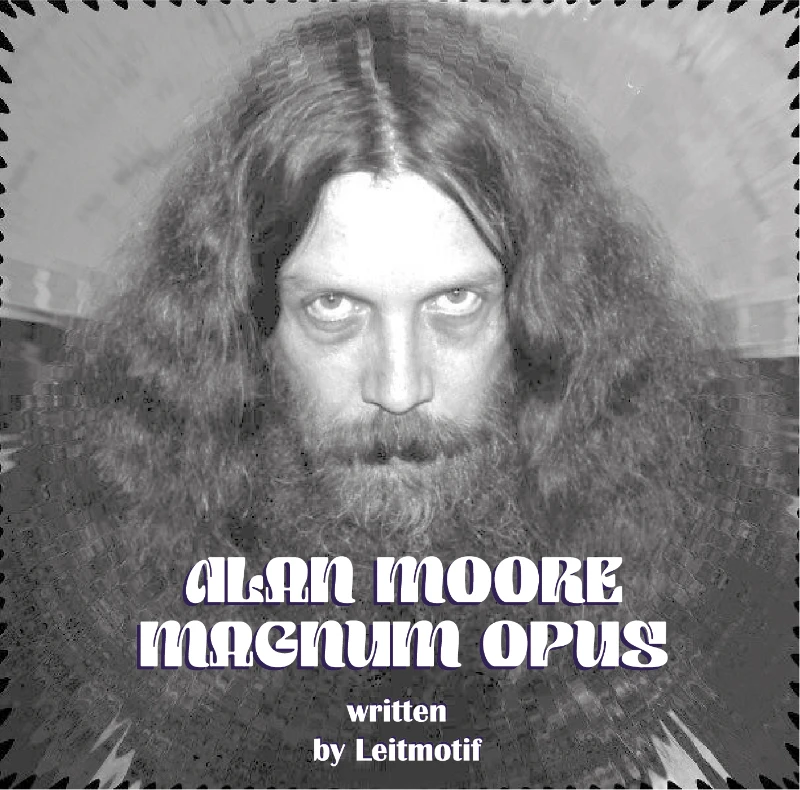
Standing in the pouring rain, he deliberately exposes his leather coat to the sharp blows of drops of dirty water that fell from heaven, like Lucifer, exiled for his disobedience.
His thick beard, as if plucked from Santa Claus' chin and dyed a darker shade, hangs like a heavy weight from his face. If you look closely at it, you can see something in the halls of secret knowledge: either the bitterness of existence, or the absurdity of life.
Sucking in the heavy, thick gray smoke of a B/W cheap (or maybe expensive?) filter cigarettes, he exhales the colored colors of the comic book, stained with blood, cheerful depression and the smell of passionate flesh.
He's a real rebel. He is a sorcerer and a writer.
The man who slammed the bold and beautifully ugly stamp "18+" into the colorful cover of the comics.
* * *
"No compromises. Even in front of the face Armageddon"
You know that phrase. And you know who it belongs to. Charismatic mentally ill antihero Rorschach from the Guardians comic book. He, like John Constantine, Guy Fawkes from "V Means Vendetta," as well as such mastodon comics as "From Hell," "Batman: A Killing Joke," "Swamp Thing," and "The League of Distinguished Gentlemen," came from the pen and brush of Master Alan Moore.
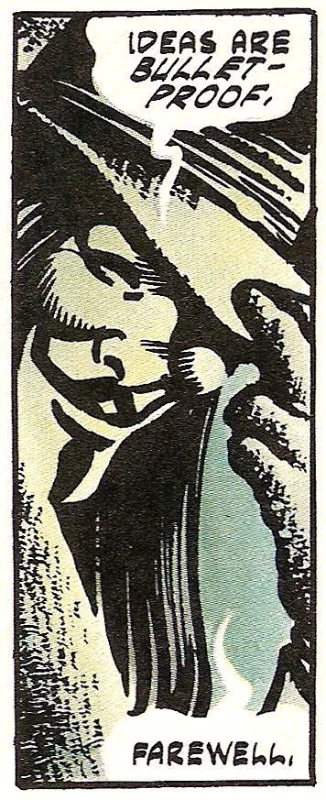
But I'm not going to talk about his biography or the comics he created today. This information is quite easily searched on the Internet, and in general it is very common.
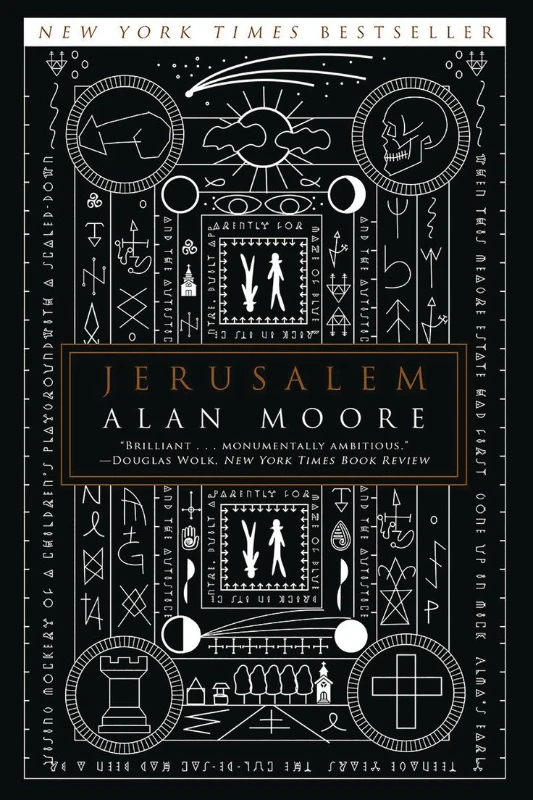
But what is less often talked about on the Internet (especially Runet) is his novel "Jerusalem" (inspired by the poem of the same name by writer William Blake), published in 2016. Yes, my dear padawans, this is not some kind of comic book with pictures for the evening, this is a huge book with more than 1,000 pages. This, of course, eliminates the question of why "Jerusalem" is not often and not much talked about. But believe me, we can talk here. clearly there is something to talk about...
* * *
Briefly about how this brainchild was born.
It won't be a secret that "Jerusalem" has been written for a dozen years. Moore's intentions were clearly serious. And what is he talking about? Well... about everything.
Have you read the "Dark King's Tower, where he mixed a bunch of genres? So Alan did about the same thing, only not so graphically, not so fantastically and crazily, and much, much more subtly, and also put it all in one volume.
If there are no critical spoilers, then on this flight you will find: the Middle Ages and mythology; the 17th and 20th centuries with historical figures, the pre-war period, which raises questions of humanity, faith and honor; the theme of time, cyclicity and the future; morality and vulgarity; and even the afterlife.
The main character of the work is the author's native Borough and its surroundings in the city of Northampton. And already in it, different characters act out their role in their own setting and according to their own script. In the center of attention is the ancient Vernall family, who are destroying the processions of the Tolanals. In short: Mind for mind, balls for rollers.
* * *
It's a mark on my soul. That's what really struck me.
"Jerusalem" - this is a real Talmud. The whole English epic about Northampton and Borough, which caused me some kind of contradictory, but definitely the strongest, and for the most part positive, impressions.
The occultist's manuscript is divided into three books.
The first book, BORO, is beautiful, and it's hard to get away from it. Each chapter is a separate story in a different time period, on behalf of different characters, and raising a different topic. A library of faces and their points of view.
The second book, "The SOUL," changed its perspective. If "BORO" was the introduction/exposition, while "SOUL" is a single adventure, the second act of the film. It took much longer to read, as the first chapters were not very interesting to me, but with each subsequent part this book became better. And in the end, she even teared up.
The third book, THE VERNALL INQUIRY, is the most controversial. Of all the chapters in the last book, only three and a half chapters were really impressive enough for me. Six and a half were just average, and one was, in my opinion, completely superfluous (or delayed).
* * *
On the one hand, "Jerusalem" left a lot of questions, surprised not all of its chapters and elements, stole a lot of time and showed all its intellectual overload.
On the other hand, this is a full-fledged global story, which is written from "A" to "Z" by a real maestro who knew what he was doing. A plot thought out to the smallest detail with its original, interesting and eccentric characters and intricacies in the narrative; a huge number of quotes written by me; an incredible variety of leitmotifs and topics raised; a really talented style of the writer's text; perfectly working elements (which, although not all of them I liked) of the plot designer; a historically and nationally significant work for both Alan Moore's native Borough (on which the city of Northampton was built), and for the whole of England. I would even say that the rest of the world has something to learn.
My free time played a cruel joke on me, which, due to work and other books, I didn't have much of. Subsequently, it took me more than six months to read Jerusalem (or, to be more precise, 7 months and 11 days), as a result of which, by the end of the book, I was simply tired.
But this is solely my fault, since you can read this creation in a month, or even faster.
Nevertheless , "Jerusalem" by Alan Moore is a great dopamine masterpiece, a sweet, delicious, soft cupcake. A cupcake with small raisins, which I didn't like. This book will *bet your brain. And you will forget the safe word on your own.
Prostitutes. The ghosts. Mammoth. Charlie Chaplin. Demon. Paintings.
* * *
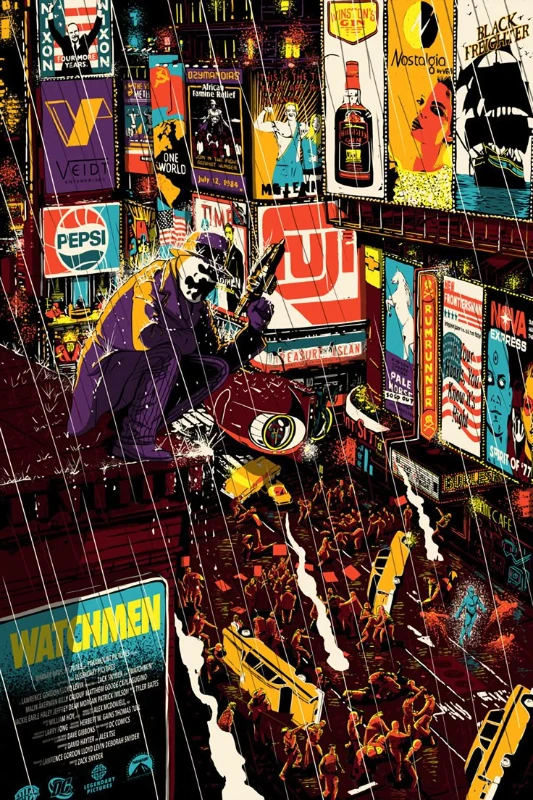
"It doesn't matter if it's the second reading or the hundredth: it will seem unprecedented to you, and willy-nilly you will enjoy it. You don't even want the book to end. But when it comes to an end, when the coffin backboard inevitably slams shut, you will instantly forget that you have already been through the plot, and will be reborn again – perhaps attracted by the spectacular and heroic picture of yourself on the dust jacket. They say it's a sign of a good book if you can reread it and find something new every time."
* * *
Just the other day, I watched 3 very good movies.:
"The Elephant Man" by David Lynch [1980],
Orson's "Citizen Kane" Wells [1941],
"Monk" by David Fincher [2020].
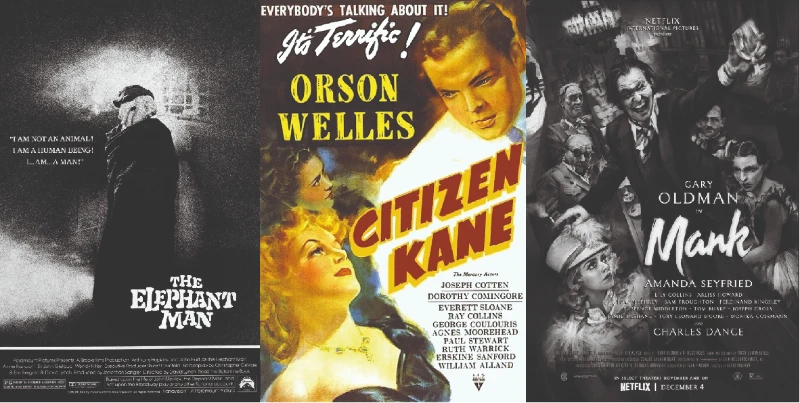
Movie posters
I'm not going to talk about these paintings now (all three are beautiful in their own way and deserve separate reviews) - oh no, the point is different.
All three films are in black and white. Realizing this, I became imbued with this aesthetic and wondered: how does the color black affect our perception of what it means to a person?
Because I started this text with films, and we will continue with them.
Why until the middle of the 20th century, films were in black and white, and why do directors still resort to this technique?
* * *
1. Cinematography in b/w.

Cinema
The monochromacy of the first films is, in principle, understandable to any Internet user – the limitations of film technology. In those days, using b/w in cinematography was precisely a necessity, and not some kind of director's decision.
Nevertheless, even after the appearance of "color" in the cinema, films such as Schindler's List, American History X, The Lighthouse, as well as the previously mentioned Elephant Man, Citizen Kane and Monk were released. They are all in b/w.
Now for a bit of decoding. Let's look at the example of two films: what, how, and why.
* * *
1.1. The Lighthouse, 2019.
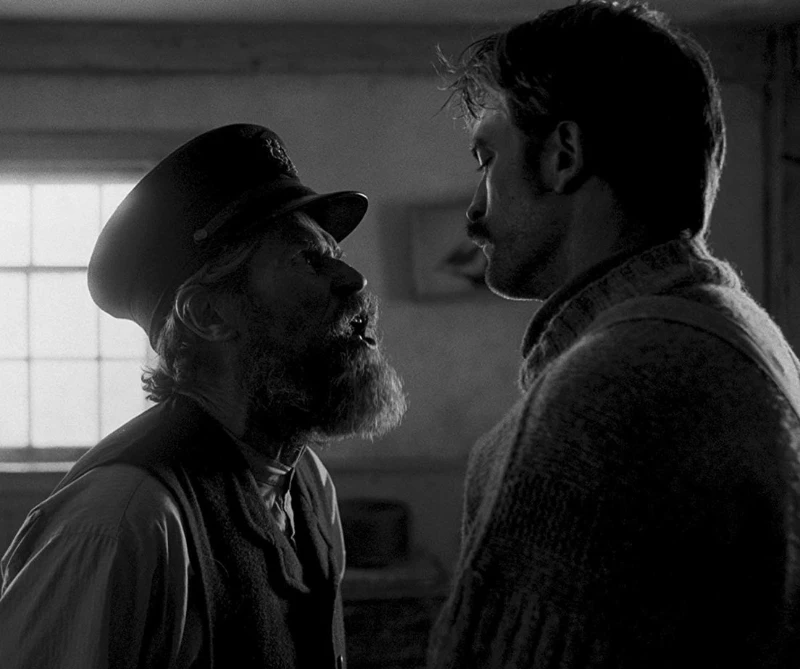
An image from the movie "The Lighthouse"
Dafoe as Thomas Wake (left) and Robert Pattinson as Thomas Howard (right)
Robbert Eggers shot a fascinating art house with two talented actors - William Dafoe and Robert Pattinson. Why is the color black here?
The entourage.
The film is filled with shots and elements that drive the viewer into a feeling of awkwardness, discomfort, disgust. From raging waves and a lonely stone lighthouse, to farting (I'm serious) and a mermaid with a huge pussy (I'm still serious). The black-and-white filter here adds to the depressing mood.
Also, b/w plays a different role here, but more on that later…
* * *
1.2. Manc, 2020.
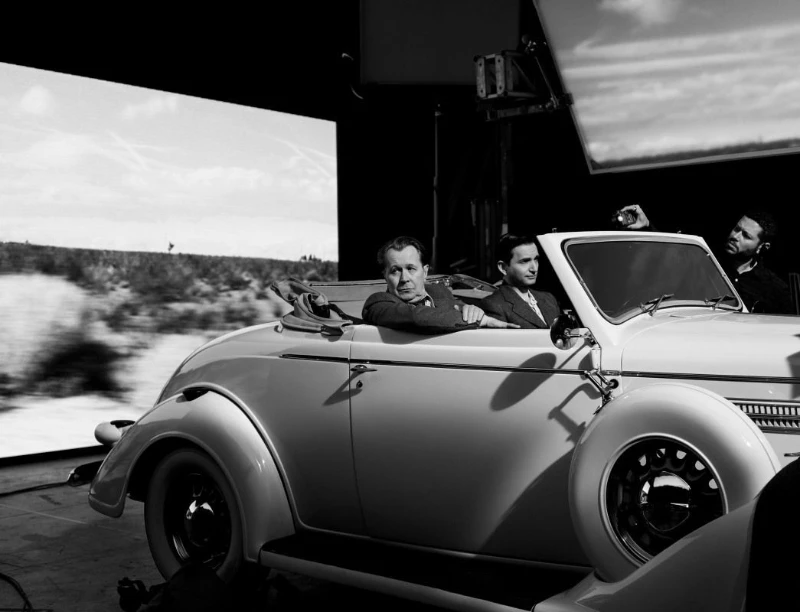
A shot from the movie "Monk"
What is the first thing we associate with a black-and-white filter? That's right – with something old, gone.
The cultural context of the epoch.
Back in the 90s, Fincher planned to film his father's script about Herman Mankiewicz, the screenwriter of Citizen Kane, who disappeared in the shadow of the great and terrible Orson Welles.
Almost all the events of the film actually took place in the distant 30s. And in order to bring to the screens the spirit of that time and his love for Hollywood of that era, David used the chronicle style: he shot the film in black and white, imitated the film in modern digital printing and selected an authentic soundtrack.
As you can see, with the development of technology, films not only did not stop shooting in b/w, but also began to do it especially.
Nevertheless, the black color does not end with cinema: a sudden relevant fact is that I am a graduate of the graphic design specialty.
* * *
2. Black color as a tool.
Black and white logos are some of the easiest to design. The point, of course, is precisely in the combination itself: the designer / customer does not need to think about a combination of certain colors – just take and fuck black and white, a proven option. A great option. The simplicity of this combination does not negate its aesthetics.
At least, I'm more attracted to the black and white logo of a bar, barbershop , sports market, or magazine than all these colorful logos of children's stores, shopping malls, TV channels, and more.

The Playboy logo
No wonder. Indeed, in the psychology of colors, black is associated with style, solidity, classics, restrained luxury and seriousness. All this applies not only to logos and banners, but also to clothing, interiors and cars.
Yes, what is the magic of black?
In its versatility. Despite its emptiness, it has a huge number of ideas, meanings and associations. The king of flowers, who will always be a classic.
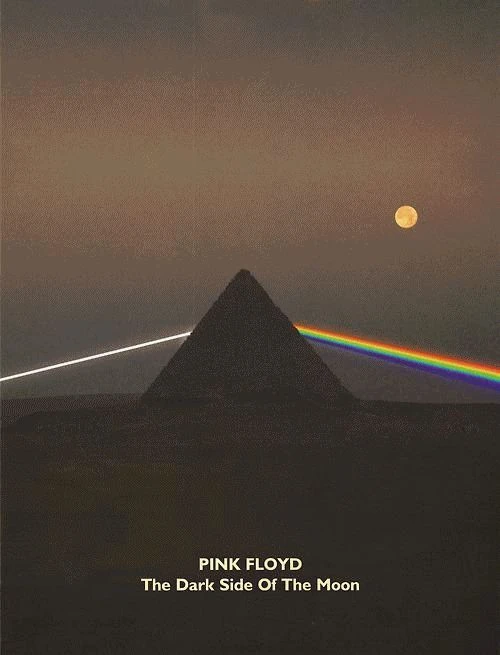
Image from the cover of the album The Dark Side Ot The Moon by Pink Floyd
Interesting facts:
- Black is the absence of light. That is why for me black is the color of purity/purification, calmness and stoicism.
- While in many countries black is considered a symbol of mysticism and death, in China it is associated with luck and peace.
- When printing products , they do not use pure black color, but composite color, for higher quality.
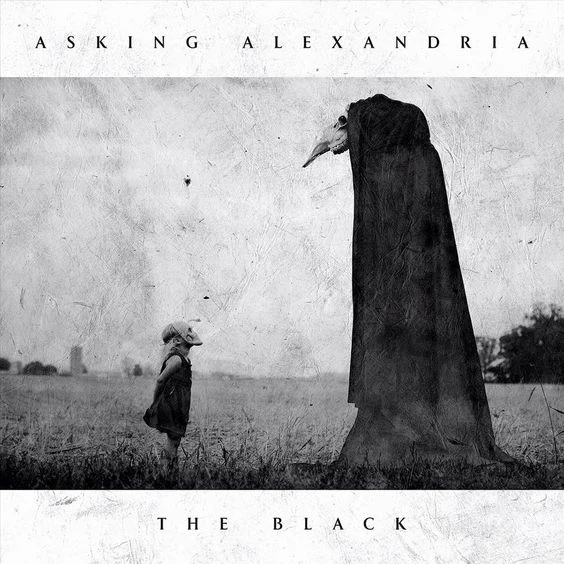
The Black album cover by Asking Alexandria
How do you feel about black?1

