Hello everyone
Those who watched the Kino Fire channel are clearly aware of such a section, where 10 events of the past year are taken and discussed - how their film adaptation would look on the big screen. And I thought, why limit ourselves to the events of the past years?
The only problem is that I'm not bad at history, but I'm quite limited in my knowledge of cinema. That's why, maybe, there were feature films about the events I told. But I'm still going to talk about big-budget blockbusters. In the meantime, let's go.
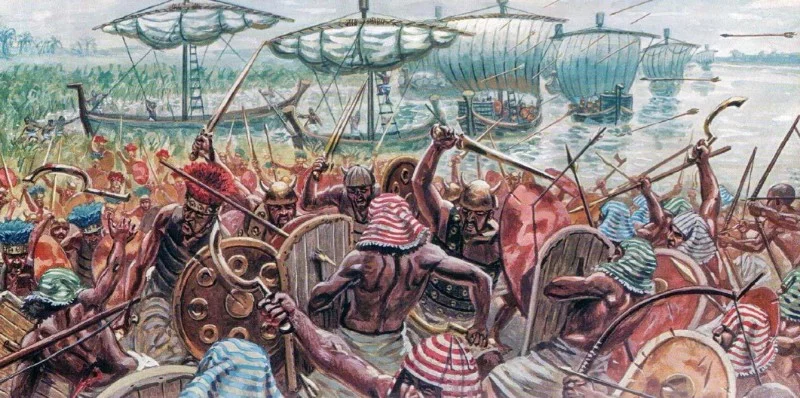
It's quite a good scenario for a disaster movie or something. At the same time, he can narrate both about a single hero in a certain location, and about several places at once, since the events were truly global.
In short, due to tectonic activity, volcanic eruptions, abundant drought, migrations and the crisis of the system, a series of destructions swept through almost the entire then civilized world. Cities were abandoned, countries were tortured by the mysterious peoples of the sea, villages were cut out, and large centers that once owned wide lands now could not control the situation beyond their city walls.
The only ones who could stand at least a little in such a situation were Egypt, Assyria and part of the Greek policies. But for them, these times have become one of the darkest ages.
I think if you embellish the situation a little, combine all the disasters and show different locations (for example, Asia Minor, Greece, Crete and Egypt with Assyria), it will be quite epic.
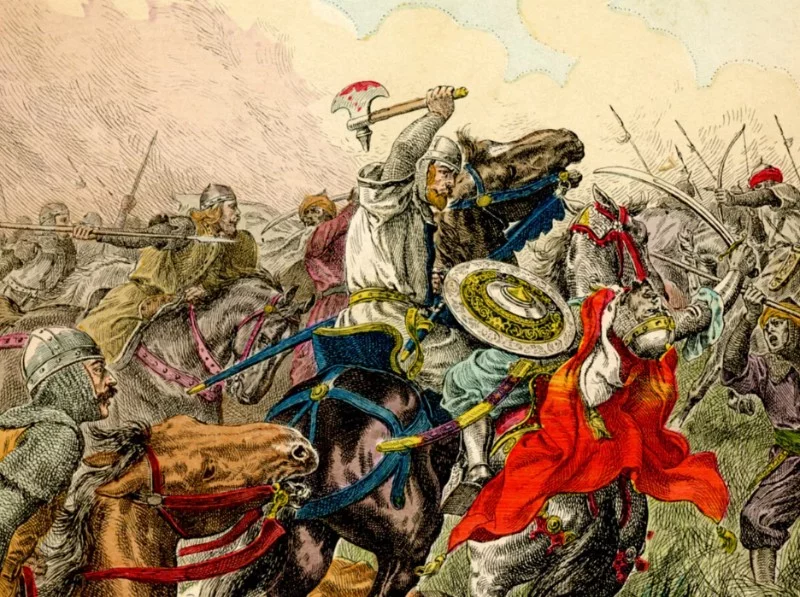
It must be said here that the Battle of Poitiers is a little exaggerated in its significance. But now I will tell you exactly about the publicized version of events, so that it is easier to understand the idea.
The year is 732. The Muslims, who have already captured almost all of Spain, are encroaching on the south of France, which was then under the rule of the Aquitanian lords. And so, Duke Ed of Aquitaine, who had already been defeated by the Muslims, called for the help of the Franks in the person of Majordomo Charles Martell. As a result, he won the battle, pushing the Arabs back over the Pyrenees and preventing Islam from spreading northward across Europe.
Of course, this story is somewhat embellished, and the impact of this battle was not the most significant. However, this is still a significant layer of the Western European epic.
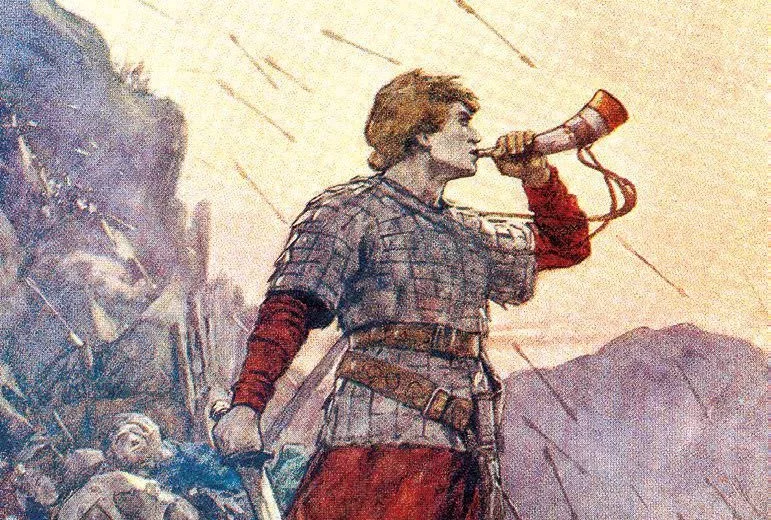
As with the last point, Roland's story in reality and in the epic are slightly different.
In reality, this is either a distant relative, or just one of Charlemagne's peers, who died during the Basque attack on Charlemagne's army.
In the epic, the situation is a little different. Roland is already Charles's nephew, the battle was against the Saracens, and its plot and conditions were explained by the betrayal of one of Charles's servants. Well, one of the most important moments with Roland's horn, in which he trumpets with his last strength before his death, I urge my uncle Karl to take revenge on the Saracens.
I think it's obvious that it's better to make a film adaptation based on the epic))
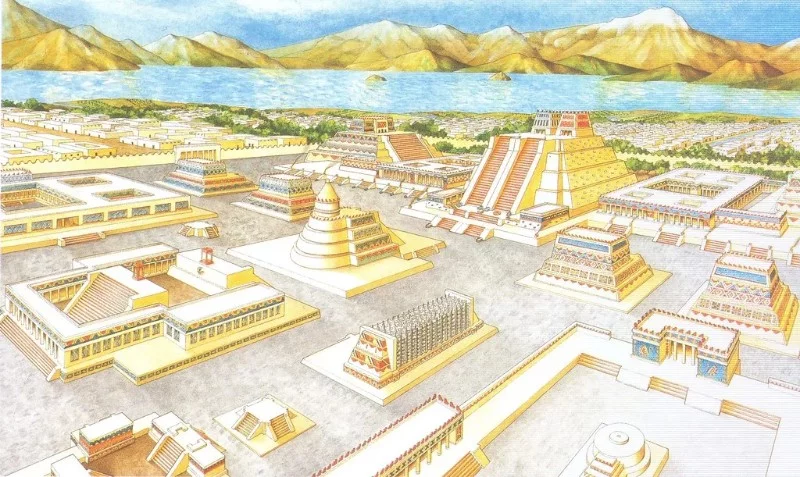
Here, perhaps, the idea is not even for a movie, but for some kind of mini-series, since the idea is divided into periods.
In the first, the ancient nomadic Aztecs see the Sun god descending to them, who predicts them to settle in the place where they will see an eagle on a cactus holding its prey. Eventually, they find a place on an island in the middle of a salt lake, where they found the city of Tenochtitlan. However, not everything goes smoothly - the new settlers are subjected to hostile attitude, and some of them soon separate and form another city - Tlatelolco.
The second act tells about the period of the greatest power of the city, the times of the triumvirate, military campaigns, sacrifices and at the same time the gradual degradation of the system and the first manifestations of discontent.
Well, in the third act, the story of the capture of Tenochtitlan by the Spaniards will be told, their flight from there and another 70-day siege of the city, as a result of which it was again captured and destroyed, and in its place a completely different city appears - Mexico City.
Well, it turned out like this. Of course, I'm not a movie pro, but I think stories have a right to live on the big screen. And what do you think? Write in the comments, vote in the poll. In the meantime, thank you all for reading and see you soon!


Share:
Bestcomments (0)
There are no comments for this post yet. Want to leave the first one?