At the beginning of the 19th century, Italy was divided into many states. They were economically backward, and were also influenced by the neighboring Austrian Empire, which owned Lombardy and Venice.
In 1848, the "Spring of Nations" began. Lombardy and Venice rebelled against Austria and received help from the King of Sardinia-Piedmont. Patriots from almost all over Italy rushed to support the uprising. However, in 1849, Sardinia was defeated in the Battle of Novara, and King Charles Albert abdicated in favor of his son Victor Emanuel II.
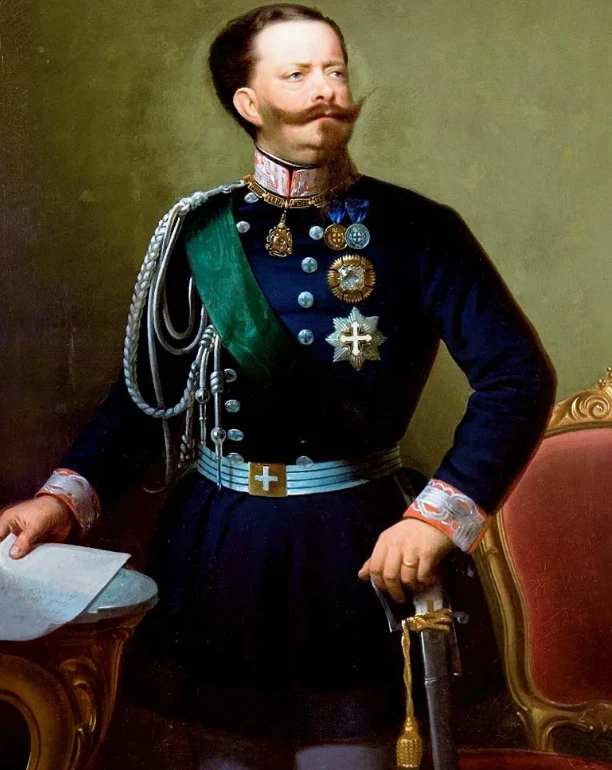
Victor Emanuel II
In the 1850s, the Sardinian Kingdom grew in strength. It made a new attempt to unite Italy, handed over Savoy and Nice to France in order to conclude an alliance with it. In 1859, the war of France and Sardinia-Piedmont against Austria began. The former won, and the Sardinian Kingdom gained Lombardy.
Shortly after the war, Tuscany, Modena and Parma first became puppets of Piedmont, and then became part of it. Romagna (part of the Papal Region) She also joined Piedmont.
The last Italian state that did not join the revolution was the Kingdom of the Two Sicilies. Victor Emanuel II sent Giuseppe Garibaldi (who had previously become famous in the battles for the unification of Italy) to support the uprising in Sicily. Garibaldi, initially with very small forces, with the help of the locals managed to annex the kingdom of Both Sicilies to Piedmont.
Thus, by the end of 1860, all of Italy was under the rule of Piedmont, not counting the Papal Region (it was in the sphere of influence of France and the French king Napoleon III kept a serious army there, which made the invasion of Rome an adventure that would most likely lead to a war between Piedmont and France) and Venice. The Italian Parliament, which met in Turin on March 17, 1861, announced the creation of the Italian Kingdom, headed by the Piedmontese King Victor Emmanuel II.
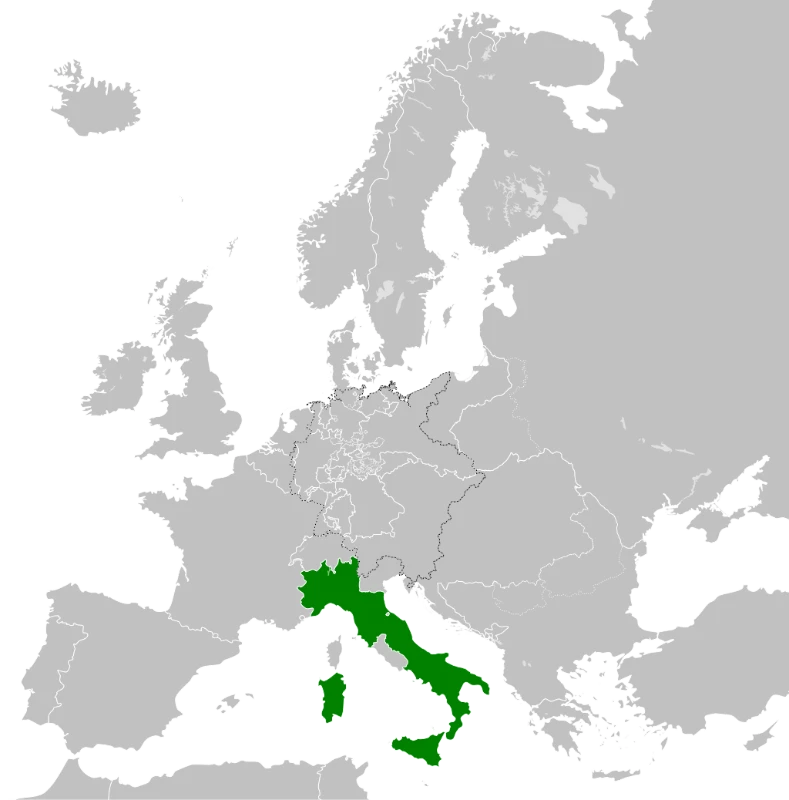
The territory of Italy in 1861
In 1866, in order to liberate Venice, Italy accepted Bismarck's proposal to form a military alliance with Prussia against Austria, as a result of the Austro-Prussian-Italian War, Italy received Venice. In 1870, due to the outbreak of the Franco-Prussian War, the French garrison was withdrawn from Rome, thanks to which Italy was able to annex the Papal Region. The capital was moved to Rome.
That's all. I hope you enjoyed it.


Share:
Bestcomments (0)
There are no comments for this post yet. Want to leave the first one?