Let's start with the base, namely with radiation. Outside the Earth's magnetosphere, cosmic radiation (galactic cosmic rays and solar bursts) significantly exceeds the permissible doses; prolonged exposure is accompanied by an increased risk of cancer, cardiovascular and neurological diseases.

This one has a subscription for sunbathing.
Now a little bit of biology. During long-term flights and living in microgravity, bone density decreases by about ~1% per month, muscles atrophy, and the cardiovascular system and vestibular apparatus change; despite exercise, there are no complete and stable countermeasures yet. In short, the demographics will be worse than ours now.
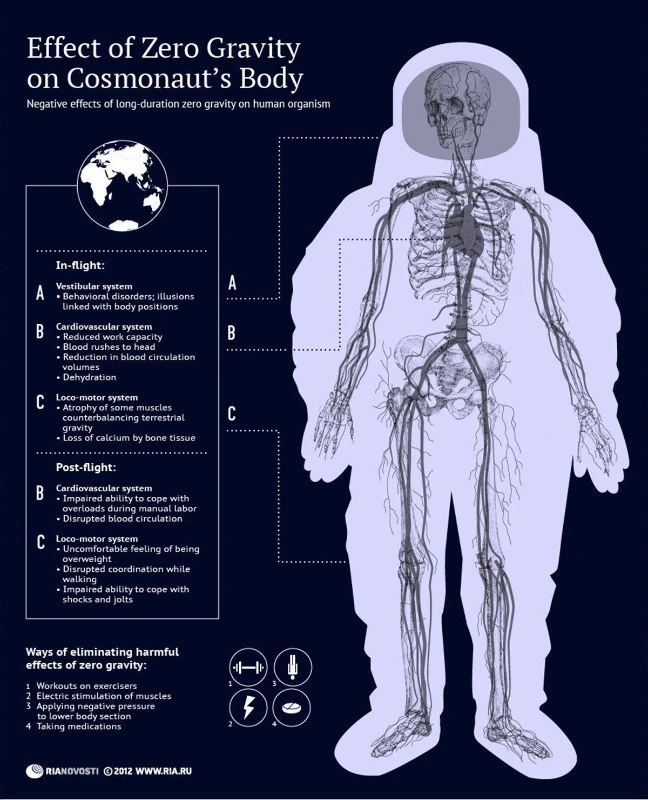
So, he just put on a spacesuit and already turned into a skeleton.
Technical underdevelopment. The experience of Biosphere-2 and decades of research on the creation of completely closed systems has shown that it is extremely difficult to maintain chemical and microbial balance, stable carbon/nitrogen/water cycles and full—fledged food production; minor errors lead to the accumulation of toxins, oxygen deficiency or unpredictable failures. That is, it's hard for people even on Earth, but where do we care about the candy bar.
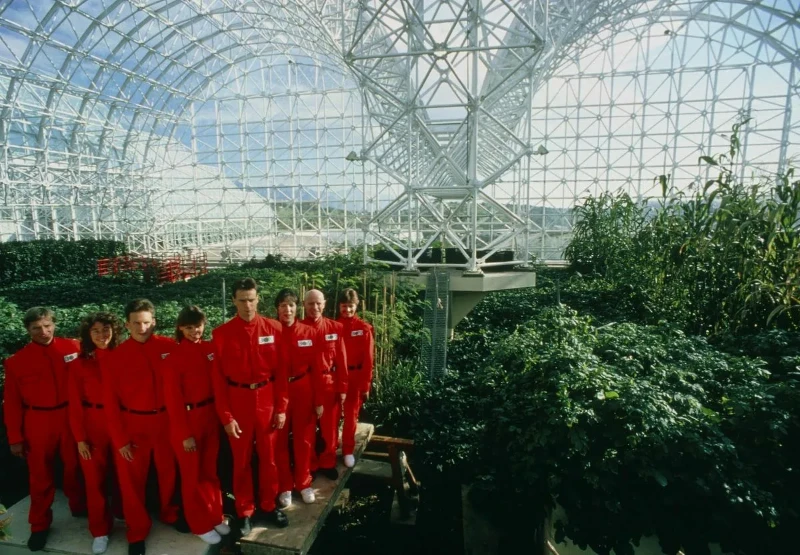
Biosphere-2 is a scientific experiment conducted in the USA
Analyses of the Martian atmosphere have shown that the available co₂ and other greenhouse reservoirs are not enough to create a dense warm atmosphere with modern technology; real estimates of the time and energy to change the planetary climate are hundreds and thousands of years (this is even longer than waiting in line at the clinic).
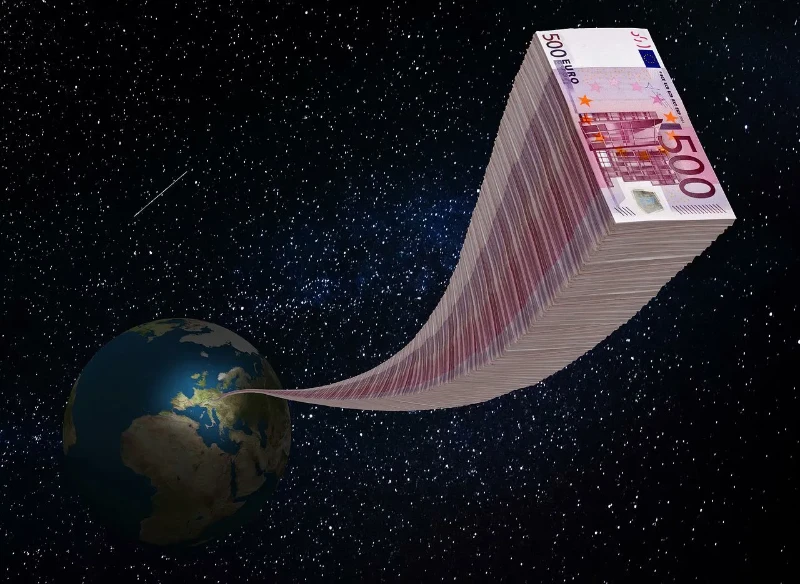
What about the money? Estimates of the cost of the first manned mission to Mars are in the hundreds of billions — a trillion dollars or more, taking into account the infrastructure of life support; without mass, cheap transport and continuous financing, the colony will cost more than the value of its products. I remind you that our ocean has been explored by 5%, there is not enough money and desire even to study what is at hand.
International recommendations and policies (COSPAR, the Outer Space Treaty) explicitly require the prevention of contamination of alien bodies by terrestrial microorganisms and the protection of the Earth from alien biomolecules; mass population risks destroying the scientific opportunity to learn about alien life, as well as creating unpredictable biorisks. Did you even know that such nonsense exists?
The next part is the trouble with the head. Long—term missions are accompanied by depression, conflict, cognitive impairment, and decreased efficiency - the effects of isolation are amplified by distance from Earth, which jeopardizes the colony's performance as a community.
Who owns, who pays, who is responsible? The norms of international law (the Outer Space Treaty) prohibit the appropriation of celestial bodies, but do not provide a working mechanism for ownership/responsibility for colonies; colonization will generate conflicts of interest, commercial exploitation, and long-term jurisdiction that have not yet been resolved internationally.
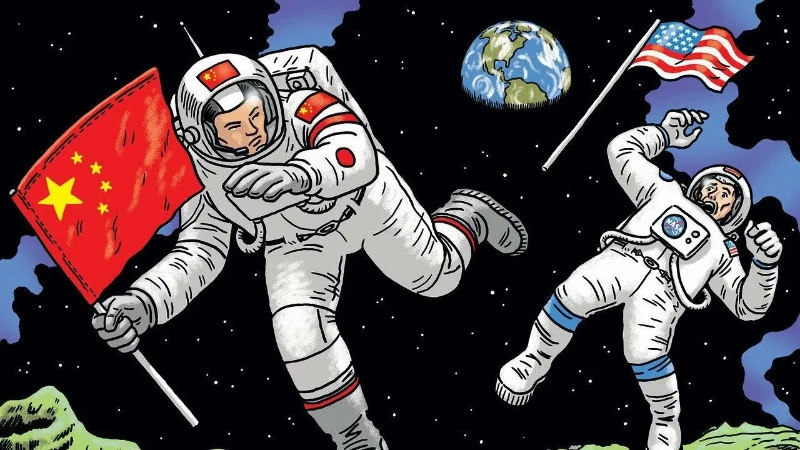
This bro definitely deserves a plate of rice.
Life and peace are a gift that needs to be taken care of; attempts to relocate humanity en masse, neglecting the preservation and healing of their own land, look like a form of pride and flight from responsibility. Until we solve the problems of heritage, ecology, and social justice on Earth, mass colonization of other planets remains a dubious and dangerous priority.
PS: This does not mean that space exploration is meaningless — robotic science, remote missions, and the development of technologies to help humanity on Earth are reasonable and useful. But to imagine colonization is either a romantic myth or a big risk.


Share:
Bestcomments (1)
Angel_felix
A wonderful post!💗