Hello, dear community members!
The test score on a ten-point scale is the main criterion that helps us distinguish good tests from less successful ones. We will discuss when and how this rating is assigned, as well as what it influences, in this brief article.
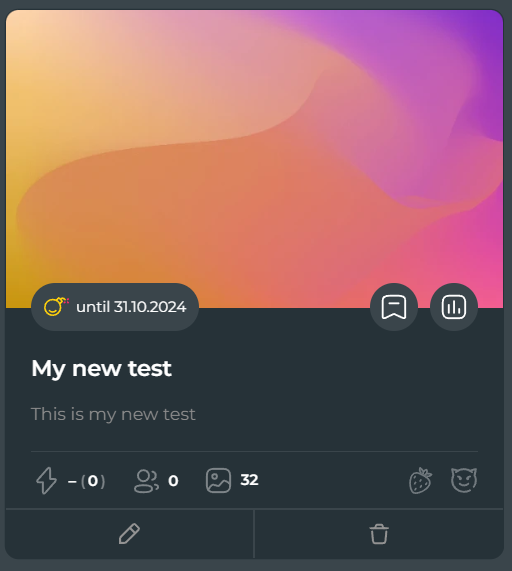
Let’s start by noting that newly created tests are initially marked with a dash for their rating, and the number of ratings is displayed in parentheses next to it (in this example, it’s 4). New tests without a rating are only shown on the main page under the "New" tab.
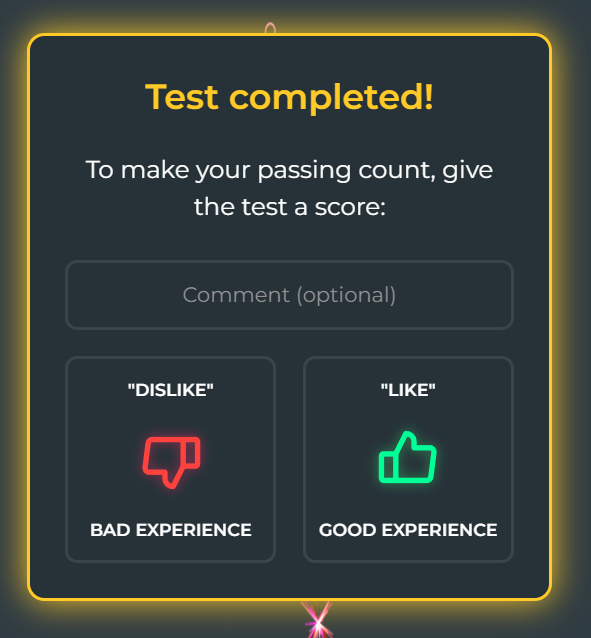
After each test completion, registered users have the option to rate the test with one of two ratings. A "Dislike" rating decreases the test's score by 1, while a "Like" rating increases the score by 1.
After receiving 10 ratings from users, the test is assigned a ten-point score. If this score is greater than 7 out of 10, it will appear on the main page under the "Interesting" tab. The score is calculated using a simple formula: "rating : number of ratings * 10." The score is recalculated after each completion by a registered user and affects the test's position in the "Interesting" tab (the higher the score and the more completions — including those from unregistered users — the higher the test ranks in the list).
A month after publication, an important milestone in the lifecycle of every test — the review.
Each test that has received at least 10 ratings is evaluated, and if its score is less than 7 out of 10, it is permanently removed. Tests that have remained hidden throughout the month are also deleted.
Tests that have not received 10 ratings within the month will be re-evaluated weekly until they reach 10 ratings.
Tests with a score of 7 or higher become permanent and remain on the site forever.
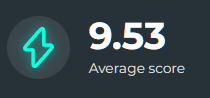
It's also worth mentioning that each author's profile displays the average rating of all tests authored by them, which serves as one of the metrics of success in the community.
Thank you for reading this article. We hope it was helpful.